You cannot outrun a charging predator on raw instinct, but knowing your physical limits will keep you alive. In an unexpected wilderness encounter, your survival depends on understanding biomechanics and animal acceleration.
While the wild kingdom boasts formidable sprinters, several feared species cannot match a focused human stride. You can comfortably outpace venomous snakes, massive lizards, and lumbering crocodilians on open ground.
Learning which creatures you can outpace—and which will easily overtake you—transforms how you navigate wild habitats. Here is the field data behind evolutionary velocity and trail safety.
Human Speed Benchmarks: The Reality of Your Stride
Evaluating which wild animals you can outrun requires an honest appraisal of your physical limits. Adrenaline often tricks outdoor adventurers into believing they can sprint like Olympic champions when danger appears.
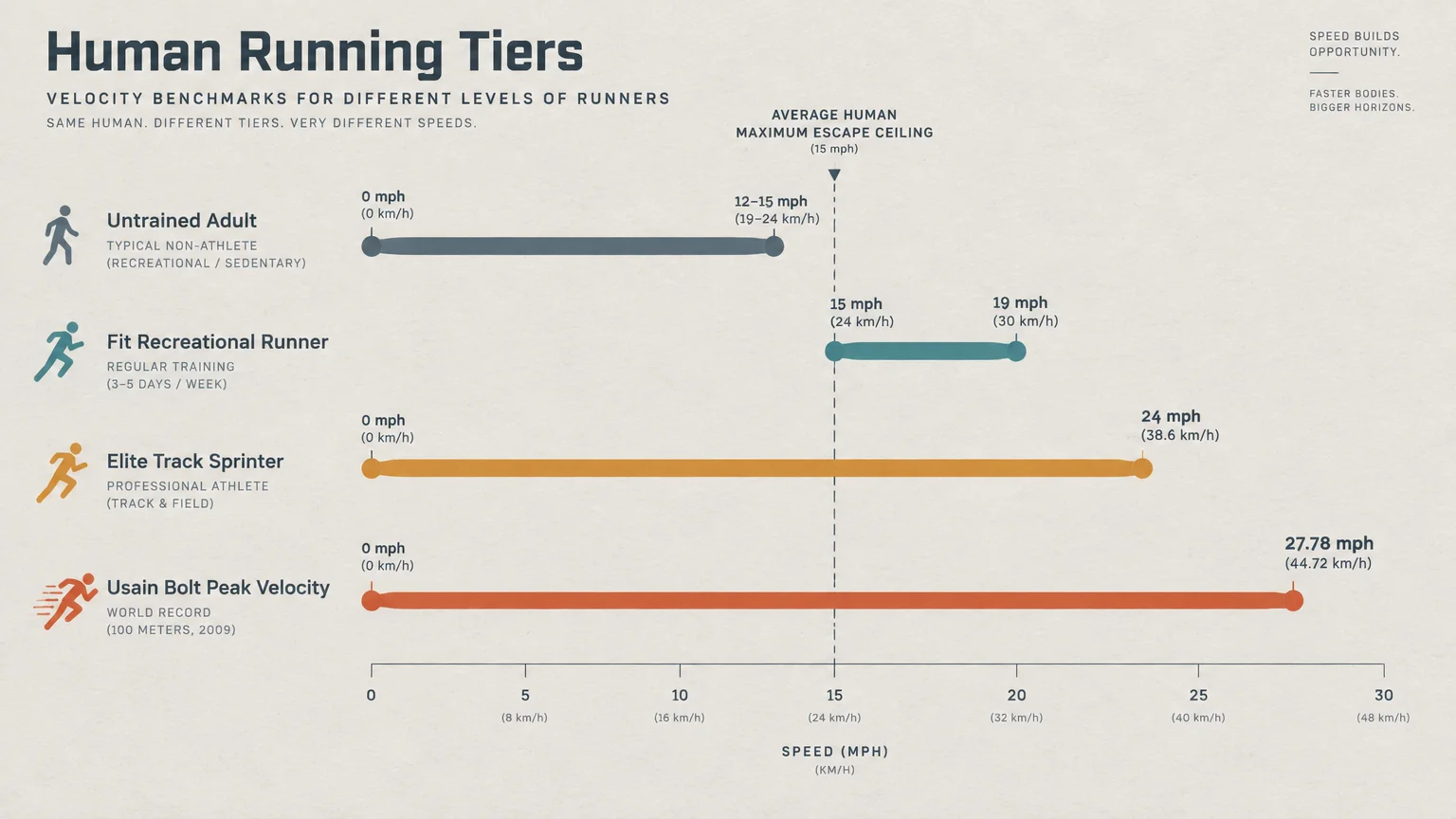
In reality, an average, healthy untrained adult reaches a peak sprint velocity of 12 to 15 mph (19 to 24 km/h). This burst lasts only a few fleeting seconds before fatigue sets in.
If you maintain a consistent running routine, your cardiovascular conditioning yields higher numbers. Fit or recreational adult runners typically clock sprint velocities between 15 and 19 mph (24 to 30 km/h).
Highly trained competitive sprinters push these limits into extraordinary territory. Elite female sprinters regularly hit peak track speeds of roughly 24 mph (38.6 km/h) during championship competitions.
Jamaican sprinter Usain Bolt holds the ultimate benchmark for human footspeed on record. On August 16, 2009, Bolt established the men’s 100-meter world record with a historic time of 9.58 seconds.
Over that entire world-record performance, Bolt maintained a staggering average speed of 23.35 mph (37.58 km/h). His stride mechanics transformed raw muscular energy into exceptional forward propulsion.
Between the 60-meter and 80-meter marks of that sprint, Bolt attained his peak velocity of 27.78 mph (44.72 km/h). That breathtaking measurement represents the highest footspeed ever scientifically recorded for a human being.
Unless you possess world-class biomechanics, you must assume your maximum escape speed sits near 15 mph. Relying on your feet to outrun wildlife requires understanding the kinetic capabilities of the species you face.
The Dangerous Illusions: Wildlife That Outpaces Any Human
Popular adventure cinema frequently portrays hikers escaping apex predators through desperate sprints through thick timber. Wildlife field science reveals a much grimmer reality for anyone attempting to flee on foot.
Most large terrestrial mammals possess biomechanical adaptations that make human sprinters appear stationary. Fleeing from these species removes your defensive advantages and triggers lethal pursuit responses.
The Apex Predators: Can You Outrun a Bear?
Outdoor travelers often ask whether a human can outrun a bear under favorable trail conditions. The definitive scientific answer is that you cannot outrun a bear under any circumstances.
Both grizzly bears and North American black bears sprint at velocities up to 30 to 35 mph (48 to 56 km/h). They reach this top speed within seconds, regardless of terrain slope.
A grizzly bear possesses massive shoulder musculature designed for digging and rapid acceleration. Even Usain Bolt at his absolute peak would lose a short sprint to a determined grizzly bear.
Polar bears dominate Arctic coastlines with equally shocking overland speed. These apex marine mammals can hit velocities of about 25 mph (40 km/h) across slick sea ice and uneven tundra.
When you turn your back and sprint away from a bear, you mimic fleeing prey. That reflexive reaction triggers the animal’s predatory drive, turning a curious approach into an active chase.
Survival in bear country depends on maintaining your composure and deploying proven deterrents. Stand your ground, speak calmly, and ready your bear spray rather than attempting an impossible footrace.
Heavyweight Velocity: Hippos, Elephants, and Surprising Sprinters
Mammalian bulk often leads travelers to underestimate the athletic capabilities of heavyweight herbivores. Large bodies do not equal sluggish movements when an animal defends its territory or young.
The common hippopotamus weighs several thousand pounds, yet it moves with terrifying overland velocity. On level ground, a charging hippo reaches speeds between 19 and 22 mph (30 to 35 km/h).
Because an average adult sprints at 12 to 15 mph, a hippo can overtake you with shocking ease. Research featured by National Geographic underscores that hippos rank among Africa’s most dangerous animals.
African elephants demonstrate a similar disparity between massive weight and surprising agility. These matriarchal giants can launch aggressive charges at speeds ranging from 16 to 25 mph (25 to 40 km/h).
You cannot outrun a focused elephant charge across open savanna grasslands. Your best defense involves identifying early warning signs, such as head shaking and ear flaring, before a full charge begins.
Small mammals and birds also produce velocity statistics that comfortably exceed human capacity. The common domestic cat can sprint at speeds up to 30 mph (48 km/h) over brief distances.
Wild warthogs match that exact pace, reaching 30 mph (48 km/h) when bolting toward underground burrows. Their compact muscular bodies generate immediate torque to evade pursuing lions and leopards.
Consider the African ostrich, the fastest bipedal runner on the planet. With elongated legs and elastic tendons, an ostrich sustains running speeds of 43 mph (70 km/h) across arid plains.
The cheetah remains the undisputed sprint champion of the terrestrial animal kingdom. Clocking verified top speeds of 58 to 65 mph (93 to 104 km/h), a cheetah accelerates from zero to 60 mph in 3 seconds.
North America’s pronghorn holds the second-fastest title, reaching sprint bursts of 55 mph (88 km/h). More impressively, pronghorns can maintain sustained cruising speeds of 30 to 45 mph (48 to 72 km/h) over long distances.
Terrestrial Contenders: Species You Can Actually Outpace on Foot
While apex predators and savanna herbivores outstrip human runners, many intimidating creatures move far slower than legend suggests. Understanding which species you can genuinely outrun dispels unnecessary panic during field encounters.
Cold-Blooded Pursuers: Black Mambas and Komodo Dragons
Few reptiles inspire as much dread as the black mamba across sub-Saharan Africa. Local mythology frequently claims that this slender, venomous snake can chase down riders on horseback across open country.
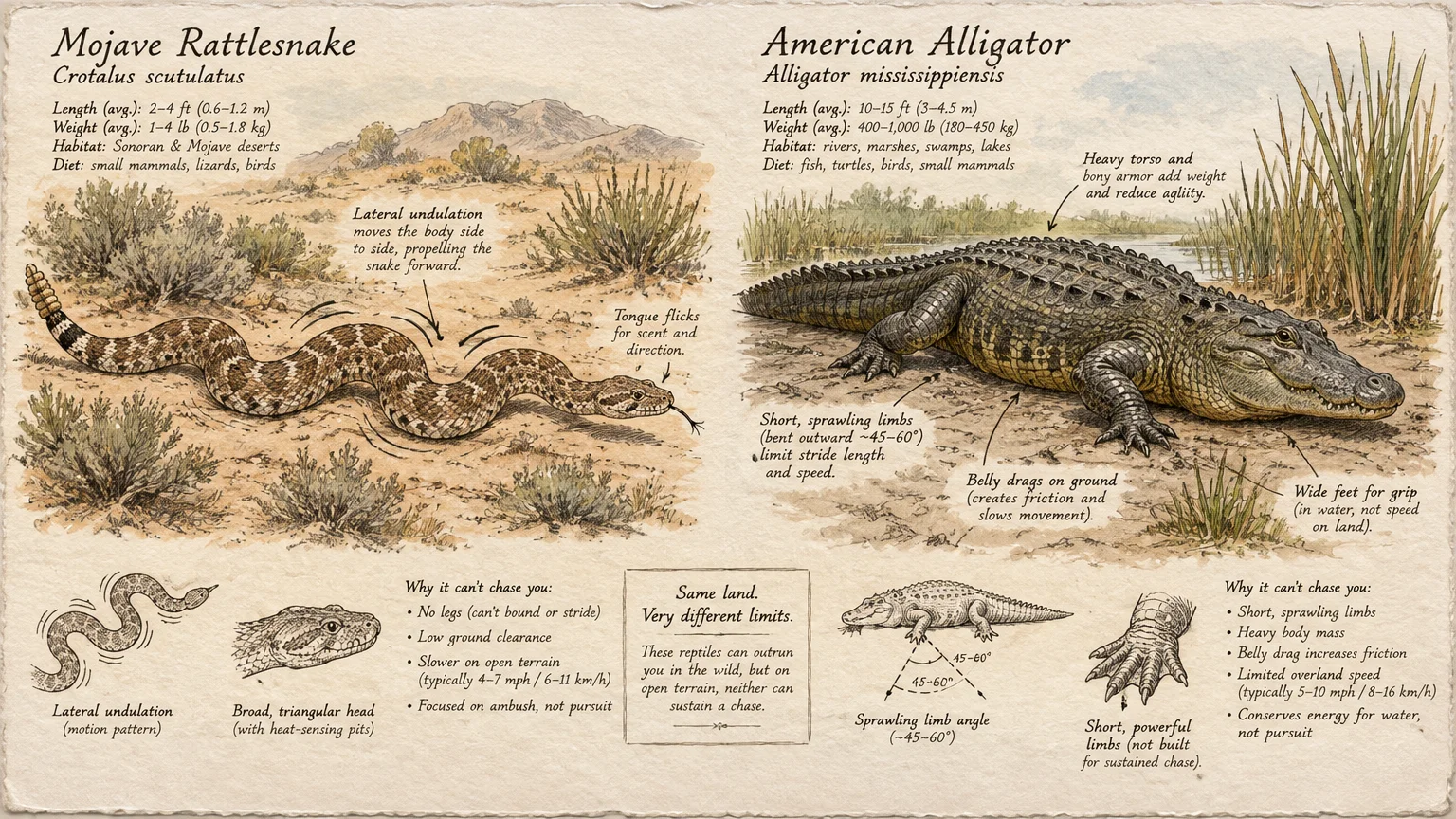
Rigorous field data firmly debunks these exaggerated accounts of serpentine velocity. Over flat terrain, a black mamba achieves a maximum slithering speed of only 10 to 12 mph (16 to 20 km/h) in short bursts.
An average healthy human sprinting at 12 to 15 mph can outrun a black mamba on flat ground. Furthermore, mambas prefer seeking underground refuges over pursuing humans unless they feel cornered or threatened.
Indonesia’s Komodo dragon presents another legendary predatory threat that travelers frequently misunderstand. Growing up to ten feet in length, these formidable monitor lizards dominate island ecosystems like Komodo and Rinca.
A Komodo dragon can reach a top sprint speed of about 11 to 12 mph (18 to 19 km/h) during sudden ambushes. A fit human runner can comfortably outpace this giant reptile on open ground.
Monitor lizards suffer from Carrier’s constraint, a biomechanical limitation that prevents them from breathing efficiently while running side-to-side. Consequently, their sprint bursts collapse quickly into metabolic exhaustion.
If you remain alert and spot a Komodo dragon from a safe distance, escaping requires only moderate physical effort. Maintaining steady forward momentum easily neutralizes their short-range strike capability.
Explosive Lungers: Alligators and Crocodiles
Crocodilians represent ancient evolutionary engineering perfected for ambushing prey along murky waterlines. Their terrestrial capabilities, however, remain severely constrained compared to their devastating aquatic power.
American alligators and crocodiles can launch sudden overland lunges at speeds of 15 to 20 mph (24 to 32 km/h). This rapid burst uses a high-walk or belly-slide posture to surprise shoreline targets.
Crucially, this explosive terrestrial burst lasts only for a few body lengths. Crocodilians cannot sustain an overland pursuit beyond 20 to 30 meters before severe lactic acidosis incapacitates their muscles.
An old survival myth instructs people to run in a zigzag pattern when fleeing an alligator. Following that bad advice will slow you down and increase your risk of tripping in hazardous terrain.
Sprint directly away from the water in a straight line to escape an alligator’s strike zone. A healthy human will leave the exhausted reptile far behind within a few dozen yards.
Small Mammals and Low-Speed Specialists
Backyard wildlife often seems blindingly fast because small animals change directions with remarkable agility. When you measure pure linear velocity, however, humans hold a distinct physical advantage over common rodents.
Tree squirrels reach top speeds of roughly 12 mph (19 km/h) on flat ground. Common house mice top out around 8 mph (13 km/h), depending on immediate ground cover.
These small creatures survive through tight turning radiuses and vertical climbing rather than raw velocity. You can easily outrun them in a straight sprint across open turf.
At the extreme slow end of the animal kingdom sit specialized low-energy herbivores. The three-toed sloth navigates tropical forest canopies at a maximum speed of 0.15 mph (0.24 km/h).
Giant tortoises move across rugged volcanic islands at a measured pace of 0.2 to 0.3 mph (0.3 to 0.5 km/h). You could effortlessly outdistance either species with an unhurried, gentle stroll.
Evolutionary Biomechanics: Why Humans Excel at the Long Game
While humans lose short-distance dashes to most medium-sized mammals, our species dominates long-distance locomotion. Our evolutionary path prioritized metabolic efficiency and thermal regulation over short-burst acceleration.
During high-speed sprints, vertebrate muscle cells burn through adenosine triphosphate and phosphocreatine. These vital biochemical fuel stores deplete completely within 6 to 10 seconds of explosive activity.
Once anaerobic stores vanish, quadrupeds must rely on aerobic metabolism while managing extreme metabolic heat. Most four-legged mammals cool their bodies solely by panting through their mouths.
Galloping quadrupeds link their respiration directly to stride frequency in a rigid one-to-one ratio. They cannot pant effectively while moving at high speeds, which rapidly leads to lethal hyperthermia.
Humans evolved an entirely different physiological cooling system: millions of eccrine sweat glands across hairless skin. This adaptation enables you to dump internal heat continuously while maintaining a steady running stride.
Bipedal locomotion also decouples your breathing rhythm from your foot strikes. You can inhale and exhale at variable rates, matching your oxygen intake to your physiological needs.
Groundbreaking biomechanical research published in the Journal of Experimental Biology highlights how these traits enabled early human persistence hunting. Ancestral hunters pursued fleet-footed game across hot savannas until the animals collapsed from heat exhaustion.
Under warm conditions, a conditioned human runner can outlast horses, pronghorns, and antelopes over distances exceeding 20 miles. You may lose the opening sprint, but your endurance biology eventually conquers the field.
This profound evolutionary tradeoff explains why our sprint velocities remain modest. Nature sacrificed explosive short-range acceleration to build the planet’s ultimate endurance runner.
Ecological Pressures: How Habitat Loss Affects Animal Locomotion
The incredible sprint speeds of wild animals evolved within vast, unbroken ecosystems. Predators and prey honed their physical capabilities across millions of acres of open savannas, grasslands, and steppes.
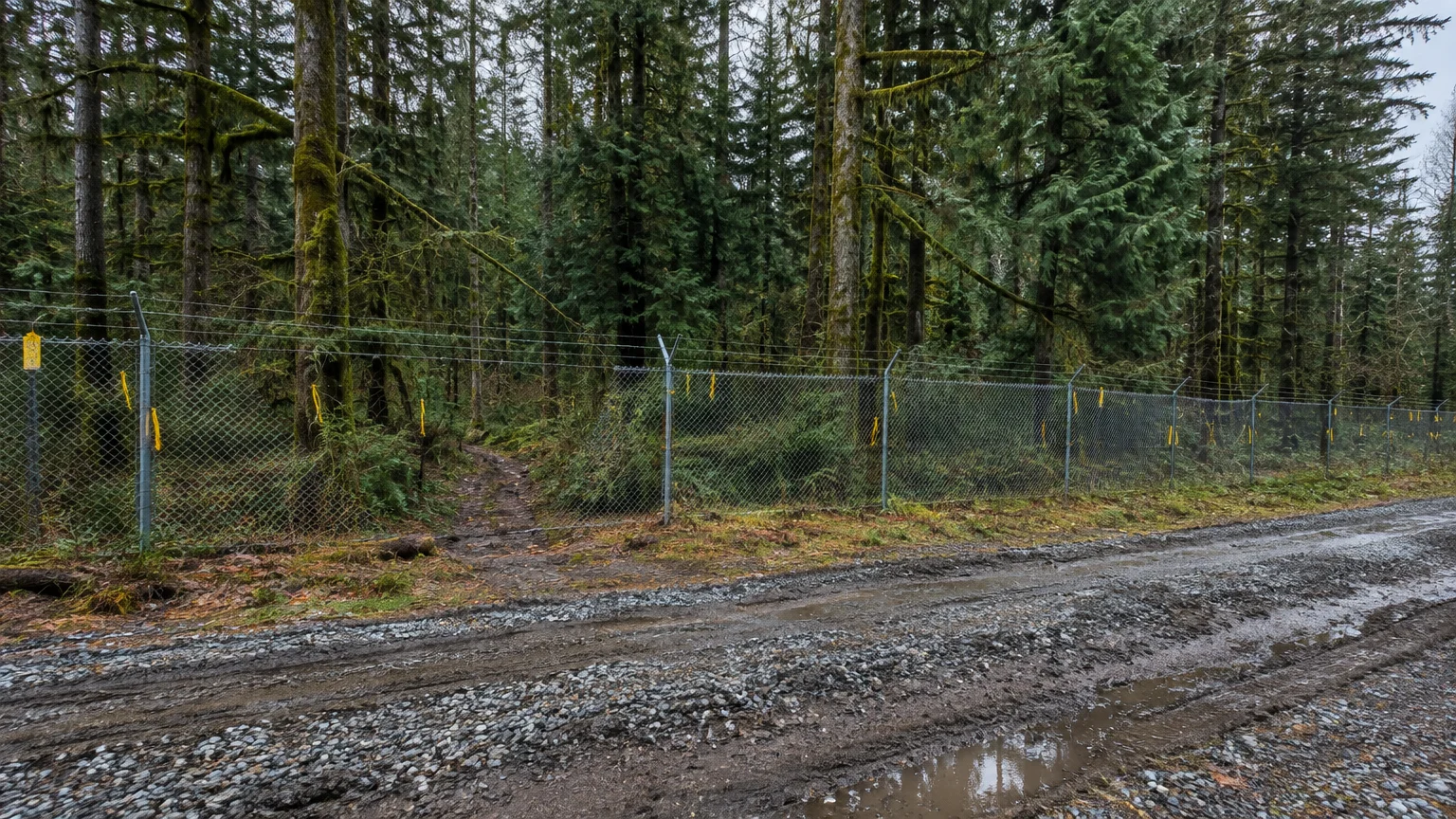
Human expansion now fractures these ancestral running grounds with roads, urban developments, and barbed-wire fences. When habitats fragment, specialized sprinters suffer severe ecological consequences.
The cheetah once hunted across vast expanses of Africa, the Middle East, and southwestern Asia. Data compiled by the IUCN Red List reveals that cheetahs now occupy less than ten percent of their historic range.
Confined to small reserves, cheetahs face intense competition from larger predators like lions and spotted hyenas. In cramped habitats, the cheetah’s explosive 65 mph sprint provides diminishing evolutionary returns.
North American pronghorns encounter comparable artificial obstacles throughout their migratory corridors. Highway right-of-way fences prevent herds from executing seasonal movements to escape lethal winter snowdrifts.
Because pronghorns evolved to run across wide prairies rather than jump vertical barriers, standard livestock fences trap entire populations. Trapped animals succumb to starvation or fall victim to opportunistic coyotes.
Conservation organizations like the World Wildlife Fund work alongside agricultural communities to modify range fences. Replacing the lowest barbed strand with smooth wire allows pronghorns to slide underneath at full speed.
Scientific studies indexed by Science demonstrate that habitat connectivity directly preserves species diversity and evolutionary fitness. Protecting large landscape corridors guarantees that natural running dynamics survive for future generations.
Field Safety Protocols: Actionable Decisions When Facing Wildlife
Understanding animal running speeds should guide your tactical reactions during wilderness emergencies. When you encounter dangerous wildlife on the trail, knowing when to move and when to stand still saves lives.
Never run from a predatory mammal like a mountain lion, wolf, or bear. Fleeing signals weakness and instantly triggers an instinctual chase response that you cannot outrun.
If you encounter a large carnivore, halt immediately and face the animal directly. Make yourself appear intimidating by raising your arms, opening your jacket, and maintaining an assertive stance.
Carry dedicated bear spray in a quick-draw holster whenever you travel through bear country. If a bear charges toward you, pull the safety clip and deploy short bursts when it reaches 30 feet.
If you surprise an alligator on land, sprint directly away from the water in a straight line. Because the reptile exhausts its energy within 30 meters, quick linear movement ensures your safety.
When you encounter venomous snakes like a black mamba or rattlesnake, freeze initially to locate the reptile. Back away slowly and deliberately; snakes strike only when they perceive an immediate physical threat.
Give wide berths to large herbivores like moose, elk, and bison during your backcountry travels. These animals can sprint at 25 to 35 mph and will vigorously defend their space during mating or calving seasons.
Travel in groups and make regular noise when traversing trails with limited visibility. Announcing your presence gives wild animals sufficient time to retreat, preventing sudden, defensive charges.

Citizen Action: Supporting Wildlife Habitats and Research
Wildlife conservation requires active participation from outdoor enthusiasts and local communities. You can support the habitats that sustain high-speed mammals through several practical, evidence-based actions.
Log your wildlife sightings using citizen science tools like iNaturalist while exploring public lands. Wildlife biologists use these crowdsourced data points to identify critical migration routes and seasonal bottlenecks.
Join volunteer work parties dedicated to removing obsolete barbed-wire fencing from public rangelands. Removing unused fencing immediately reopens migration corridors for pronghorns and other swift ungulates.
Support regional ballot measures and infrastructure funds that finance dedicated wildlife overpasses. Highway overpasses dramatically reduce animal-vehicle collisions while reconnecting severed wilderness areas.
Practice rigorous Leave No Trace ethics by keeping your campsite clean and packing out food waste. Using bear-proof food storage protects wild animals from becoming food-conditioned, preserving their natural foraging behaviors.
Donate directly to land trusts that purchase conservation easements from willing agricultural landowners. Permanent conservation easements protect vital grassland ecosystems from commercial subdivision and industrial fragmentation.
Frequently Asked Questions About Animal Speed and Safety
Outdoor travelers regularly debate animal running capabilities and wilderness safety rules. Here are clear, data-driven answers to four common questions regarding wildlife encounters and trail safety.
Can you outrun a bear if you sprint downhill?
You cannot outrun a bear downhill, despite widespread folklore claiming their front legs are too short. Bears run exceptionally well across all terrain types, including steep descents and rocky slopes.
Grizzly bears can sprint downhill at speeds exceeding 30 mph with remarkable agility and balance. Running downhill increases your risk of falling, making you vulnerable to an immediate attack.
What should you do if an alligator lunges toward you?
If an alligator lunges toward you on land, run away in a straight line as fast as possible. Do not waste time or energy running in a zigzag pattern.
Alligators achieve rapid acceleration for only a few body lengths before metabolic exhaustion halts their sprint. Moving straight away from the shoreline quickly removes you from the animal’s strike range.
How does climate change alter animal sprint performance and predatory chases?
Rising ambient temperatures reduce the hunting efficiency of specialized mammalian sprinters. Because cheetahs and other carnivores generate massive internal heat during sprints, warmer days shorten pursuit durations.
As daytime temperatures rise, many predators shift toward nocturnal hunting, increasing competition with other nocturnal hunters. Meanwhile, human endurance capabilities remain effective in warm weather due to our sweating mechanism.
How can citizen scientists record wildlife encounters responsibly?
Always maintain a safe, ethical distance when photographing or documenting wildlife for citizen science projects. Use telephoto zoom lenses or binoculars rather than physically approaching wild animals.
If an animal stops feeding, raises its head, or alters its movement, you have crowded its space. Back away immediately and record your field observations without causing stress or altering natural behaviors.
The Living Velocity of the Natural World
Watching a pronghorn herd ignite across the sagebrush steppe reminds you of nature’s extraordinary physical potential. Their effortless strides bridge thousands of years of evolutionary refinement across ancient open landscapes.
Humans did not evolve to conquer the natural world through sudden, blinding bursts of speed. Our survival stems from resilience, complex thermal regulation, and the endurance to cover vast distances.
When you step onto wild trails, carry an informed respect for the species sharing your path. Understanding animal locomotion transforms wilderness fear into profound admiration for the living velocity of the wild.