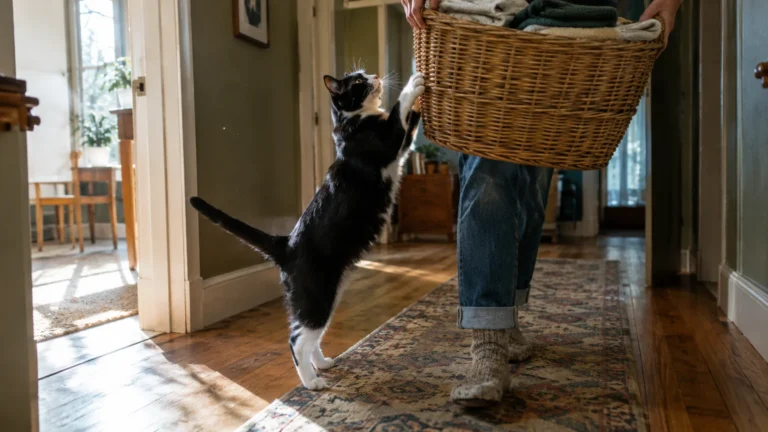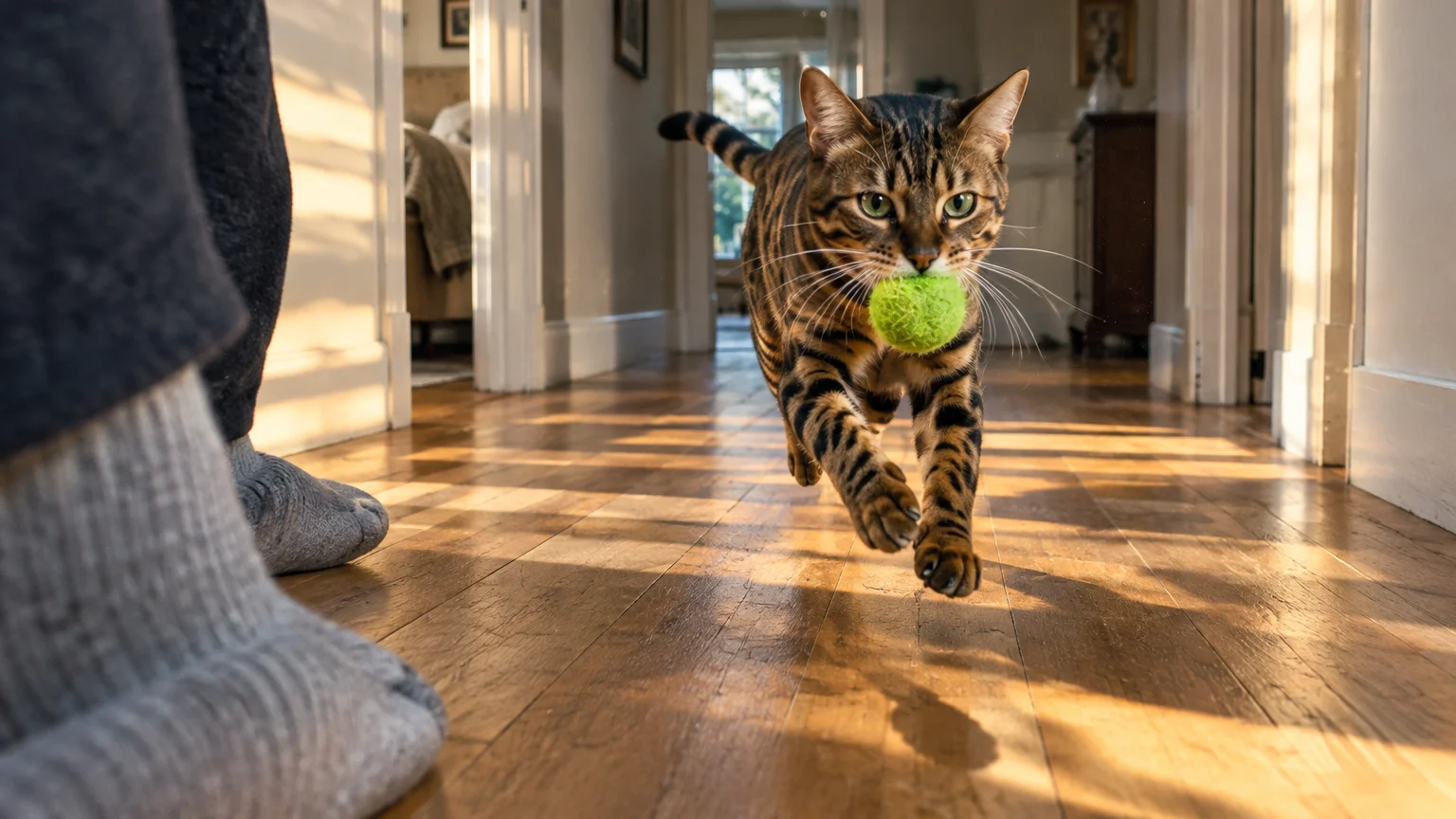
You can share a game of fetch with your cat just as effortlessly as with an energetic retriever. Millions of feline companions sprint after tossed toys and eagerly drop them at their owners’ feet.
Recent veterinary behavioral studies reveal that domestic felines engage in retrieval games far more frequently than popular culture assumes. This canine-like play style combines predatory drive with an innate desire for social connection.
Certain pedigree lineages demonstrate an extraordinary biological predisposition toward carrying objects and initiating interactive retrieval sessions. Understanding these breeds allows you to unlock your companion’s full athletic and cognitive potential.
The Evolutionary Science Behind the Feline Retrieve
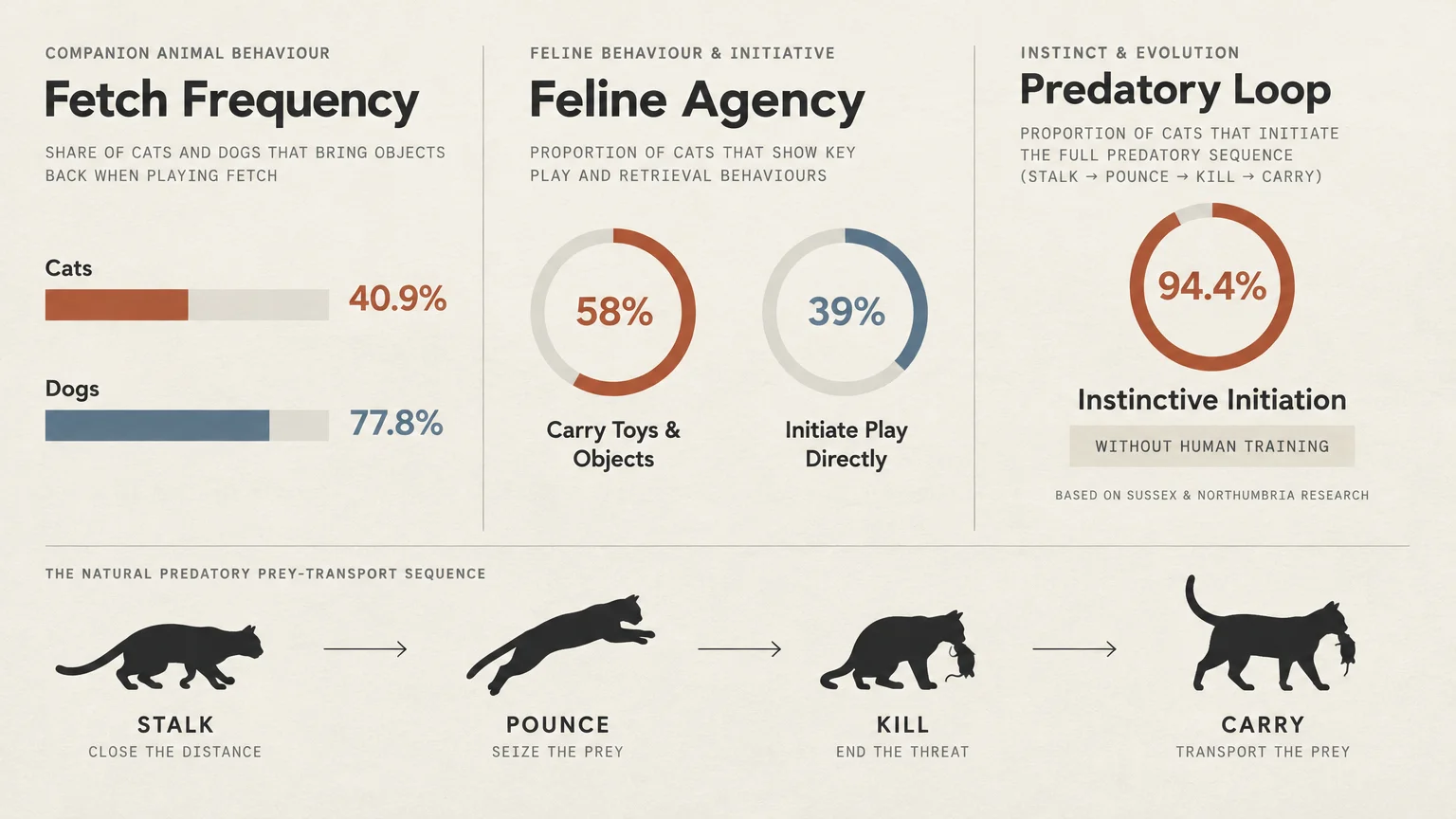
Cats possess a predatory motor pattern refined over millions of years of solitary hunting. In the wild, an efficient predator stalks, pounces, kills, and then carries its quarry back to a secure location.
Domestic cats preserve every link in this ancestral hunting chain. When your cat brings a toy back to your feet, you witness a modified version of this ancient prey-transport behavior.
Groundbreaking research published in PLOS One by researchers from Purdue University and the University of Pennsylvania quantified this phenomenon across thousands of homes. Their team surveyed 8,224 cat owners alongside 73,724 dog owners.
The data revealed that 40.9% of cats play fetch sometimes, usually, or always. While 77.8% of dogs fetched, the feline percentage proves that retrieving is a mainstream cat behavior rather than a rare anomaly.
Carrying items also represents a widespread feline instinct beyond the structured rules of a game. The same investigation documented that 58% of cats carry toys or everyday objects around their living spaces.
Furthermore, 39% of cats actively initiate play sessions by bringing items directly to their human companions. This metric highlights that cats do not merely respond to human cues; they dictate the terms of interaction.
A complementary study published in Scientific Reports by researchers at the University of Sussex and Northumbria University examined 1,154 fetching cats. They discovered that 94.4% of these felines began fetching instinctively without any formal human training.
Felines view fetch as an interactive dialogue rather than an exercise in human obedience. You provide the propulsion, while your cat satisfies an innate predatory loop that keeps their mind razor-sharp.
Demographic data underscores that physical vitality fuels this high-energy game. Scientists found that retrieving occurs with significantly higher frequency among younger, male, indoor-only cats in good health.
Indoor environments encourage cats to invent collaborative games with human companions to expend surplus predatory energy. When outdoor hunting opportunities are absent, carrying and retrieving objects becomes a primary physical outlet.
Eight Breeds That Love Fetching Like Dogs
While mixed-breed domestic cats frequently fetch, specific pedigree lineages exhibit exceptional talent for retrieving. Genetic selection for sociability, athletic prowess, and high prey drive elevates fetching behavior across particular feline families.
1. The Siamese
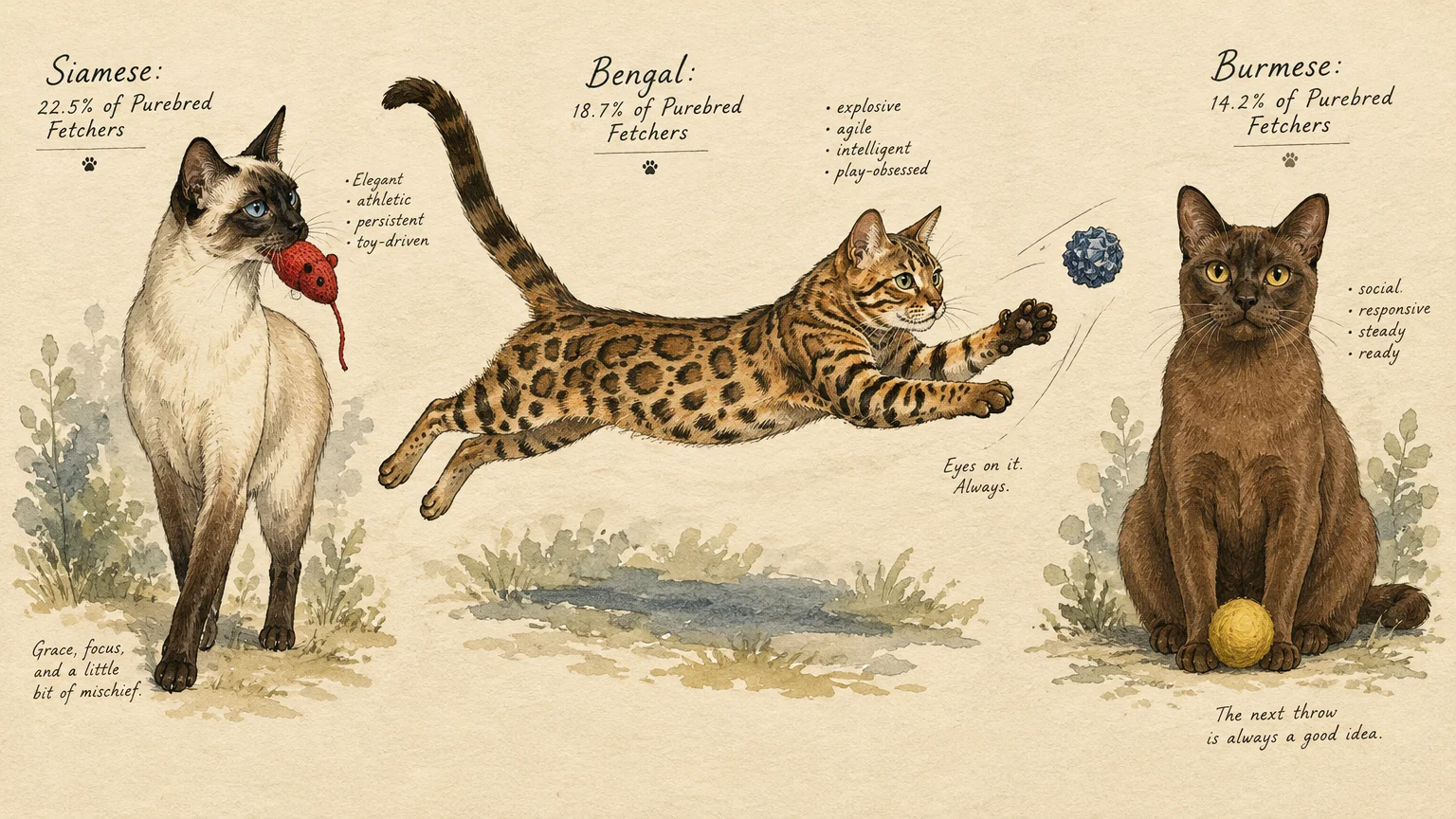
The Siamese stands as the undisputed champion of feline retrieving. In the University of Sussex study, Siamese cats represented 22.5% of all purebred fetchers, claiming the top spot by a wide margin.
The comprehensive survey in PLOS One confirmed that Siamese cats are statistically more likely than expected to fetch and carry household objects. Their genetic lineage fosters an intense desire for cooperative engagement with humans.
These sleek, vocal athletes demand intellectual stimulation from their human guardians. When a Siamese feels bored, they will drop a toy in your lap and announce their playtime demands with piercing vocalizations.
Their lean frames and powerful hindquarters allow them to sprint across rooms and leap effortlessly to intercept thrown toys. You will find that a Siamese often persists with fetching games long after you grow tired.
To keep a Siamese engaged, toss lightweight objects that mimic darting insects or tiny rodents. Their hyper-focused attention turns every retrieval run into a masterclass in feline agility.
You should establish a predictable fetch routine with your Siamese. Their demanding social nature means they view daily retrieval sessions as mandatory appointments rather than casual pastimes.
2. The Bengal
Bengals bring the untamed spirit of the wild directly into your living room. Developed by crossing domestic cats with the wild Asian leopard cat, this breed retains an exceptionally intense prey drive.
Statistical models from the Purdue and University of Pennsylvania research identified Bengals as significantly more prone to both fetching and carrying objects than expected. They treat interactive toys like prized wilderness catches.
The Sussex study also highlighted Bengals as one of the most prominent purebred fetchers alongside Siamese cats. Their athletic heritage makes running down moving targets second nature.
Bengals possess muscular bodies built for explosive acceleration. When you toss a toy down a hallway, a Bengal will chase it down with breathtaking speed and retrieve it with focused determination.
These spotted felines often express a fascination with water alongside their retrieving habits. Do not feel surprised if your Bengal drops a retrieved toy directly into their water dish to simulate washing their prey.
Daily fetching sessions provide vital psychological relief for Bengals living in domestic environments. Without structured interactive exercise, their boundless energy can quickly transform into unwanted household mischief.
3. The Burmese
Burmese cats possess an affectionate, dog-like personality that charms everyone they meet. Closely related to the Siamese, this stocky, muscular breed approaches life with infectious curiosity and boundless enthusiasm.
Researchers confirmed in the 2024 PLOS One study that Burmese cats fetch with statistically higher frequency than expected across domestic cat populations. They actively seek out interactive play to strengthen bonds with their owners.
Unlike aloof feline stereotypes, a Burmese thrives on direct participation in your daily activities. They will happily follow you from room to room with a favorite toy clamped firmly between their teeth.
Their playful demeanor persists well into their senior years. While many other breeds slow down with age, Burmese adults maintain the exuberant fetching drive of young kittens throughout adulthood.
You can optimize play for a Burmese by offering toys with varied textures. They enjoy the sensory feedback of gripping plush mice or crinkly foil balls during high-speed return sprints.
A Burmese will often nudge your arm repeatedly with a toy until you toss it. Their persistent, loving nature makes them irresistible play partners for devoted cat lovers.
4. The Tonkinese
The Tonkinese emerged from the deliberate crossbreeding of the Siamese and the Burmese. By uniting two naturally playful bloodlines, breeders created a brilliant companion that views fetch as an essential daily ritual.
The 2024 PLOS One breed analysis confirmed that Tonkinese cats display a statistically significant propensity for fetching. They inherit the vocal communication of the Siamese alongside the clownish warmth of the Burmese.
Tonkinese cats excel at complex aerial maneuvers during play. When you launch a toy through the air, a Tonkinese will leap gracefully upward, twist mid-air, and deliver the prize back to your feet.
These cats possess remarkable memory and problem-solving skills. If a thrown toy slides under a cabinet, your Tonkinese will systematically extract it before completing the retrieve.
Their social nature makes them responsive to praise and positive verbal reinforcement. Celebrating each successful delivery keeps your Tonkinese motivated to continue the game across multiple rounds.
Tonkinese cats become deeply attached to specific signature toys. Once your Tonkinese designates a particular plush item as their fetching token, they will retrieve it exclusively for weeks.
5. The Abyssinian
The Abyssinian resembles a miniature African wildcat with its ticked coat and large, alert ears. Known as the athletes of the feline world, Abyssinians rarely spend their waking hours lounging idly on couches.
The landmark PLOS One study revealed that Abyssinians are statistically more likely than expected to carry toys and objects around the home. They possess an obsessive desire to transport physical tokens across their territory.
Abyssinians view vertical space as their private playground. You can easily engage an Abyssinian by tossing toys onto the top tiers of tall cat trees or along dedicated wall shelves.
Their relentless motor drives them to investigate every moving object in their vicinity. When you introduce a game of fetch, an Abyssinian treats each throw like an urgent tactical mission requiring total focus.
Because Abyssinians exhibit such high metabolic activity, interactive retrieving prevents restlessness and anxiety. Incorporating fetch into their daily routine keeps their lean musculature toned and their inquisitive minds satisfied.
You should vary the trajectory of your throws when playing with an Abyssinian. They relish unpredictable bounces that test their razor-sharp reflexes and lightning-fast turning speed.
6. The Siberian
Hailing from the subarctic forests of Russia, the Siberian cat is a powerful, heavy-boned natural breed. Despite their substantial size and thick, water-resistant triple coat, these gentle giants move with astonishing grace.
Veterinary researchers discovered in the PLOS One investigation that Siberian cats carry objects around living spaces at rates significantly exceeding baseline domestic populations. Their strong retrieving drive mirrors their historical role as working mousers.
Siberians form intense, loyal attachments to their human families, frequently greeting owners at the front door like faithful dogs. They express their devotion by presenting cherished toys as gifts to initiate interactive retrieval.
Their robust physique allows them to retrieve larger, heavier toys than smaller breeds can manage. A Siberian will proudly haul oversized plush items or thick wool balls up staircases to continue a game.
If you share your home with an energetic Siberian, play fetch across carpeted spaces to provide reliable traction. Their powerful rear-leg thrust sends them flying after toys with incredible kinetic energy.
Siberians maintain an exceptionally calm temperament during indoor play. They retrieve with quiet determination and place items delicately in your hands before patiently waiting for your next toss.
7. The Ragdoll
Ragdolls earned their name from their famous tendency to go completely limp with contentment in human arms. Beneath their relaxed, docile exterior lies an affectionate feline that thoroughly enjoys interactive canine-style games.
The Sussex and Northumbria University study ranked the Ragdoll among the top three purebred cats most frequently reported for fetching behavior. Their participation proves that intense athletic agitation is not required to enjoy retrieving.
Ragdolls approach fetch with gentle persistence rather than frantic speed. They will trot methodically after a gently rolled toy, scoop it up, and trot back to place it carefully by your side.
Their soft, placid nature makes them exceptionally patient playmates for children and quieter households. A Ragdoll often uses a game of fetch as a low-stress avenue to initiate social contact with their favorite humans.
Use lightweight foam balls or plush felt toys when playing with a Ragdoll. They prefer soft, pliable textures that feel gentle against their teeth and jaws during retrieval.
A Ragdoll often pairs fetching sessions with deep, rumbling purrs. They find emotional comfort in the shared rhythm of retrieving, viewing the game as mutual bonding rather than competitive sport.
8. The Maine Coon
The Maine Coon ranks among the largest domestic cat breeds in existence, combining wild forest majesty with a genial disposition. Known affectionately as the dogs of the cat fancy, Maine Coons love human companionship.
Originating as rugged working cats in harsh northeastern climates, Maine Coons retain potent hunting and retrieving drives. Their large, tufted paws and nimble toes allow them to grasp and manipulate toys with surprising dexterity.
Many Maine Coon owners report that their cats initiate fetch spontaneously during quiet evening hours. These gentle giants will gently nudge you with a toy held in their jaws until you toss it.
Maine Coons often exhibit a fascination with moving water, occasionally dropping retrieved items into fountains before returning them. Their hearty constitution and gregarious nature make interactive games an ideal outlet for their expansive energy.
Providing ample floor space is essential when playing fetch with a Maine Coon. Their long strides cover vast distances in seconds, making hallways and open living rooms ideal arenas for interactive retrieval.
Their expressive chirps and trills often accompany every retrieve. A Maine Coon will announce their successful capture with happy vocal chirps as they march proudly back to your side.
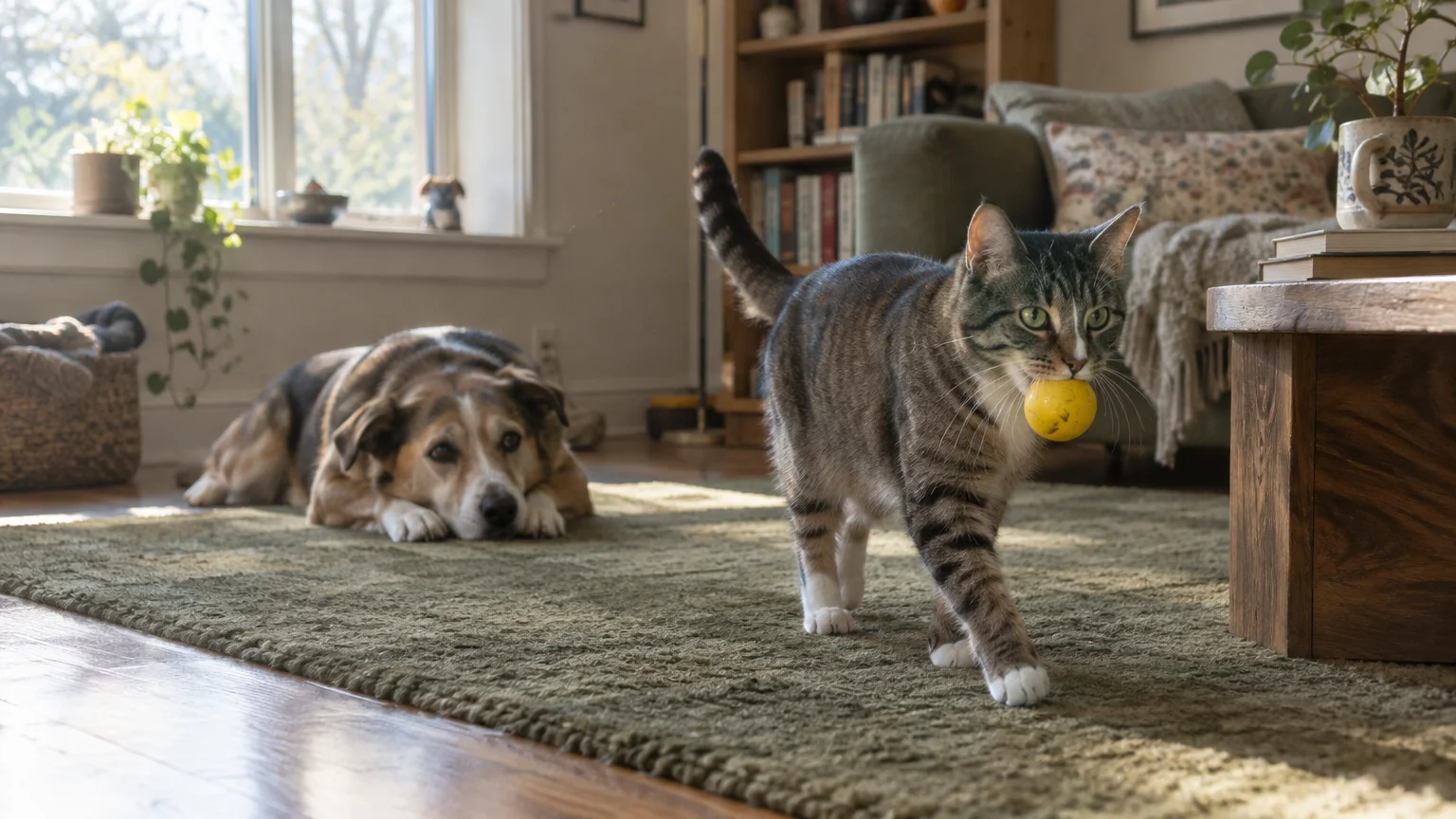
The Canine Factor: Why Cohabitation Alters Feline Play
Comparing dogs and cats often sparks fierce debate among pet enthusiasts. In the Purdue and UPenn study, 77.8% of dogs fetched, establishing retrieval as an overwhelming staple of canine recreation.
However, the researchers uncovered an unexpected dynamic regarding multi-pet households. Living in a home with dogs actually decreased the likelihood that a cat would play fetch.
Canine housemates alter the social ecology of a shared living space. Dogs frequently intercept tossed toys before a cat can reach them, dampening the cat’s natural hunting enthusiasm through overwhelming physical competition.
Cats require a sense of total security to enter the vulnerable psychological state required for social play. A rambunctious dog charging into a hallway can instantly shatter a cat’s focus and suppress its play drive.
Canine resource guarding may also intimidate a feline companion. If a dog claims ownership of floor toys, a cat will naturally avoid retrieving items to prevent unnecessary cross-species conflict.
If you live with both species, create dedicated canine-free play zones behind baby gates or closed doors. Allowing your cat to play fetch in an exclusive sanctuary restores their confidence and rekindles their retrieving instincts.
Toy Preferences and Critical Ingestion Hazards
Felines exhibit remarkably refined tastes when selecting objects for retrieval. The University of Sussex investigation discovered that cats do not pursue items indiscriminately; they favor specific textures, shapes, and weights.
According to the survey, 38.4% of fetching cats preferred commercial cat toys, such as artificial mice and crinkle balls. These products match the size and tactile resistance of natural mammalian prey.
Spherical items represented the second most popular category, with 25.3% of cats favoring objects like crumpled paper balls or lightweight baubles. Spheres produce erratic rolling paths that mimic unpredictable prey evasion tactics.
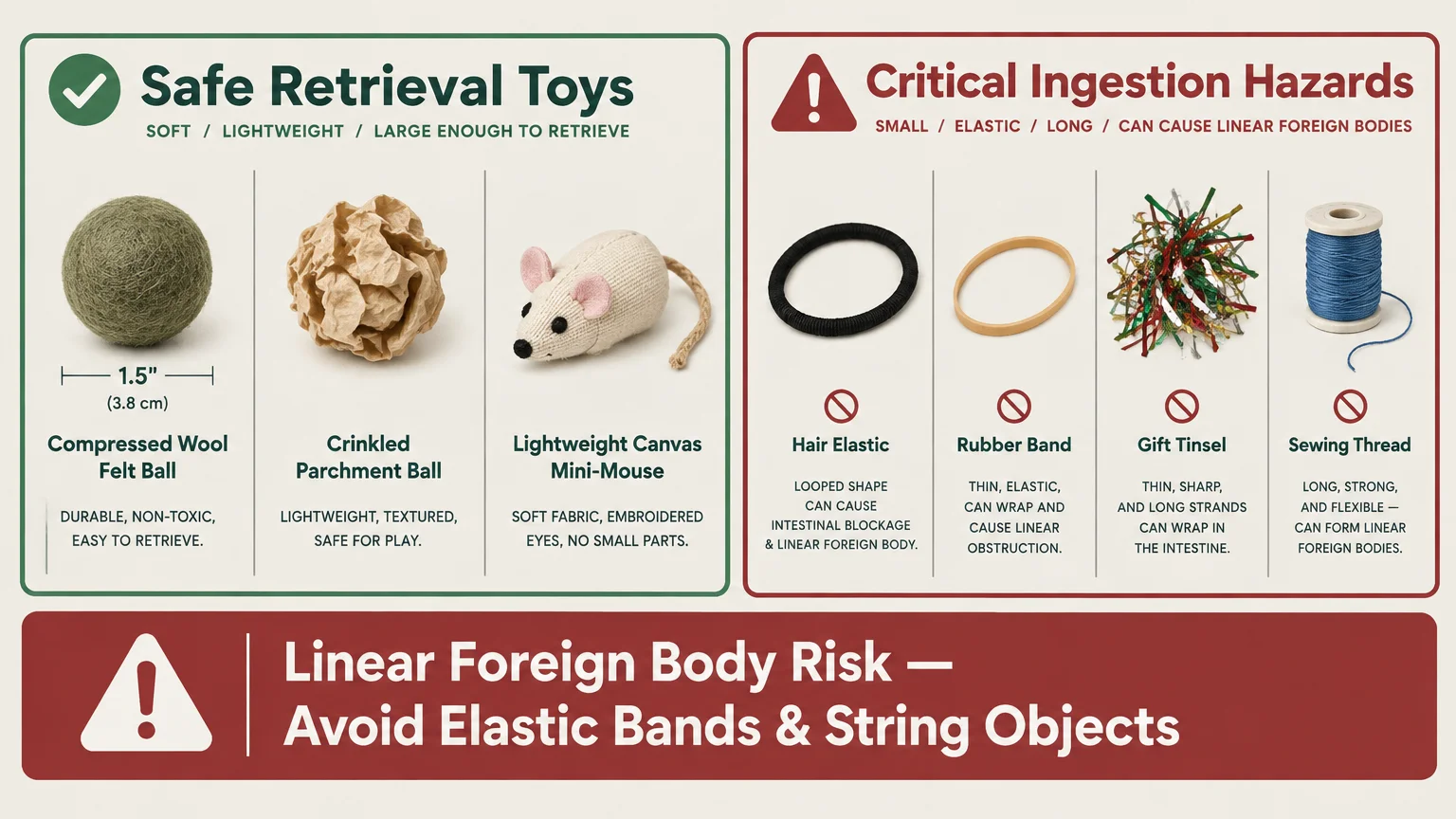
Intriguingly, 9.5% of cats preferred cosmetics or everyday household items, such as hair ties, cotton swabs, and plastic bottle caps. Felines favor these small objects because their lightweight construction allows effortless mouth carrying.
However, allowing cats to fetch household sundries introduces severe medical risks that every pet parent must address. Veterinary organizations, including the American Veterinary Medical Association, warn against unsupervised access to elastic bands and strings.
When a cat chews or swallows a hair tie, the elastic band can become a linear foreign body inside the digestive tract. The feline intestines bunch up around the foreign material, causing life-threatening perforations or bowel blockages.
The Cornell Feline Health Center notes that intestinal obstructions require emergency surgery and intensive hospitalization. You should never permit your cat to fetch rubber bands, dental floss, or elastic hair accessories.
Replace dangerous domestic items with veterinary-approved alternatives like dense wool felt balls, lightweight crinkle toys, or specialized cat springs. These safe substitutes provide identical tactile satisfaction without threatening your pet’s life.
Always inspect toys regularly for loose seams or exposed stuffing. Discarding damaged playthings immediately keeps your interactive fetch sessions both thrilling and completely safe for your feline friend.
How to Cultivate Fetching Behavior in Your Home
While 94.4% of fetching cats begin the game instinctively, you can actively foster an environment that encourages retrieval. Recognizing developmental windows and understanding feline communication helps you nurture this captivating skill.
The University of Sussex study established that 60.7% of fetching cats initiated the behavior as kittens under 1 year old. The most frequently reported age of onset was 7 months old.
Furthermore, 96.7% of fetching cats adopted the habit before reaching 7 years of age. Introducing interactive toys during early development establishes play routines that endure throughout your cat’s mature adult life.
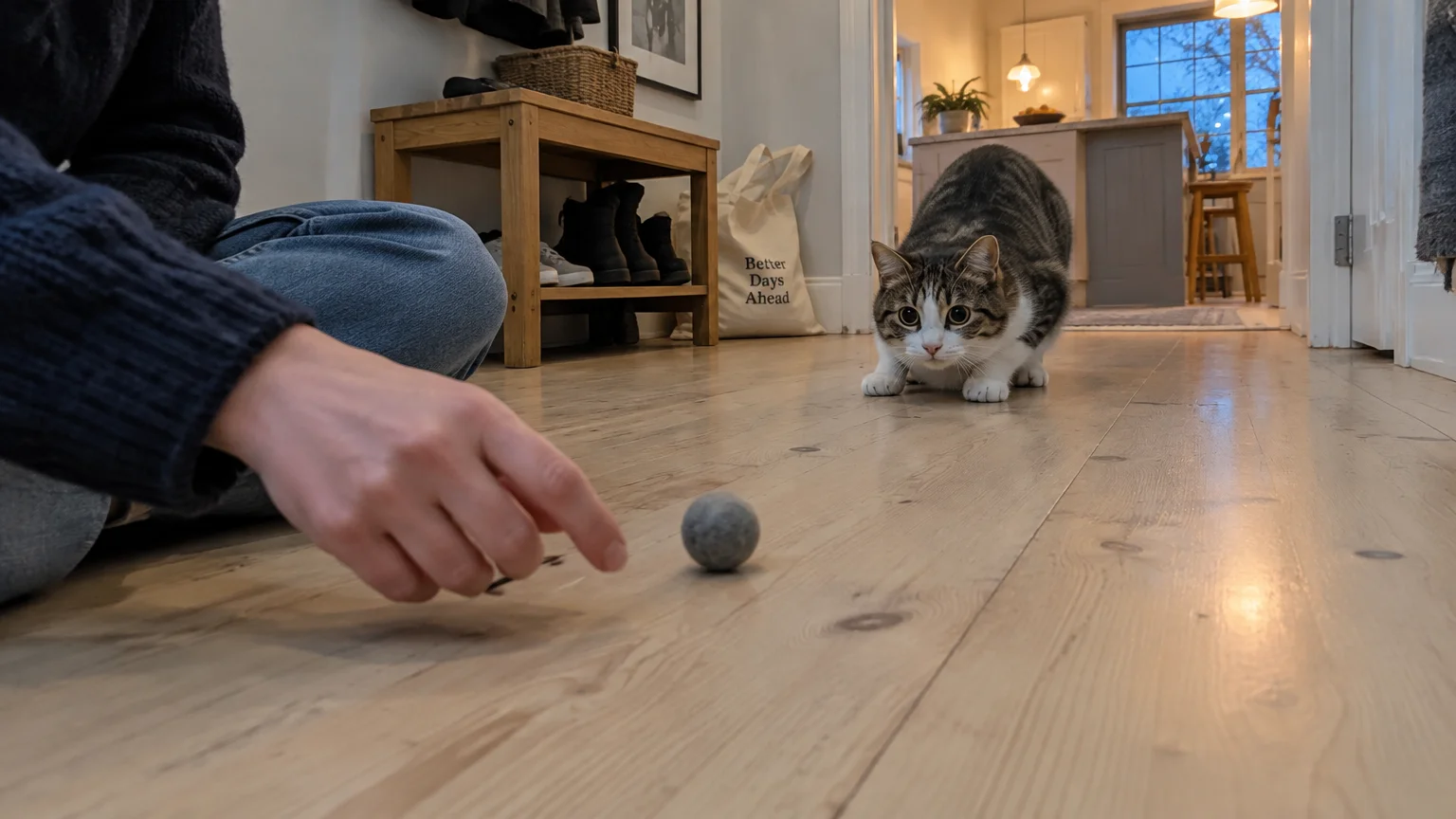
To spark interest, observe what items your cat naturally picks up in its mouth. If your feline enjoys batting crumpled paper, gently toss a paper ball across the floor when they feel alert.
Avoid forcing your cat to perform on command. The Sussex study underscored that fetching cats retain strict agency over the game, frequently dictating when sessions begin and precisely when they conclude.
When your cat returns a tossed object, reward the action with positive verbal praise or a high-value treat. Pairing retrieval with immediate positive reinforcement encourages your companion to bring the toy directly to your hands.
Keep interactive sessions short and lively to match natural feline predatory stamina. Ending the game when interest begins to wane leaves your cat enthusiastic and eager for the next retrieval opportunity.
Always respect your cat’s signals when they decide playtime is over. If your cat walks away or drops the toy out of reach, allow them to rest without interruption.
Frequently Asked Questions About Fetching Cats
Can you train an adult cat to fetch if they did not learn as a kitten?
You can certainly teach an adult cat to retrieve toys using positive reinforcement and clicker training. While kittens pick up the game instinctively, older felines respond well to structured behavioral shaping.
Begin by rewarding your cat with treats whenever they touch a designated toy with their nose. Gradually reward them for picking up the toy, carrying it a few steps, and dropping it near your hands.
Patience remains essential throughout the shaping process. Celebrate small incremental victories every day until your adult cat connects the retrieval sequence with receiving affection and rewards.
Why does my cat bring toys into my bed or drop them in the water bowl?
Cats view your bed as a central, secure territory where they feel entirely safe relaxing and sleeping. Depositing toys on your bedding represents a caching behavior where they store captured prey in a trusted sanctuary.
Dropping toys into water bowls mirrors wild hunting instincts to submerge kills to hide scent trails from rival predators. Alternatively, some domestic cats simply discover that floating toys present entertaining tactile challenges during play.
Both habits illustrate natural predatory patterns expressed within a home setting. Providing dedicated toy storage bins in quiet areas can sometimes redirect where your cat deposits their play treasures.
Does playing fetch mean my cat has dog-like separation anxiety?
Playing fetch reflects healthy athletic engagement and mental acuity rather than underlying behavioral dysfunction. While dog-like sociability makes fetching more likely, the game itself does not correlate with clinical separation anxiety.
Cats that experience genuine distress during human absences exhibit destructive behaviors, improper elimination, and excessive vocalization when left alone. Fetching simply demonstrates your cat’s active desire to share joyful moments with you.
Interactive retrieval actually reduces stress by releasing beneficial endorphins and burning surplus physical energy. Regular play sessions build feline confidence and promote deep emotional security within the home.
Which cat breeds are least likely to play fetch?
The landmark 2024 PLOS One study revealed that Persian cats and Domestic Longhairs were significantly less likely to fetch or carry objects. Their calmer temperaments and lower prey drives make them prefer sedentary relaxation.
Breeds selected for placid, quiet indoor companionship generally exhibit less interest in chasing and retrieving thrown items. These cats often prefer stationary visual enrichment, such as watching garden birds through an open window.
If you own a less active breed, do not feel discouraged. You can still engage them with slow-moving teaser wands or gentle puzzle feeders tailored to their relaxed lifestyle.
Enriching Your Cat Through Interactive Play
Interactive games like fetch offer profound cognitive and physical benefits that elevate your cat’s daily quality of life. Tossing a toy taps into ancestral instincts, transforming an ordinary living room into an engaging hunting landscape.
Modern feline veterinary specialists at International Cat Care emphasize that regular play prevents feline obesity and curbs stress-induced behavioral disorders. Engaging your cat’s mind protects their physical longevity.
Whether your companion is a pedigree Siamese or an inquisitive mixed-breed rescue, fetching builds an unbreakable interspecies bond. This shared ritual bridges the wild past of felines with the loving warmth of modern pet companionship.
Pick up a soft ball, catch your cat’s watchful eye, and toss the toy across the floor. You might discover an enthusiastic retriever purring right at your feet.