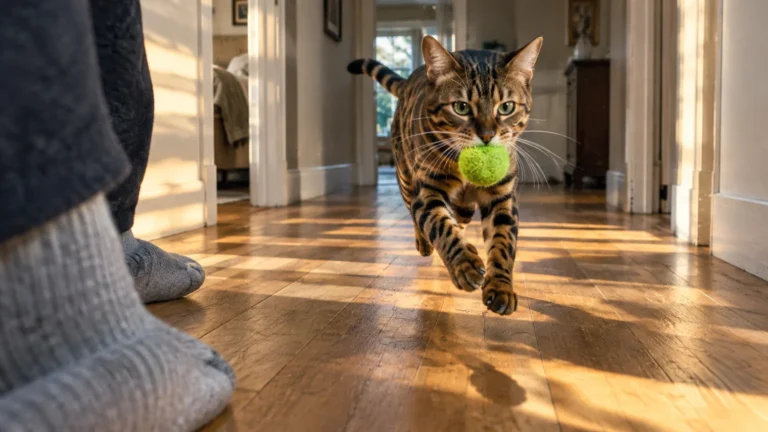
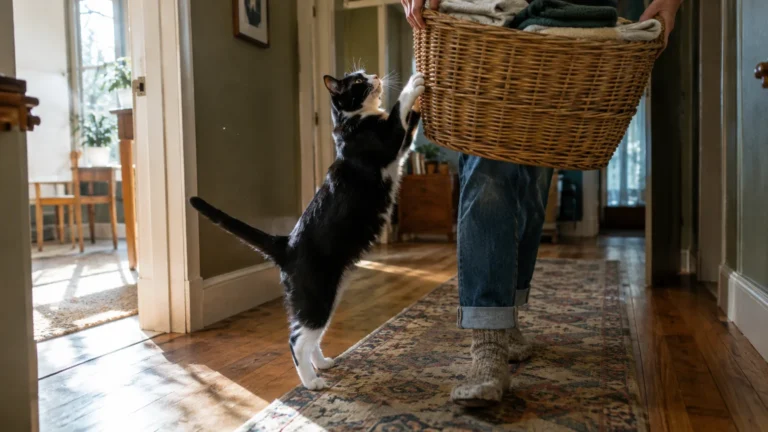
When your cat chooses to connect with you, they share subtle behavioral markers refined over millennia. Recognizing these signs unlocks a deeper understanding of your feline companion’s internal emotional landscape.
Domestic felines descended from solitary hunters who hid vulnerability at all costs to survive. When a cat drops their defensive armor in your presence, they offer an extraordinary display of biological security.
You can measure this psychological devotion through specific physical cues that signal safety and social acceptance. Here are the primary behavioral signs that prove you have earned your companion’s genuine confidence.

The Evolutionary Blueprint of Feline Affection
To appreciate feline trust, you must first understand the ancestry of Felis lybica, the African wildcat. Unlike pack-oriented wolves, ancestral cats lived as solitary hunters who depended entirely on their own vigilance.
Domestic cats occupy a unique biological status as both predators and prey in natural ecosystems. This dual ecological role hardwires their nervous systems to remain perpetually alert to environmental hazards.
Research indicates that social bonding was not originally essential for feline survival. In evolutionary analyses from Smithsonian Magazine, scientists track how agricultural grain storage first drew wild cats into human settlements.
Over ten thousand years, cats adapted their flexible communication systems to navigate living alongside humans. When a cat forms a close bond with you, they override their ancestral instinct toward guarded isolation.
Groundbreaking investigations confirm that felines develop secure attachments to their primary caretakers. In a study in Current Biology, researchers demonstrated that cats display attachment styles remarkably similar to human infants and dogs.
Understanding these behaviors helps you distinguish between passive tolerance and authentic emotional security. Trust represents an active cognitive choice made by an animal built for autonomous survival.

7 Definitive Behaviors That Reveal Your Cat Trusts You
1. The Deliberate Slow Blink
Direct eye contact between predatory animals usually signals an imminent challenge or physical threat. An unblinking stare causes a cat to assume an adversary is preparing to attack.
When your cat gazes at you and slowly closes their eyes, they deliberately surrender their visual vigilance. By closing their eyelids, your cat communicates that you represent zero threat to their immediate survival.
Behavioral biologists refer to this signature sequence as the feline equivalent of a genuine smile. According to published research in Scientific Reports, cats respond positively when humans initiate slow blinks back toward them.
You can easily practice this subtle language to reassure a hesitant or newly adopted cat. Simply narrow your eyes, close them gently for two seconds, and turn your gaze slightly away.
2. Exposing the Vulnerable Abdomen
A cat lying on their back with their belly fully exposed presents one of nature’s greatest vulnerability displays. The feline abdomen houses vital organs unprotected by dense bone or heavy muscle.
In a defensive conflict, a grounded cat may roll onto their back to fight with all four clawed paws. However, a relaxed posture accompanied by loose limbs reveals complete psychological comfort rather than combative readiness.
Many humans misinterpret this magnificent display as an open invitation for an immediate belly rub. Reaching down to stroke their stomach often triggers a defensive swat or an instinctive biting reflex.
You honor their confidence best by admiring the display without invading their personal space. Praise them softly or stroke their chin instead of disturbing their exposed underside.
3. Head-Bunting and Facial Allorubbing
When your cat pushes their forehead or cheeks against your hands, they engage in a behavior called bunting. This physical gesture represents an essential chemical dialogue rooted in feline scent communication.
Specialized sebaceous glands line your cat’s temples, cheeks, and the corners of their mouth. These scent glands deposit unique pheromones that establish familiarity, safety, and mutual acceptance.
In wild and feral colonies, related felines rub their heads together to construct a shared group scent. By scent-marking you, your cat formally integrates you into their familial social collective.
This tactile mingling replaces unfamiliar environmental odors with comforting, recognized pheromonal signatures. It demonstrates that your presence provides them with profound emotional stability.
4. Deep Sleep in Your Immediate Presence
Sleep represents the single most dangerous activity for an animal in the wild. While asleep, a feline cannot actively monitor predatory threats or detect sudden shifts in their physical environment.
Felines divide their resting time between shallow slow-wave sleep and profound, paralytic rapid-eye-movement sleep. During deep cycles, a cat requires several crucial seconds to regain motor control and wakefulness.
If your cat curls up on your lap or falls asleep beside your head, they designate you as their trusted protector. They rely entirely on your senses to alert them to external dangers while they recharge.
This habit signifies that your cat feels safe enough to completely disarm their internal early-warning systems. Such behavioral relaxation demonstrates that your presence creates an impenetrable safe haven.
5. The Upright Tail with an Inquisitive Hook
A cat’s tail acts as a precise emotional barometer reflecting changes in their autonomic nervous system. Tail movement reveals internal motivation long before facial expressions or vocalizations emerge.
When your cat approaches you with their tail held vertically like an antenna, they signal friendly intentions. The tip often forms an elegant, inquisitive hook resembling a gentle question mark.
Field researchers observe this vertical tail display when colony members greet one another after periods of separation. It exposes their scent glands and indicates an open, non-defensive psychological posture.
You can reinforce this welcoming gesture by offering an extended finger at their eye level. Allowing your cat to initiate contact confirms your respect for their personal autonomy.
6. Rhythmic Kneading and Resonant Purring
Rhythmic pawing, commonly called kneading or making biscuits, originates during the earliest hours of life. Nursing kittens rhythmically push against their mother’s mammary glands to stimulate steady milk flow.
When an adult cat kneads your leg or blanket, they experience a comforting neurochemical regression. They enter a calm state associated with maternal protection and profound nutritional security.
This rhythmic motion frequently pairs with low-frequency purring vibrating between twenty and one hundred forty hertz. These acoustic vibrations soothe the cat’s nervous system while promoting bone density and tissue repair.
When your cat directs this dual behavior toward you, they express complete emotional contentment. You have successfully created an environment that mirrors the absolute security of maternal care.
7. Reciprocal Allogrooming
Cats invest a significant portion of their waking hours meticulously cleaning their fur coats. When your companion begins licking your fingers, arms, or hair, they invite you into their grooming circle.
Biologists classify this interpersonal behavior as allogrooming, a key social mechanism observed across mammalian species. In feline colonies, allogrooming strengthens group bonds and reduces social tensions.
Your cat’s tongue features tiny, backward-facing spines made of keratin called filiform papillae. While these raspy papillae can feel coarse against human skin, their application represents profound social devotion.
By grooming you, your cat blends their distinct scent profile directly with your biological scent. This ritualistic exchange signifies that they view you as a treasured member of their family.

The Neurochemistry of Interspecies Bonding
Beneath these outward physical displays lies a sophisticated cascade of neurochemical interactions. When a bonded cat interacts warmly with you, their brain releases pulses of oxytocin into the bloodstream.
Oxytocin, frequently called the bonding hormone, promotes emotional closeness while dampening sympathetic nervous system activity. This biological response mirrors the physiological changes that occur between human parents and children.
Simultaneously, blood tests reveal that shared affection leads to measurable drops in circulating cortisol levels. Lower cortisol helps regulate immune function, reduce inflammation, and prolong your feline’s active lifespan.
Peer-reviewed veterinary assessments confirm that domestic cats possess remarkable acoustic discrimination skills. According to clinical behavioral guidelines from the Journal of Feline Medicine and Surgery, cats easily differentiate their caregiver’s voice from unfamiliar voices.
Your cat stores your individual vocal patterns and natural scent within their long-term memory architecture. When they perceive these familiar stimuli, their neural pleasure centers activate with rewarding dopamine releases.

How to Protect and Deepen Your Feline Relationship
Building deep trust with a cat requires patience, environmental consistency, and conscious respect for their personal autonomy. Because cats thrive on predictability, establishing clear daily routines minimizes stress hormones.
Always grant your companion the freedom to choose when interactions begin and conclude. Practicing the simple finger sniff consent test prevents unintentional overstimulation and preserves their sense of control.
Present a relaxed, slightly curled index finger at your cat’s nose level from several inches away. If they lean forward and rub against it, they welcome physical contact.
If your cat backs away or remains still, honor their boundary without forcing physical affection. Providing agency shows your companion that their choices matter in your shared home.
You can also enrich their domestic environment with elevated perches and vertical climbing trees. Elevated vantage points allow your cat to observe their territory without feeling cornered or vulnerable.
Interactive hunting play using wand toys also builds strong cooperative bonds between you and your pet. Ending play sessions with a healthy meal satisfies their predatory sequence and produces profound psychological satisfaction.
Frequently Asked Questions About Cat Trust
Why does my cat suddenly nip me while enjoying affection?
Sudden nipping during petting sessions usually stems from sensory overstimulation rather than malice. Repeated strokes can overwhelm sensitive nerve endings located along their spine and near the tail base.
Watch closely for subtle warning signs such as a twitching tail tip, rippling skin, or pinned ears. When you notice these micro-signals, immediately pause touching to allow their nervous system to settle.
Can an adult rescue or feral cat learn to trust a new human?
Adult rescue cats possess remarkable neural plasticity and can form deep bonds despite prior trauma. Earning their trust requires quiet patience, structured feeding routines, and zero forced physical interactions.
Guidance provided by the American Veterinary Medical Association emphasizes that passive presence builds rapid confidence in fearful animals. Sitting quietly in the same room while reading helps them perceive you as a safe companion.
Does my cat following me from room to room always signal trust?
Cats frequently follow trusted human guardians as a natural expression of curious companionship and social attachment. They enjoy observing your daily routines while keeping you within their direct visual radius.
However, if accompanied by incessant vocalization or panic when separated, following can indicate separation anxiety. Ensuring they have independent environmental enrichment helps maintain a confident, emotionally balanced disposition.
How long does it take to establish a secure bond with a cat?
The timeline for building trust varies widely based on individual genetics, early socialization, and previous life experiences. Outgoing kittens may bond within days, whereas under-socialized adult rescues often require months.
Consistency remains the most critical ingredient when building genuine security with any feline companion. Respecting their subtle signals daily ensures your relationship strengthens steadily over their entire lifetime.
Preserving the Wild Bond
Domestic cats remain extraordinary creatures that walk effortlessly between the primeval wild and human domesticity. They have surrendered neither their hunting instincts nor their proud autonomy over millennia of shared history.
When an animal with such deeply ingrained survival instincts chooses to trust you, they offer a profound gift. Treasure every quiet slow blink and gentle head-bunt as proof of a rare, enduring alliance.