Across icy Arctic trenches and remote volcanic islands, certain wild creatures quietly outlive entire human civilizations. You share this planet with vertebrates and marine invertebrates that treat a single century as a brief opening chapter.
Studying the longest living animals gives you practical guidance on wildlife conservation, sustainable seafood choices, and the cellular repair mechanisms that protect aging tissue.
Follow this field expedition to examine verified animal longevity records, understand how slow-aging species anchor fragile food webs, and apply concrete strategies that protect these ancient habitats from modern threats.
Field Notes from the Edge of Time
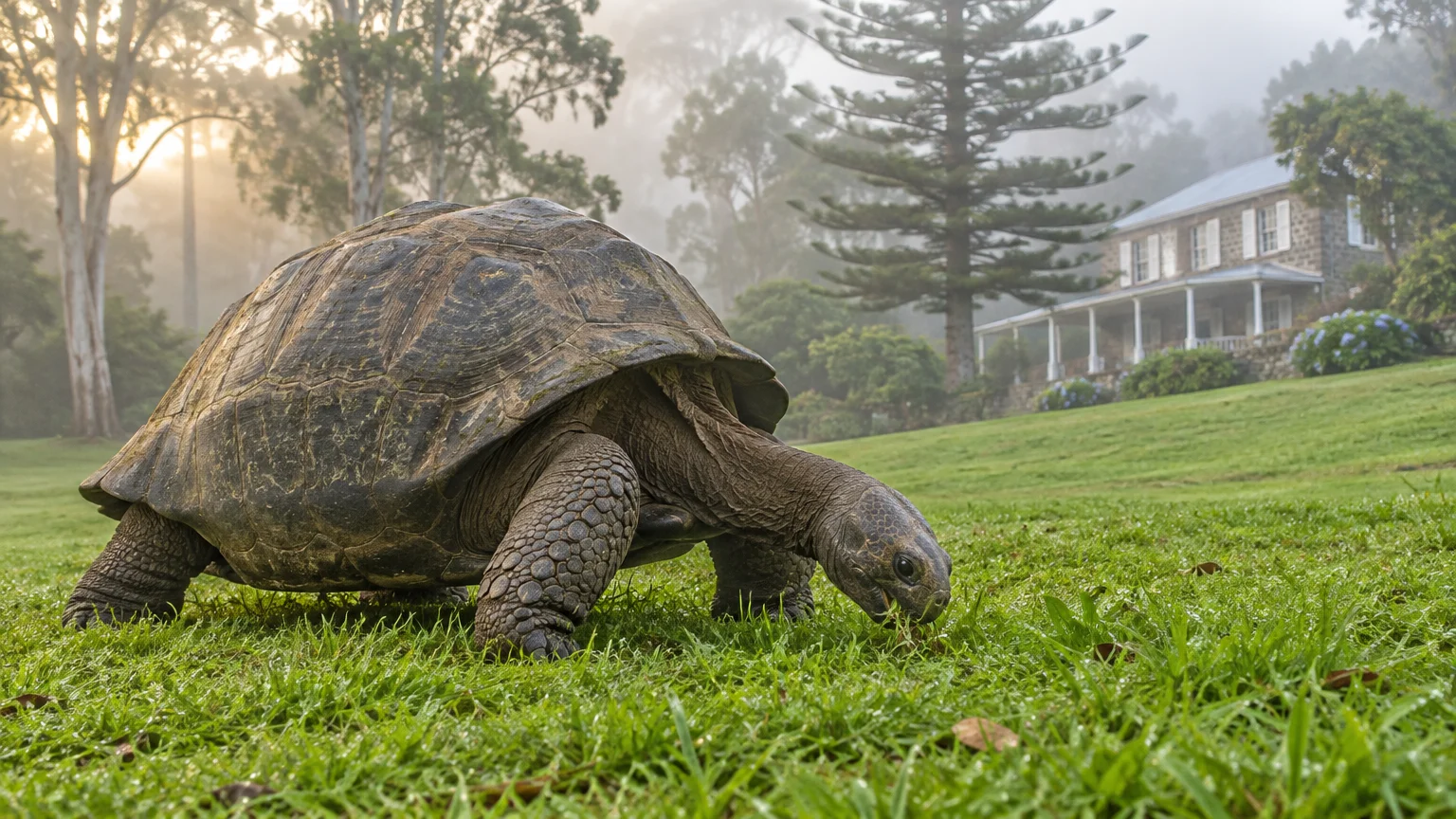
Step onto the damp manicured lawns of Saint Helena in the South Atlantic, and the air smells of eucalyptus and sea salt. A heavy, domed shadow grazes near the grass, moving with the unhurried precision of a creature from another era.
That creature is Jonathan, a Seychelles giant tortoise whose steady footsteps anchor your understanding of terrestrial vertebrate endurance.
Now shift your compass north toward frigid Arctic currents where light barely penetrates the ocean surface. Beneath drifting sea ice, Greenland sharks glide through near-freezing darkness while bowhead whales surface along narrow ice leads.
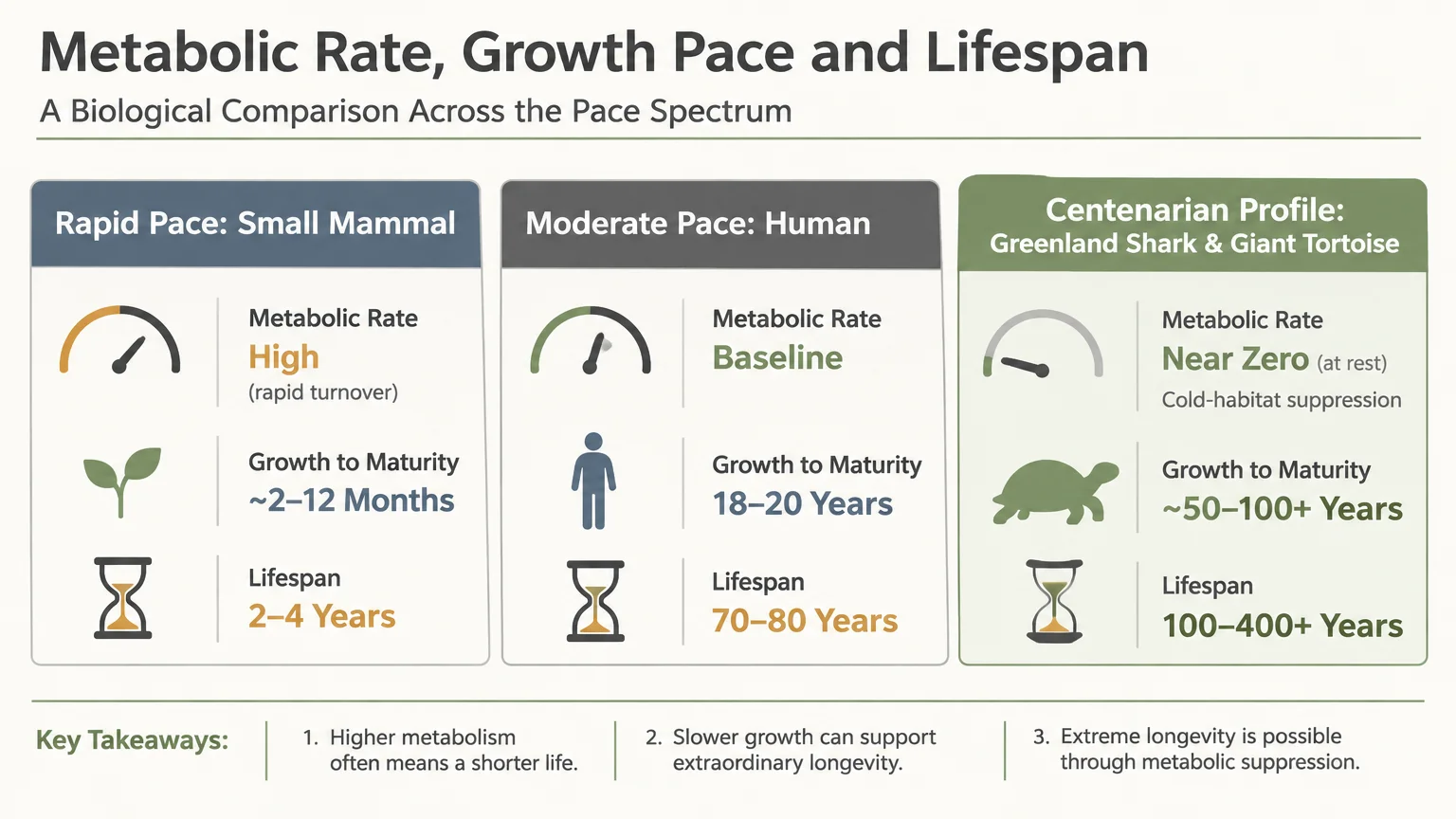
Tracking animals that live over 100 years forces you to rethink how biological clocks work across contrasting habitats. Most mammals burn energy rapidly, grow fast, and fade within a few decades.
Extreme centenarians follow a radically different rulebook shaped by cold temperatures, low metabolic rates, and fortified DNA repair. When you observe these animals or evaluate wildlife reports, look closely at growth pace rather than body size alone.
You can apply that same observation skill whenever you visit coastal aquariums, read conservation news, or plan wildlife tours. Slow maturity signals high ecological vulnerability, meaning every single adult survivor matters far more than in a fast-breeding species.
Landbound Giants That Outlast Centuries
Jonathan and the Giant Tortoise Lifespan
Jonathan, a Seychelles giant tortoise (Aldabrachelys gigantea hololissa), remains alive in 2026 at roughly 194 years old. He hatched around 1832 and arrived on Saint Helena in 1882 as an adult of at least 50 years.
Saint Helena Governor Nigel Phillips assigned Jonathan an official birthday of December 4, 1832 in 2022. In June 2026, Guinness World Records named him an official ICON and reaffirmed his status as the oldest known living land animal.
His dual title also recognizes him as the oldest verified chelonian ever recorded. When an April 1, 2026 online death hoax sparked widespread confusion, the Saint Helena Government swiftly refuted the rumor on April 2, 2026.
While a typical Seychelles tortoise lifespan averages 120 to 150 years, Jonathan has pushed far past that benchmark. Recent genetic breakthroughs explain how giant tortoises sustain healthy tissue across such vast stretches of time.
An October 2026 study published in Science Advances, coauthored by University of Cambridge biologist Justin Gerlach and reported by CNN, examined tortoise cellular aging. Researchers found that slow metabolic rates correspond directly to slower genetic and cellular aging than humans experience.
If you observe captive giant tortoises at accredited sanctuaries, pay attention to their deliberate breathing and sparse daily movement. Conserving energy protects their cells from oxidative stress, showing why calm, undisturbed habitats extend reptile lifespans.
The Tuatara: New Zealand’s Century-Old Living Relic
Reptiles do not need massive shells or giant proportions to cross the century mark. Across cool offshore islands of New Zealand, the lizard-like tuatara (Sphenodon punctatus) can live well past 100 years in the wild and in carefully managed sanctuaries.
Consider Henry, a famous male housed at New Zealand’s Southland Museum. Henry proved that reproductive vitality can persist well past a century when he first mated in 2009 at an estimated age of 111 years.
Tuataras thrive in cool temperate conditions that keep their metabolism remarkably low compared to tropical lizards. For travelers and conservation supporters, protecting predator-free island reserves remains the single best step you can take to safeguard these slow-breeding reptiles.
Cold-Water Titans of the Deep
Greenland Sharks and the Architecture of Slow Time
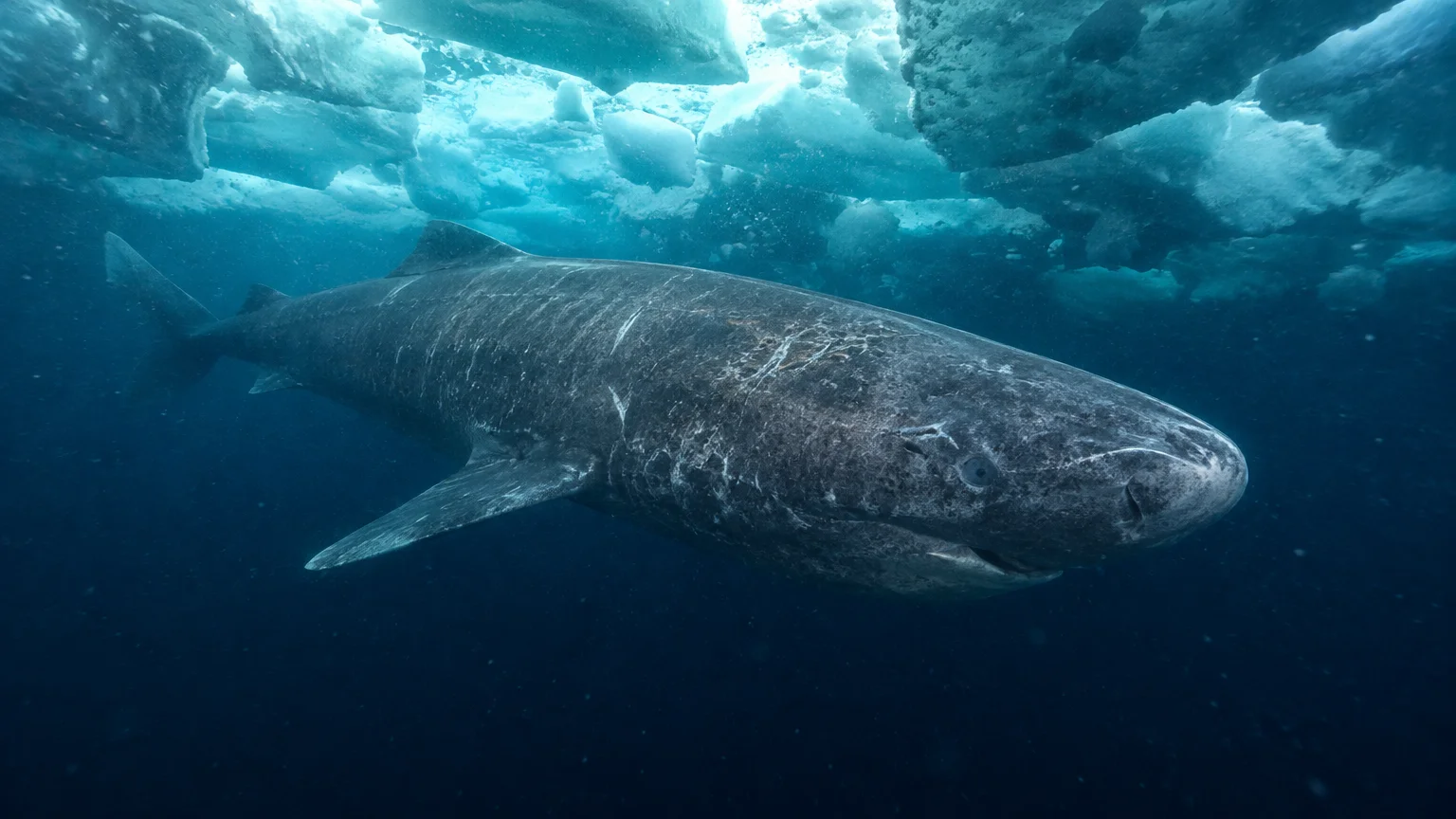
Slip beneath icy North Atlantic waters and you enter the domain of the oldest known vertebrate on Earth. The Greenland shark (Somniosus microcephalus) patrols deep, cold basins with a sluggish grace that masks an astonishing evolutionary triumph.
Traditional fish aging fails on this shark because its skeleton lacks calcified ear bones. To solve that puzzle, Julius Nielsen and colleagues turned to radiocarbon dating of eye-lens nuclei from 28 females, publishing their findings in Science in August 2016.
Their measurements established a minimum lifespan of 272 years across the sampled sharks. The largest individual, measuring 502 centimeters long, yielded an estimated age of 392 plus or minus 120 years, placing its true age between 272 and 512 years.
Every milestone in a Greenland shark’s lifecycle unfolds in extreme slow motion. Females grow less than one centimeter per year and do not reach sexual maturity until roughly 156 plus or minus 22 years of age.
Even pregnancy stretches across generations, with an estimated gestation period lasting 8 to 18 years. That glacial reproductive schedule leaves populations poorly equipped to absorb accidental fishing mortality, earning the species a Vulnerable listing on the IUCN Red List.
Genomic tools are revealing how these sharks resist tumors across centuries. A May 2026 PNAS study assembled its 5.9 Gb chromosome-level genome, finding unique substitutions in linker histone H1.0 predicted to boost chromatin stability.
The researchers also found expanded DNA-repair, immune, and cancer-resistance genes. Earlier September 2024 preprint work by the University of Copenhagen and Fritz Lipmann Institute identified a unique TP53 tumor-suppressor insertion and duplicated double-strand DNA-repair genes.
As a citizen conservationist, you can support policies that mandate deep-water bycatch reduction gear in northern fisheries. Keeping hooks and trawl nets out of deep Arctic trenches protects juveniles that will not breed for another century.
Bowhead and Southern Right Whales: Cellular Armor in Cold Seas
Warm-blooded marine mammals face intense metabolic demands in polar oceans, yet baleen whales still shatter expectations for mammalian longevity. The bowhead whale (Balaena mysticetus) holds the verified crown as the oldest known mammal, with confirmed individuals living past 211 years.
Scientists initially verified these extraordinary ages using physical clues embedded directly in whale tissue. Nineteenth-century harpoon points recovered from blubber, paired with baleen isotope analysis and eye-lens amino acid racemization, proved individual whales survived over two centuries.
How does a mammal carrying massive cell counts escape the cancer rates that limit shorter-lived species? University of Rochester researchers published breakthrough evidence in Nature, reported in October 2025 and July 2026, showing bowhead cells rely on precision DNA repair.
Their study revealed that bowhead whale cells produce a cold-inducible repair protein called CIRBP at levels 100 times higher than other mammals, including humans. Instead of destroying damaged cells, CIRBP helps bowhead tissue mend broken DNA strands accurately.
Bowhead whales are not the only cetaceans outlasting earlier scientific estimates. Survivorship-curve modeling by Breed and Corkeron, reported in 2026 using decades of photographic tracking, showed southern right whales (Eubalaena australis) can live over 130 years.
That finding nearly doubles the roughly 70-year lifespan biologists previously assumed for the species. You can support whale longevity research by choosing certified boat operators that follow strict approach distances and contribute fluke or callosity photos to long-term catalogs.
Long-Lived Bony Fish and Freshwater Survivors
Marine and freshwater bony fishes also hide remarkable centenarians beneath inconspicuous scales. Along deep Pacific rocky reefs, the rougheye rockfish (Sebastes aleutianus) has been verified to reach up to 205 years of age.
Deep-sea oreos (Oreosomatidae) live up to 170 years based on otolith-increment and radiometric dating. Meanwhile, the commercially harvested orange roughy (Hoplostethus atlanticus) reaches up to 149 years in deep ocean waters.
Use this seafood rule at any fish counter or restaurant menu. Avoid orange roughy and deep-water rockfish unless verified sustainable, because harvesting century-old fish removes an ecosystem’s most productive breeding stock.
Freshwater rivers hold their own quiet elders that often go unrecognized by anglers. Using otolith growth rings and bomb radiocarbon dating, biologists verified that the bigmouth buffalo (Ictiobus cyprinellus) lives at least 127 years in North American watersheds.
Even captive freshwater fish can illuminate extreme vertebrate lifespans when cared for consistently. In 2023, researchers determined that an Australian lungfish named Methuselah was 92 to 101 years old, making her the oldest living fish in captivity at that time.
Supporting catch-and-release etiquette for native rough fish like bigmouth buffalo protects irreplaceable breeding adults. Treating native freshwater species with the same respect given to prized game fish preserves healthy river food webs for future generations.
Invertebrates Measuring Time in Millennia
Ming the Clam and Single-Body Records
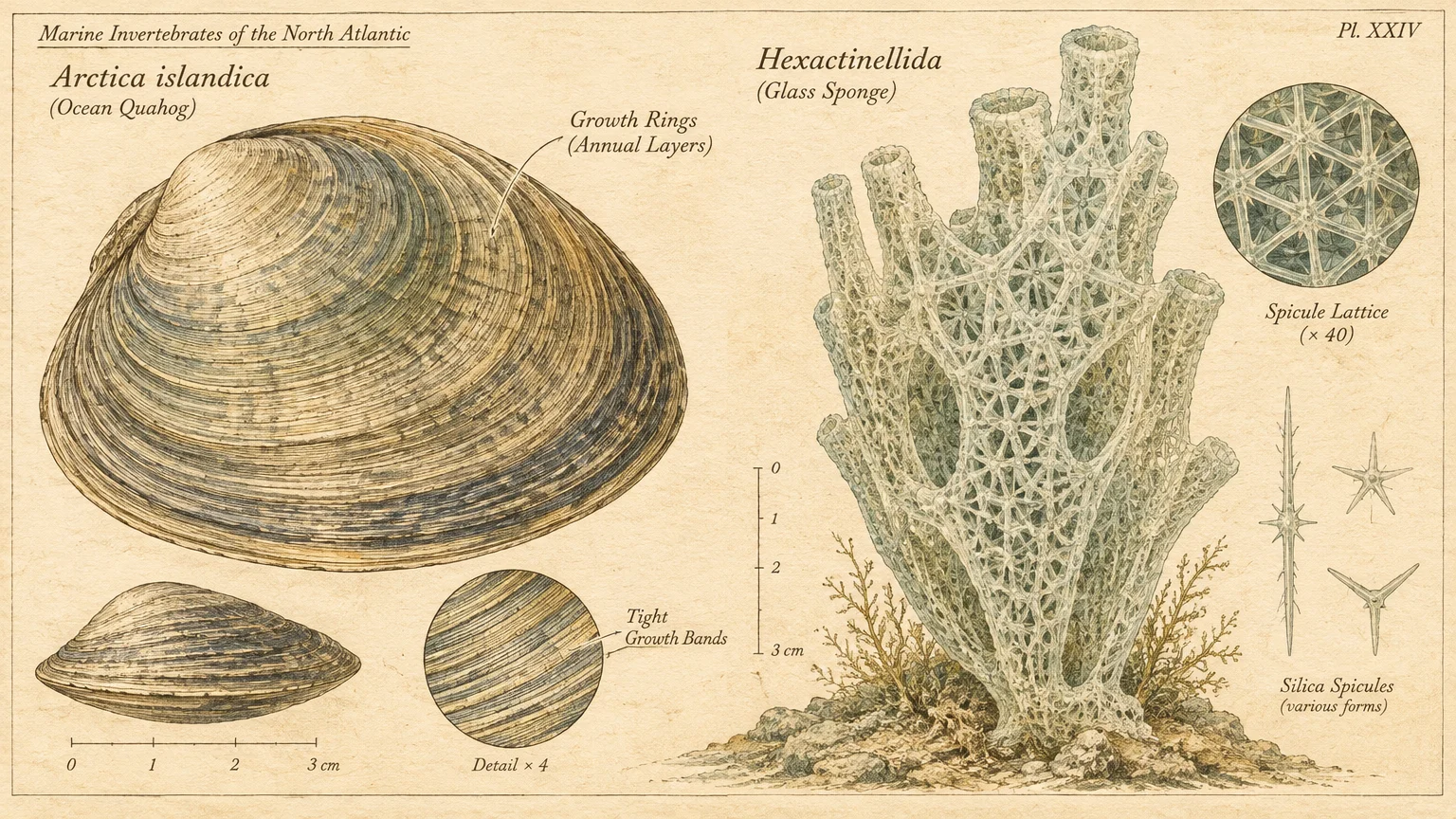
Leave vertebrates behind and animal longevity expands from centuries into half-millennia. Dredged off northern Iceland in 2006 by Bangor University researchers, an ocean quahog clam (Arctica islandica) nicknamed Ming rewrote biological records after surviving from roughly 1499.
Biologists initially counted 405 shell growth bands before revising the age in November 2013 with carbon-14 dating. The update confirmed Ming reached 507 years old, earning Guinness World Records recognition as the oldest non-colonial individual animal ever discovered.
Bivalves and echinoderms across cool waters share similar traits of slow growth and tough shells. Freshwater pearl mussels (Margaritifera margaritifera) reach 210 to 250 years in clean, silt-free rivers, while red sea urchins (Mesocentrotus franciscanus) surpass 200 years along rocky coastlines.
Along Pacific mudflats, large geoduck clams can live past 160 years buried safely beneath sediment. Deeper on the ocean floor around chemical cold seeps, specialized tubeworms thrive without sunlight for centuries.
Cold-seep tubeworms such as Escarpia laminata regularly live 100 to 200 years, with verified specimens exceeding 300 years. Neighboring seep species like Lamellibrachia luymesi also survive past 170 years by partnering with sulfur-oxidizing bacteria inside their tissues.
You can protect river-dwelling centenarians like freshwater pearl mussels by keeping agricultural runoff, road salt, and lawn fertilizers out of local storm drains. Clear, well-oxygenated streams allow fragile mussel larvae to attach safely to host fish and start another multi-century life.
Colonial Architects of the Abyss
When animals grow as connected colonies rather than solitary bodies, individual lifespans blur into geological time. In March 2009, Roark and colleagues published radiocarbon measurements in PNAS revealing astonishing ages among deep-sea black corals growing along dark ocean ridges.
Measuring growth rates of only 4 to 35 micrometers per year, the team dated Leiopathes colonies at 4,265 years and Gerardia colonies at 2,742 years. Because each coral houses many cooperating polyps, biologists classify them as colonial organisms.
Deep-sea sponges push structural endurance even further back in time. In April 2012, Max Planck Institute for Chemistry researchers dated a silica spicule over two meters long from the glass sponge Monorhaphis chuni in the East China Sea.
Their chemical dating placed that single structural anchor at roughly 11,000 years old. Further south in frigid waters, the Antarctic sponge Cinachyra antarctica has been estimated at 1,550 years, while some deep-sea glass sponges carry age estimates up to 15,000 years.
These ancient skeletons form vital three-dimensional reefs where fish, crabs, and brittle stars shelter from deep currents. A single bottom-trawling pass can shatter a structure that required millennia to build, making deep-sea marine sanctuaries essential for ocean resilience.
Separating Verified Science from Longevity Myths
Popular wildlife stories frequently exaggerate animal lifespans, making critical media literacy an essential skill for nature enthusiasts. Before sharing viral animal facts, compare dramatic claims against peer-reviewed aging techniques and museum verification.
Keep established benchmarks in mind as your baseline for terrestrial vertebrates. The oldest fully documented human, Jeanne Calment, lived 122 years and 164 days before dying on August 4, 1997, making humans the longest-lived land mammal on record.
Among birds, a sulphur-crested cockatoo known as Cocky Bennett reportedly lived from 1796 to 1916, reaching 120 years as the oldest known bird on record. Yet other famous tales collapse under rigorous scientific scrutiny.
Consider the widely shared story of Hanako, a scarlet koi claimed to have lived 226 years from roughly 1751 to 1977. In April 2021, Snopes rated Hanako’s legendary age unproven because no peer-reviewed studies or official historical records confirm it.
California Academy of Sciences curator Dave Catania noted that scale-ring counting—the method cited for Hanako—is the least reliable way to age carp, which typically live 40 to 50 years. Scales erode, regrow, and blur growth lines throughout a fish’s life.
Similar caution applies to viral crustacean and eel headlines lacking laboratory dating. Claims around George, an American lobster estimated at 140 years by PETA in 2009, and Åle, a European eel reportedly 155 when it died in 2014, lacked scientific verification.
Neither animal underwent validated otolith radiocarbon dating or amino acid racemization. Whenever you evaluate an extraordinary longevity headline, check whether researchers examined eye lenses, ear stones, or shell bands rather than body weight or owner memory.
Ecological Anchors and Conservation Stakes
Why Slow-Aging Species Matter to Whole Ecosystems
Extreme longevity is never a biological quirk isolated from the surrounding food web. When predators like Greenland sharks or grazers like giant tortoises live past a century, they stabilize energy flow and nutrient cycling across generations.
On oceanic islands, grazing tortoises disperse hardy seeds and clear woody brush, maintaining open grasslands for ground-nesting birds and insects. In deep oceans, centuries-old black corals and glass sponges trap drifting organic matter and build nursery habitats for commercial fish.
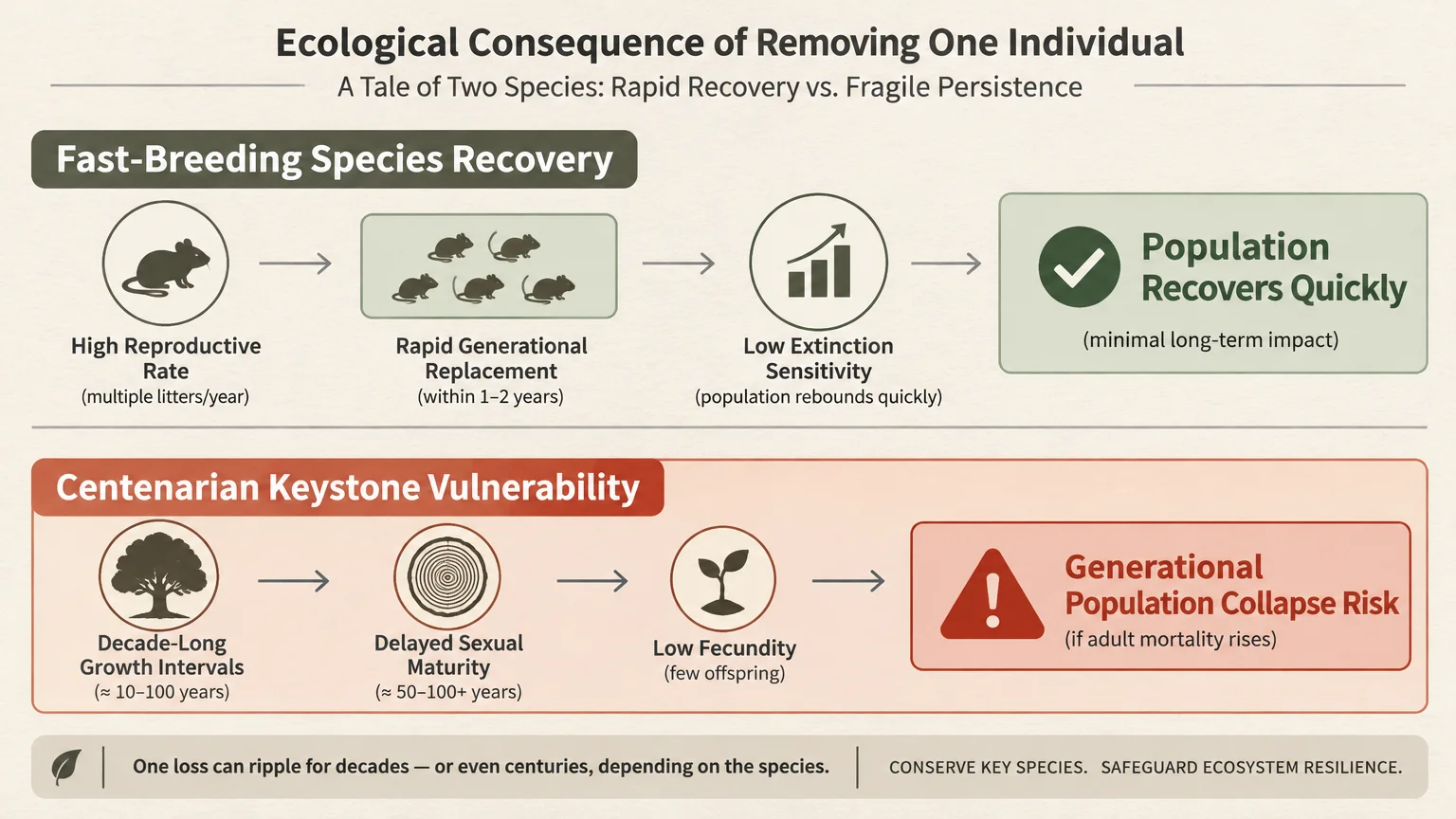
That ecological importance makes slow-aging species dangerously vulnerable to sudden human disturbance. An animal that waits more than a century to reproduce cannot rebound quickly after habitat clearing, ocean warming, or heavy fishing pressure.
Removing mature breeding adults collapses future generations before juveniles even reach reproductive age. Protecting these elders requires conservation policies tailored to multi-decade timelines rather than short election or budget cycles.
Concrete Steps You Can Take Today
You do not need an expedition grant to defend the planet’s oldest wildlife. Start at your dinner table by checking seafood guides before purchasing slow-growing deep-sea fish like orange roughy or deep-water rockfish.
Redirecting your spending toward fast-maturing, well-managed fisheries takes direct commercial pressure off century-old spawning aggregations. When traveling to coastal regions or island sanctuaries, vet wildlife tour operators carefully before booking your trip.
Choose guides who keep vessels idle near surfacing bowhead or southern right whales and enforce strict no-touch rules around tortoises. Responsible tourism dollars reward local communities for keeping ancient animals wild and undisturbed.
If you spot tagged sea turtles, stranded marine mammals, or photographed whale flukes along the coast, submit clear images to regional sighting databases. Decades of photographic tracking helped researchers follow southern right whales long enough to nearly double their known lifespan estimates.
Finally, advocate for expanding deep-sea marine protected areas that ban bottom-contact trawling gear over seamounts and coral ridges. Keeping heavy nets off the seabed safeguards glass sponges and black corals that began growing before recorded history.
Field Correspondent FAQ
Where can you responsibly see centenarian animals in person?
You can visit Jonathan on Saint Helena through regulated viewing near Plantation House, or observe accredited giant tortoise and tuatara habitats at conservation-focused zoos and island reserves. Wild whale-watching tours along southern coastlines also offer safe glimpses of right whales.
Always pick facilities and tour operators accredited for animal welfare rather than roadside attractions that allow handling or feeding. Respecting barriers keeps stress low and protects elderly reptiles from human-borne pathogens.
Is it safe to approach ancient tortoises, whales, or sharks?
Keep a respectful distance from every centenarian species, regardless of how calm or slow it appears. Giant tortoises possess powerful jaws capable of severe bites, while startling a resting whale risks dangerous tail strikes or vessel collisions.
Greenland sharks patrol freezing waters far below recreational dive limits and carry toxic compounds in their flesh. Observing through binoculars, telephoto lenses, or aquarium viewing glass keeps both you and the animal safe.
Why does saving one century-old individual matter so much?
Older females in many fish, shark, and tortoise populations produce more eggs or stronger offspring than young breeders. Losing a single mature adult erases accumulated survival resilience and reproductive potential that takes generations to replace.
Preserving elder individuals also keeps genetic diversity intact inside fragmented populations. In slow-breeding species, every surviving adult acts as a living insurance policy against environmental shocks.
How does rapid ocean warming threaten animals built to live for centuries?
Many extreme centenarians rely on cold water to maintain low metabolic rates and stable cellular repair. Warming currents force polar species like bowhead whales and Greenland sharks into shrinking thermal refuges while introducing unfamiliar competitors and diseases.
Ocean acidification and shifting food webs also stress filter feeders like clams, mussels, and deep-sea corals that build calcium carbonate or silica skeletons. Cutting fossil fuel emissions and protecting cold-water refuges buys these ancient lineages crucial time to adapt.
Stepping Back into Deep Time
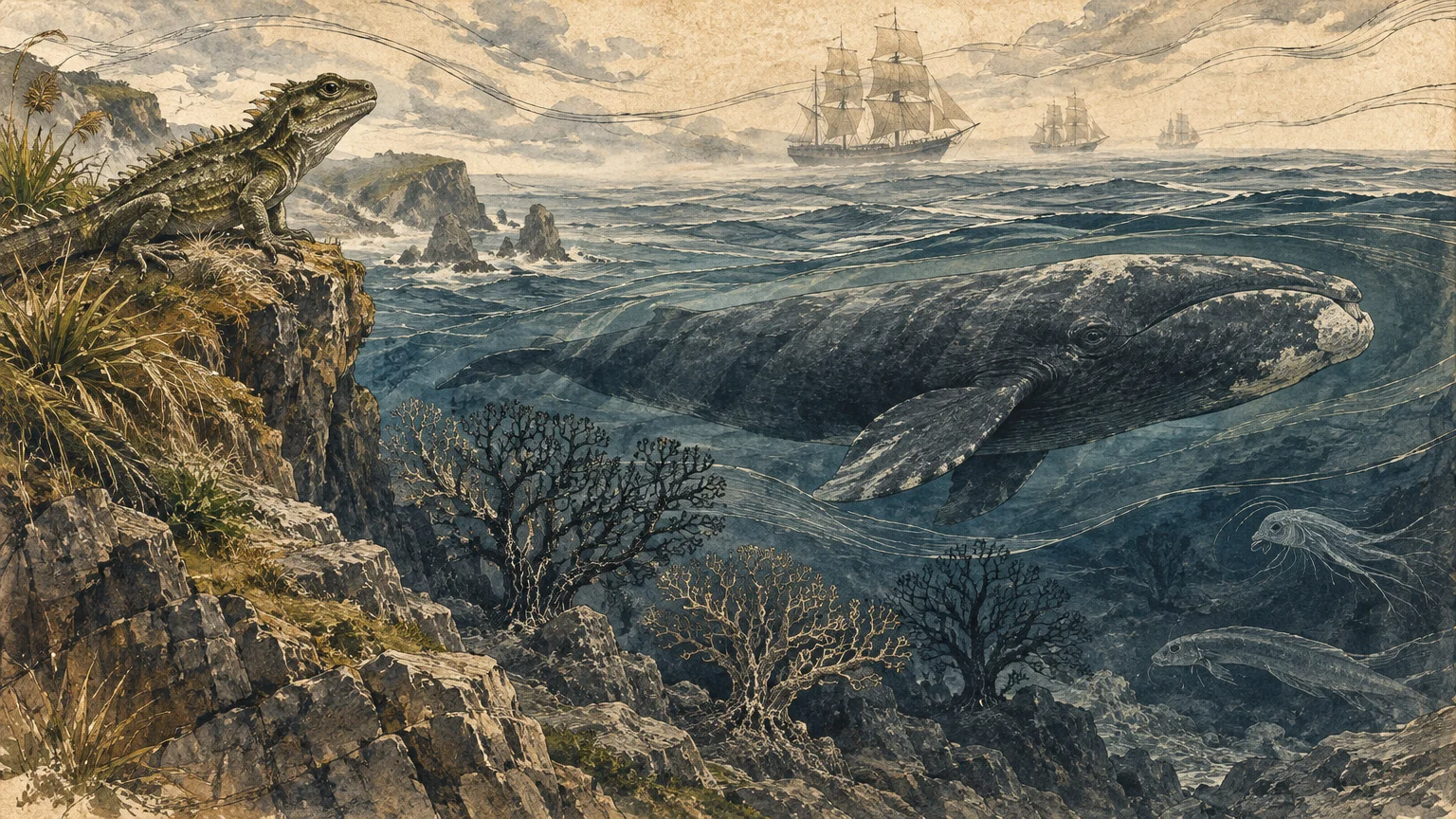
Picture Jonathan shifting slowly across Saint Helena’s grass while a Greenland shark glides silently through black Arctic water far to the north. Both creatures carry living cellular histories forged long before modern cities, highways, or satellite networks existed.
Their endurance proves that rushing is rarely nature’s winning strategy over the long run. When you align your daily habits—from seafood choices to coastal stewardship—with the patient pace of ancient wildlife, you help keep Earth’s oldest living stories unfolding.