
Picture your cat greeting you at the door tonight—tail curled high, slow blinks steady, and purrs vibrating against your shins. You might wonder whether choosing a sleek Abyssinian, fluffy Maine Coon, or shelter tabby reveals something hidden about your personality.
Animal behavior science offers a surprising answer that reaches far beyond any playful cat personality quiz. While your cat’s pedigree cannot predict your life story, your daily habits, emotional rhythm, and care choices actively shape your companion.
Exploring the real link between cat breeds and cat owners’ personality traits helps you build a calmer, happier bond starting tonight.
What Science Actually Says About Cat Breed Personality
Lighthearted quizzes love pairing purebred cats with human archetypes, yet no peer-reviewed evidence proves a specific cat breed predicts your psychological profile. Most cat households form through serendipity rather than strict breed shopping.
Cat ownership keeps booming across diverse demographics right now. According to the American Pet Products Association’s 2026 Cat Report, 53 million U.S. households—39% of all homes—owned at least one cat in 2025, following a 23% surge in 2024.
That report also shows men now represent 43% of U.S. cat owners, with Gen Z male ownership climbing 27% year over year. Meanwhile, the American Veterinary Medical Association’s 2025 Sourcebook estimates 76.3 million U.S. pet cats, averaging 1.8 cats per household.
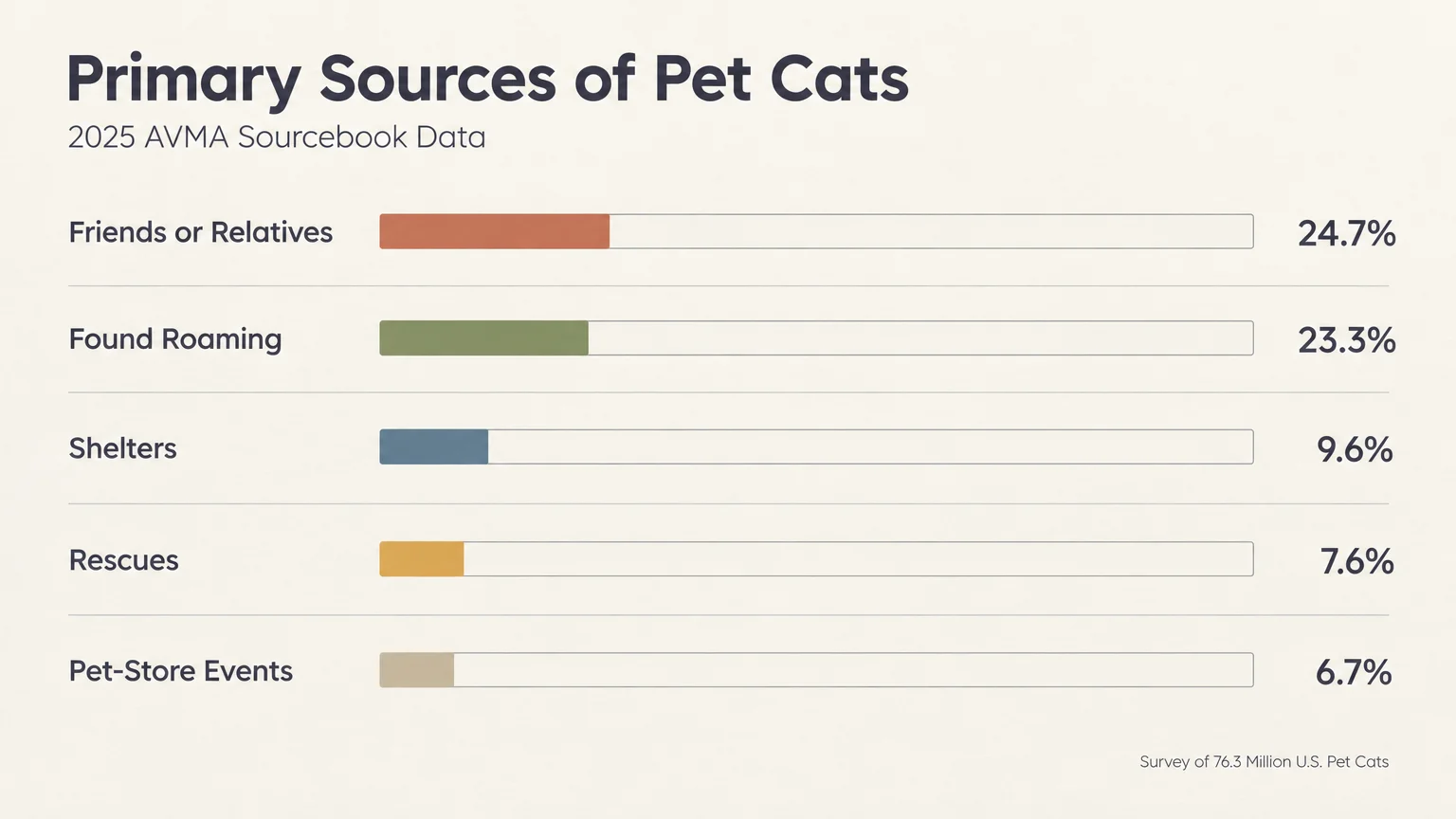
How you meet your cat rarely involves a formal breeder contract. Per the 2025 AVMA Sourcebook, 24.7% of cats came from friends or relatives, 23.3% were found roaming, 9.6% arrived from shelters, 7.6% came from rescues, and 6.7% joined from pet-store events.
How Genetics Shape Feline Traits
Even though your cat’s family tree does not define your personality, genetics genuinely influence feline behavior. You can use breed tendencies as practical clues when planning playtime, social routines, and home layouts.
In a 2019 Scientific Reports study from the University of Helsinki, Salonen and colleagues analyzed 5,726 cats across 40 breeds. Researchers documented statistically significant breed differences across 10 behavioral traits, including activity, human contact, shyness, grooming, wool-sucking, and aggression.
Genetic heritability in Ragdolls, Maine Coons, and Turkish Vans ranged from 0.40 to 0.53 across seven behavioral traits. Cornish Rex, Korat, and Bengal cats topped activity scores, while British Shorthairs ranked least aggressive toward family and strangers.
A 2021 University of Helsinki follow-up by Mikkola and colleagues in Animals surveyed 4,316 cats across 56 breeds plus mixed-breed house cats. The team identified five personality traits—activity, fearfulness, human aggression, human sociability, and feline sociability—alongside litterbox and over-grooming challenges.
Across those traits, breed acted as a primary predictor rather than coat color or pattern. Knowing that biology drives energy more than fur color saves you from misreading a fiery tortoiseshell or mellow orange tabby.
Researchers at the University of South Australia and Victoria University of Wellington also mapped feline temperament in a 2017 PLOS ONE study. Analyzing 2,802 pet cats, Litchfield and colleagues established the Feline Five dimensions: Neuroticism, Extraversion, Dominance, Impulsiveness, and Agreeableness.
How Your Personality Mirrors and Shapes Your Cat
While breed biology sets your cat’s baseline, your human temperament steers how those traits unfold indoors. Researchers have studied both what draws you to cats and how your habits affect their stress levels.
In a 2010 Anthrozoös study of 4,565 participants at the University of Texas at Austin, Gosling, Sandy, and Potter compared self-identified cat and dog people. Cat people scored significantly higher on Openness to experience and Neuroticism, reflecting creativity and emotional sensitivity.
A narrower 2017 study by Guastello and colleagues in the Human-Animal Interaction Bulletin examined 418 undergraduates using a 16-factor questionnaire. In that sample, cat people scored higher on general intelligence, abstractedness, and self-reliance without showing extra anxiety.
Even more importantly, your daily emotional steadiness directly impacts feline welfare. In a 2019 PLOS ONE study of over 3,300 owners, Finka and colleagues at Nottingham Trent University and the University of Lincoln uncovered striking parallels to parent-child dynamics.
Owners scoring higher in neuroticism more often lived with cats showing fearfulness, aggression, stress-related illness, chronic medical issues, and excess weight. Conversely, higher owner conscientiousness correlated with less anxious, aggressive, and avoidant cat behaviors.
That finding hands you tremendous power as a caregiver. When you build predictable routines and respond calmly to sudden messes, you directly buffer your cat against chronic stress.
Pet Profiles: Popular Cat Breeds and What Your Choice Reflects
Around 95% of pet cats worldwide are non-pedigreed mixed-breed companions—Domestic Shorthairs, Mediumhairs, or Longhairs—according to feline genetics data from Basepaws. Yet the remaining pedigreed world offers fascinating insights into what different adopters prioritize.
The Cat Fanciers’ Association recognizes 45 pedigreed breeds for competition, including Toybob, which is advancing to full championship status for 2025–2026. Meanwhile, The International Cat Association recognizes 73 standardized breeds worldwide.
Every breed preference carries distinct health responsibilities alongside temperament perks. A 2023 VetRecord study by Hadar and colleagues, reviewing Swedish Agria insurance records for roughly 550,000 cats, highlighted clear contrasts between purebreds and domestic crossbreds.
Purebred cats carried higher relative risks for heart disease, lower respiratory infections, immunological conditions, female reproductive trouble, and surgical complications. Domestic crossbreds showed higher rates of endocrine, skin, and mobility issues, likely tied to greater outdoor roaming.
Whether you adore a top pedigreed breed or a shelter mix, matching your lifestyle to your cat’s physical and emotional needs keeps everyone thriving. Review these profiles based on the CFA’s 2026 popularity rankings to spot your best match.
The Gentle Giants: Maine Coon, Ragdoll, and Siberian
In the CFA’s 2026 rankings, the Maine Coon holds the number-one spot for the second straight year, followed by the Ragdoll at number two and the Siberian at number eight. Adopters drawn to these plush companions usually love cozy evenings and steady, affectionate rituals.
You likely value loyalty and predictability if you gravitate toward giant breeds. These cats frequently follow their favorite humans from room to room, greeting guests calmly instead of darting under the bed.
Large frames require oversized essentials from day one. Choose extra-wide litterboxes with low entry sides, heavy-duty scratching posts that never wobble, and elevated dishes that protect tall necks during meals.
Prioritize annual veterinary checkups that include careful heart auscultation, because large pedigreed breeds face elevated heart disease risks. Brush dense coats three times weekly using a wide-toothed steel comb to prevent painful mats behind the ears and legs.
The Placid Loungers: Persian, Exotic, and British Shorthair
Ranking third, fourth, and seventh on the CFA’s 2026 list, Persians, Exotics, and British Shorthairs appeal to peaceful homebodies. If you crave a serene apartment atmosphere with minimal chaos, these low-key companions fit your rhythm beautifully.
Remember how University of Helsinki researchers found British Shorthairs scored lowest on aggression toward family and strangers. You probably appreciate gentle boundaries, soft voices, and slow afternoons spent reading beside a quietly purring friend.
Flat-faced Persians and Exotics need daily maintenance rather than marathon fetch games. Wipe tear-stained facial folds gently with a damp soft cloth every morning, and monitor breathing closely during warm weather.
Because relaxed breeds burn fewer calories, keep portions measured to prevent obesity and mobility strain. Offer gentle wand play near ground level so stout joints stay limber without demanding risky high jumps.
The High-Energy Explorers: Abyssinian, Devon Rex, and Bengals
Devon Rex cats rank fifth and Abyssinians rank sixth in the CFA’s 2026 registration data, joining athletic favorites like Cornish Rexes, Korats, and Bengals. Choosing an agile climber suggests you thrive on curiosity, humor, and lively household interaction.
You likely enjoy active problem-solving and do not mind a clever companion supervising your laptop keyboard or kitchen counters. University of Helsinki data ranked Cornish Rex, Korat, and Bengal cats at the very top for daily activity.
Without structured outlets, high-drive cats invent their own entertainment—often by knocking fragile mugs off bookshelves. Install sturdy floor-to-ceiling cat trees, clear vertical shelf pathways, and rotate puzzle feeders every few days.
Devon Rex coats feel velvety and fine, so keep indoor temperatures comfortable and inspect large ears weekly for wax buildup. Schedule two brisk interactive play sessions daily to channel athletic energy into healthy sleep.
The Steady Companions: American Shorthair, Russian Blue, and Mixed-Breeds
American Shorthairs sit at number nine and Russian Blues at number ten in the CFA’s 2026 rankings, alongside the vast majority of mixed-breed house cats. Choosing an adaptable shorthair or rescue mix points toward pragmatic warmth and openness to surprises.
You probably appreciate balanced personalities—cats that enjoy a spirited chase at dusk yet happily curl beside your feet during movie night. Mixed-breed adopters often embrace shelter roulette, trusting patience and care to reveal each cat’s unique quirks.
Keep mixed-breed cats safely indoors or provide enclosed catio access to avoid the skin and mobility injuries seen in outdoor crossbreds. Pair reliable indoor safety with annual dental exams, which protect long-term kidney and heart health across all ages.
Watch for subtle shifts in appetite or posture as kittens grow into seniors. Early weight checks and routine bloodwork catch endocrine changes, such as diabetes or thyroid shifts, long before emergencies strike.
Your Daily Playbook: Nutrition, Exercise, and Enrichment by Trait
Understanding your cat’s traits only pays off when you translate insight into daily logistics. Small adjustments to meals, movement, and mental puzzles dramatically reduce anxious behaviors regardless of pedigree.
Conscientious caregiving creates the calmest households, just as Finka’s 2019 research demonstrated. When your cat knows exactly when food, play, and rest happen, cortisol drops and trust blossoms.
Feeding Routines That Respect Natural Instincts
Cats evolved as solitary hunters taking small meals throughout the day rather than scarfing one giant bowl. Free-feeding dry kibble often fuels boredom eating and excess weight, especially in relaxed indoor breeds.
Select complete-and-balanced diets carrying clear veterinary nutrition adequacy statements for your cat’s current life stage. Look for high-protein, moisture-rich formulas without paying extra for flashy marketing buzzwords or boutique packaging.
Measure daily portions with a standard kitchen scoop instead of eyeballing bowl depth. Divide daily calories into three or four predictable meals, and serve dinner right after an energetic evening play session.
Boost hydration on a tight budget by adding a tablespoon of warm water to wet food. Choose wide, shallow stainless-steel or ceramic bowls that prevent sensitive whiskers from rubbing against sharp rims.
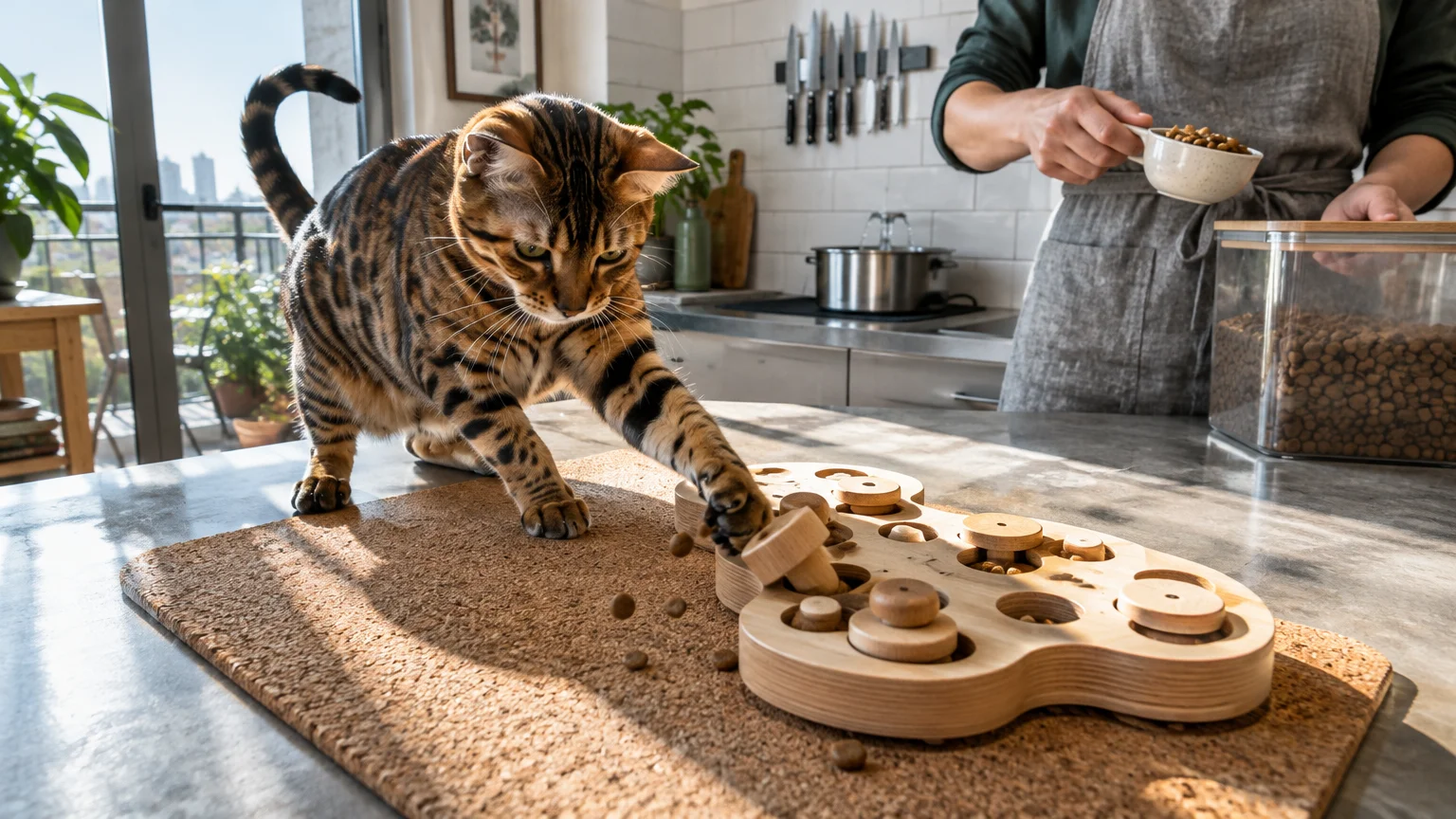
Swap ordinary bowls for DIY puzzle feeders made from clean egg cartons or punched cardboard tubes. Foraging for dry pieces slows rapid gulping and satisfies natural mental drive without costing a dime.
Exercise Plans for High-Drive and Low-Drive Cats
Every healthy cat needs movement, though an Abyssinian and a senior Persian play at very different speeds. Tailor your wand-toy choreography to mirror natural prey instead of waving feathers straight in your cat’s face.
Slide toys slowly behind sofa cushions, pause silently, and dart them away across the rug so your cat stalks and pounces. End every play session by letting your cat catch and chew a safe kick toy to satisfy the hunt.
High-energy explorers benefit from two 15-minute sessions before breakfast and dinner. Low-drive loungers prefer shorter five-minute bursts centered on batting crinkle balls or chasing slow-moving ribbons along the floor.
Keep toy budgets low by rotating three affordable favorites into a closed drawer each Sunday. Bringing out familiar mice or crumpled parchment paper a week later makes old toys feel brand new again.
Mental Enrichment and Socialization at Every Age
Mental stimulation prevents frustration-driven behaviors like wool-sucking, ankle biting, or relentless dawn meowing. Place a sturdy perch beside a sunlit window overlooking a bird feeder or rustling tree branches.
Introduce safe scent enrichment once a week using fresh catnip, silvervine sticks, or a cardboard box dusted with dried chamomile. Always supervise new items and store string toys inside locked closets once playtime wraps up.
Socialize kittens gently during early life by pairing brief nail checks, carrier visits, and guest arrivals with tiny soft treats. For shy adult rescues, let visitors ignore the cat completely while tossing tasty rewards toward a cozy hiding spot.
Multi-cat households are growing rapidly—the APPA 2026 Cat Report notes two-cat homes rose 7% year over year and three-plus-cat homes climbed 45% since 2018. In shared homes, duplicate food bowls, water stations, vertical perches, and beds in separate rooms eliminate silent guarding.
Training and Communication: Reading Cues and Building Trust
Even self-reliant cat owners sometimes misread feline body language—especially when affection feels automatic. Research shows confidence with cats does not always equal accurate handling.
In a 2022 Scientific Reports study at Battersea Dogs and Cats Home, Finka and colleagues observed 120 participants interacting with cats. Surprisingly, people who rated themselves most knowledgeable and experienced touched disliked zones—like the belly and tail base—more often.
Where and How Your Cat Actually Wants to Be Petted
Feline welfare scientists advise letting your cat initiate every cuddle session rather than scooping them up uninvited. Hold out a relaxed knuckle near eye level and wait for a gentle cheek rub before stroking.
Focus your fingertips on scent-gland hotspots: the base of the ears, soft cheeks, and directly under the chin. Pause after three slow strokes to check your cat’s reaction—if they lean back in, continue calmly.
Watch closely for subtle stop signs like twitching skin, flattened ears, a stiffening tail tip, or sudden head turns. Stopping immediately builds fierce loyalty because your cat trusts you to listen the first time.
Step-by-Step Positive Reinforcement Cues
Cats learn remarkably fast when you reward voluntary choices instead of issuing stern commands. Positive reinforcement strengthens mutual trust and turns tricky chores like carrier loading into stress-free games.
Choose tiny, pea-sized soft treats or a smear of plain meat baby food free of onion and garlic. Hold a wooden spoon or finger two inches from your cat’s nose, wait for a sniff, say yes clearly, and deliver the reward.
Once your cat reliably touches that target, hold it inside an open hard-sided carrier to build calm entry. Practice for three minutes daily, gradually closing the door for two seconds before offering praise and dinner.
Never use squirt bottles, loud clap scares, or scolding when your cat jumps onto forbidden surfaces. Fear-based corrections spike anxiety and teach your cat to avoid you rather than avoid the counter.
Troubleshooting Litterbox and Grooming Stressors
Litterbox avoidance and excessive grooming stood out as the two major problem-behavior traits in Mikkola’s 2021 University of Helsinki research. If either pattern pops up at home, call your veterinarian before blaming stubbornness.
Urinary inflammation, arthritis pain, and skin allergies frequently hide behind sudden carpet accidents or bald patches. Only a physical exam and targeted lab tests can clear hidden discomfort safely.
Once your vet rules out medical triggers, upgrade bathroom logistics right away. Set up one large, uncovered litterbox per cat plus one extra, placing each in quiet, low-traffic corners with clear escape routes.
Fill boxes with unscented clumping litter, scoop waste daily, and wash trays gently with mild unscented soap every two weeks. Predictable hygiene paired with calm play routines often resolves stress-driven habits within weeks.

Community, Adoption, and Veterinary Support Networks
You never have to decode complex feline behaviors or chronic health shifts entirely alone. Lean on credentialed shelter teams, fear-free clinics, and science-backed pet organizations whenever questions arise.
Before bringing home a second cat or troubleshooting shyness, consult local foster-based rescues who know individual personalities firsthand. You can also review practical nutrition and enrichment standards in the ASPCA cat care guidelines anytime.
For breed-specific medical questions—such as heart screening or senior kidney care—explore research updates from the Cornell Feline Health Center. Their plain-language guides help you prepare thoughtful questions ahead of annual checkups.
If behavior stress persists, ask your primary clinic for a referral to a board-certified veterinary behaviorist or credentialed trainer. Use Fear Free Pets directories to locate clinics designed around quiet waiting rooms, warm towels, and gentle handling.
For low-stress home management tips across multi-cat households, study evidence-based resources from International Cat Care. You can also verify general wellness checklists through American Veterinary Medical Association pet owner resources or ask your vet about telehealth video check-ins for mild follow-ups.
Frequently Asked Questions
How Do I Prepare My Cat for Travel Without Triggering Stress?
Start carrier desensitization weeks before your trip by leaving the carrier open in your living room with a familiar blanket inside. Toss favorite treats and catnip mice near the doorway daily until your cat naps inside voluntarily.
On travel day, cover the carrier lightly with a breathable towel to block overwhelming visual flashes. Ask your veterinarian well in advance about calming pheromone sprays or prescription travel medications if your cat experiences car nausea or panic.
What Helps Multi-Pet Households Avoid Territory Battles?
Never toss a new cat or dog straight into an open room with resident pets. Keep newcomers in a private sanctuary room with separate bowls and litterboxes while swapping scented blankets between spaces for several days.
Progress to short, treat-filled visual visits across a sturdy baby gate only when everyone stays relaxed. Provide tall vertical walkways so cats can cross shared hallways safely above curious dogs or playful housemates.
How Can I Budget Smartly for Routine and Unexpected Vet Bills?
Open a dedicated monthly pet savings account right after adoption, or price pet health insurance early before pre-existing exclusions apply. Preventive dental cleanings, parasite prevention, and measured portions cost far less than emergency urinary blockages or diabetes management.
Check local humane societies and veterinary schools for low-cost vaccination and microchipping clinics. Keep an eye on everyday spending by investing in durable wand toys and washable bedding rather than disposable novelty gadgets.
What Should My Cat Emergency Plan Include?
Keep one sturdy hard-sided carrier per cat near an accessible closet so you can load pets within seconds during fires or storms. Store a waterproof folder containing vaccination records, microchip registration numbers, and a current photo beside spare dry food.
Research pet-friendly shelters and emergency veterinary hospitals along two evacuation routes before severe weather arrives. Place a visible rescue decal near your front door listing how many cats live inside for first responders.
Start a New Bonding Ritual Tonight
Your cat’s breed may spark fun conversation, yet your patience, curiosity, and steady care define the relationship that truly matters. Forget online personality stereotypes and watch the real cat sitting beside you right now.
Tonight, set your phone down for five quiet minutes and invite your companion into a gentle wand-toy chase followed by dinner. Offer slow blinks, pause for a cheek rub, and enjoy the simple joy of speaking each other’s language.