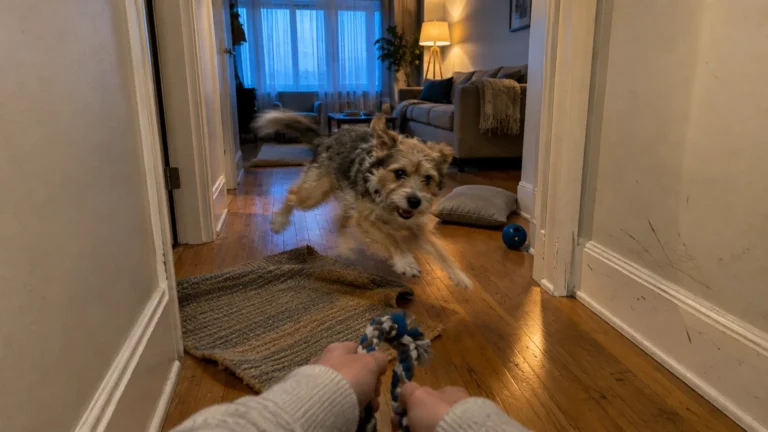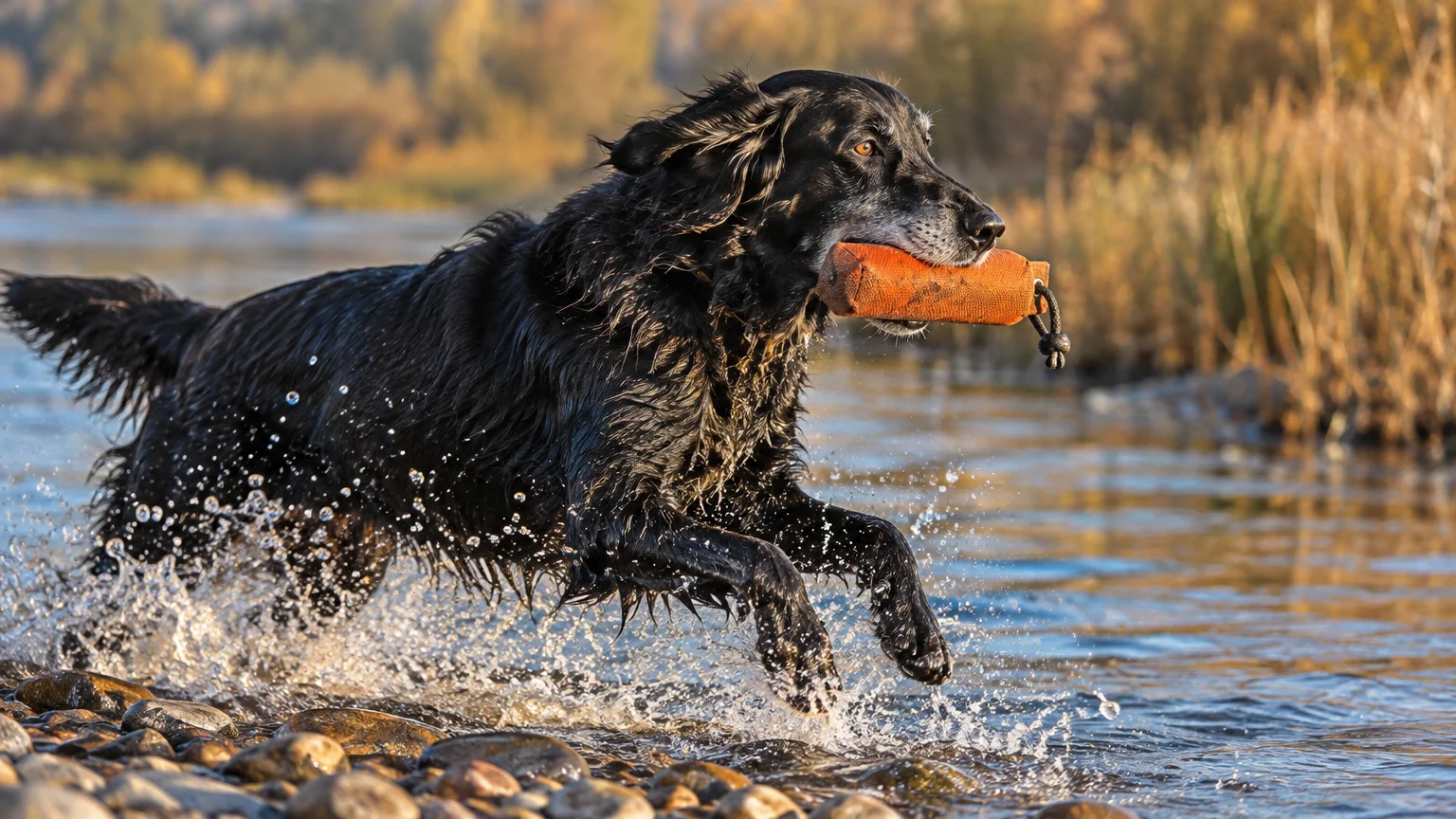
Gray muzzles do not always mean slow mornings. Even at ten or twelve years old, certain energetic dog breeds greet every leash clip with the wild optimism of a young puppy.
Caring for dogs that stay young means matching their lifelong drive with smart health habits. You can protect aging joints while feeding the playful spark that deepens your daily bond.
Explore ten active dog breeds famous for youthful spirit, plus the veterinary benchmarks and routines that keep playful senior dogs thriving.
Why Some Active Dog Breeds Stay Playful Into Old Age
Aging looks very different from one dog to the next. Under the 2023 Senior Care Guidelines from the American Animal Hospital Association (AAHA), a dog enters the senior stage during the final 25% of its estimated lifespan.
Body size shifts that timeline sharply. The American Veterinary Medical Association (AVMA) generally considers small dogs senior around age seven, while larger breeds reach senior status at five or six years old.
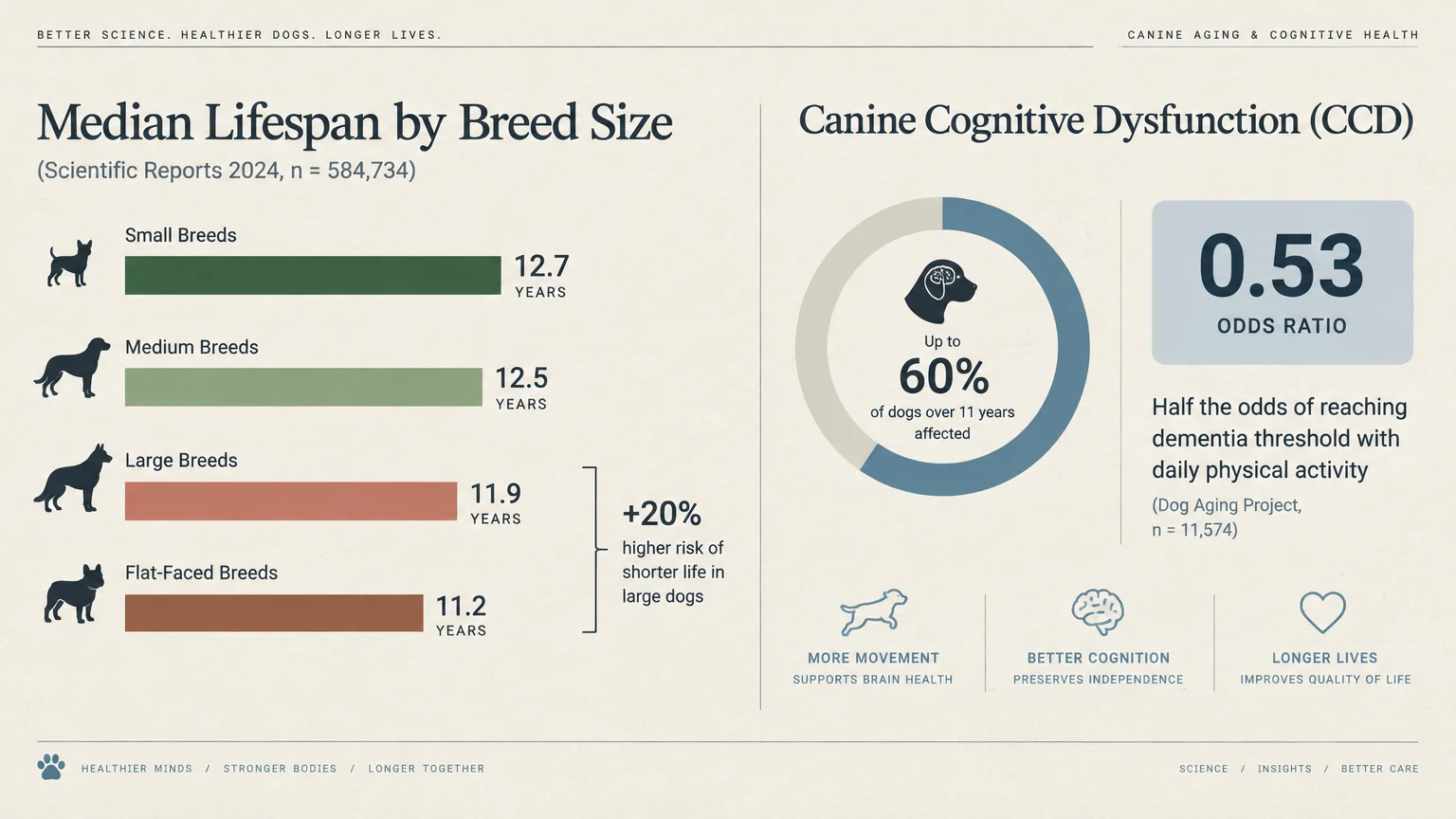
A 2024 Scientific Reports study by Dogs Trust and Kirsten M. McMillan analyzed 584,734 UK dogs across 155 breeds and reported an overall median lifespan of 12.5 years. Small breeds reached 12.7 years, medium breeds hit 12.5 years, and large breeds averaged 11.9 years.
Large dogs carried a 20% higher risk of a shorter lifespan than small dogs in that dataset. Flat-faced breeds averaged 11.2 years and faced a 40% higher risk of shorter lives than medium-snouted breeds.
Bigger dogs do not simply hit retirement earlier. A 2013 The American Naturalist study of 74 breeds by Kraus and colleagues concluded that large breeds die younger because they age at a faster physiological rate.
Even as tissues age, working heritage keeps many dogs mentally bright. Breeds shaped for herding, retrieving, or flushing still crave purposeful jobs and interactive play well past middle age.
Staying physically engaged protects the aging brain, too. A 2023 Dog Aging Project study of 11,574 dogs aged six to 18 found that higher physical activity correlated with milder Canine Cognitive Dysfunction (CCD) symptoms.
Active companions in that research showed roughly half the odds—an odds ratio of 0.53—of reaching the clinical dementia threshold. That protection matters because CCD occurs in up to 60% of dogs over 11 years old.
The 10 Energetic Dog Breeds That Refuse to Act Their Age
Every dog ages as an individual, yet certain breeds stand out for keeping their bounce into double-digit years. These ten profiles pair verified size and lifespan metrics with practical ways you can support their youthful energy.
1. Flat-Coated Retriever
Few dogs earn the label of eternal teenager quite like the Flat-Coated Retriever. According to the American Kennel Club (AKC), Flat-Coats mature slowly and keep a puppyish taste for rambunctious mischief well into old age.
Males stand 23 to 24.5 inches tall, females measure 22 to 23.5 inches, and both sexes weigh 60 to 70 pounds. Because their AKC life expectancy spans 8 to 10 years, every healthy, playful season counts.
Channel their endless joy into water retrieves and soft-surface scent games rather than high-jumping catches. Schedule semiannual wellness checks early so your veterinarian can catch lumps or joint stiffness before they slow your dog down.
2. Australian Cattle Dog
Built for rugged endurance, the Australian Cattle Dog rarely forgets how to hustle. Males reach 18 to 20 inches, females stand 17 to 19 inches, and adult dogs weigh 35 to 50 pounds with a 12-to-16-year life expectancy.
This breed even holds the official longevity crown. Guinness World Records recognizes Bluey (1910–1939), a female Australian Cattle Dog, as the oldest verified dog ever at 29 years and five months.
Older Cattle Dogs still crave structured problem-solving over aimless backyard pacing. Trade high-impact frisbee leaps for herding-ball games on flat grass, trick refreshes, and brisk morning walks.
3. Border Collie
A graying Border Collie still watches your every move for the next assignment. AKC profiles list heights of 19 to 22 inches for males and 18 to 21 inches for females, weighing 30 to 55 pounds.
Border Collies carry an AKC life expectancy of 12 to 15 years and achieved a UK median lifespan of 13.1 years in the 2024 Scientific Reports study. Their sharp minds stay hungry for novelty long after puppyhood ends.
Prevent repetitive ball-chasing injuries by rotating into nosework, low-bar cavaletti poles, and new cue chains. Five minutes of focused brainwork satisfies a senior Border Collie far better than exhausting sprint sessions.
4. Australian Shepherd
Australian Shepherds pair Velcro devotion with a sunny, comical streak that lingers for years. Males stand 20 to 23 inches and weigh 50 to 65 pounds, while females stand 18 to 21 inches at 40 to 55 pounds.
Expect a 12-to-15-year lifespan filled with enthusiastic greetings and vocal commentary. Many senior Aussies still race to the front door with a favorite plush toy whenever family members return home.
Protect their agile backs and hips by putting down non-slip rugs across slick floors. Keep them active with short trail hikes, hide-and-seek games indoors, and steady weight management.
5. Standard Poodle
Beneath those sculpted curls beats the heart of an athletic water retriever. Standard Poodles boast an impressive AKC life expectancy of 10 to 18 years, giving active households a remarkably long runway together.
Mature Standard Poodles love swimming, retrieving, and mastering complex multi-step tricks well into their teens. Their low-shedding coat requires regular brushing and ear checks, which also give you weekly chances to inspect skin and joints.
Keep dental hygiene tight and offer padded resting spots to protect bony elbows. When you keep a Poodle’s mind busy, their playful curiosity rarely dims.
6. Vizsla
Warm, sensitive, and built like a lean marathoner, the Vizsla stays deeply attached to your side at every age. Males stand 22 to 24 inches at 55 to 60 pounds, while females stand 21 to 23 inches at 44 to 55 pounds.
With a 12-to-14-year life expectancy, senior Vizslas still trot happily beside joggers who dial back the pace. Their short, single coat offers minimal insulation, so brisk mornings call for a snug fleece jacket.
Swap long pavement runs for soft-trail walks and backyard scent hunts as your Vizsla ages. Afterward, expect your senior to curl tightly under a blanket right against your knees.
7. Labrador Retriever
America’s longtime favorite family athlete keeps its goofy enthusiasm long after silver hairs frame the chin. Labs held the top AKC registration spot for 31 straight years before the French Bulldog claimed first place for four consecutive years.
Males stand 22.5 to 24.5 inches at 65 to 80 pounds; females stand 21.5 to 23.5 inches at 55 to 70 pounds. AKC lists an 11-to-13-year life expectancy, while the 2024 UK longevity study recorded a 13.1-year median.
Swimming lets older Labradors chase bumpers without pounding heavy shoulders and hips. Pair water play with strict portion measuring, because extra pounds drain senior stamina fast.
8. Golden Retriever
Golden Retrievers wear their optimism on their sleeves, carrying shoes or tennis balls to greet guests well into twilight years. Males stand 23 to 24 inches at 65 to 75 pounds; females reach 21.5 to 22.5 inches at 55 to 65 pounds.
Their AKC life expectancy averages 10 to 12 years, making proactive senior wellness essential. Gentle tug games, shallow stream wading, and relaxed neighborhood patrols preserve their sunny outlook without overtaxing stiff knees.
Schedule regular veterinary exams to monitor heart health and check any new skin lumps promptly. Lean muscle mass and daily affection keep senior Goldens glowing.
9. Boxer
Few sights rival an eight-year-old Boxer bursting into a full-body wiggle dance over a fresh walk. Males measure 23 to 25 inches and weigh 65 to 80 pounds, while females stand 21.5 to 23.5 inches and weigh roughly 15 pounds less.
Boxers carry a 10-to-12-year life expectancy and retain an endearing clownish streak throughout adulthood. Because their shorter muzzle reduces cooling efficiency, shift outdoor play to cool dawn or dusk hours during warm months.
Keep play bursts brief, offer constant shade and water, and ask your veterinarian about routine cardiac checks. Calm, joyful games keep your Boxer’s spirit bright without risking heat or heart strain.
10. Parson Russell Terrier
If you want compact rocket fuel in a portable frame, look to the Parson Russell Terrier. Males stand 14 inches tall, females measure 13 inches, and adults weigh just 13 to 17 pounds with a 13-to-15-year lifespan.
Senior terriers regularly outlast expectations with fearless curiosity and bouncy stamina. They still love investigating backyard scents, shredding safe cardboard puzzles, and racing after ground-level flirt poles on grassy lawns.
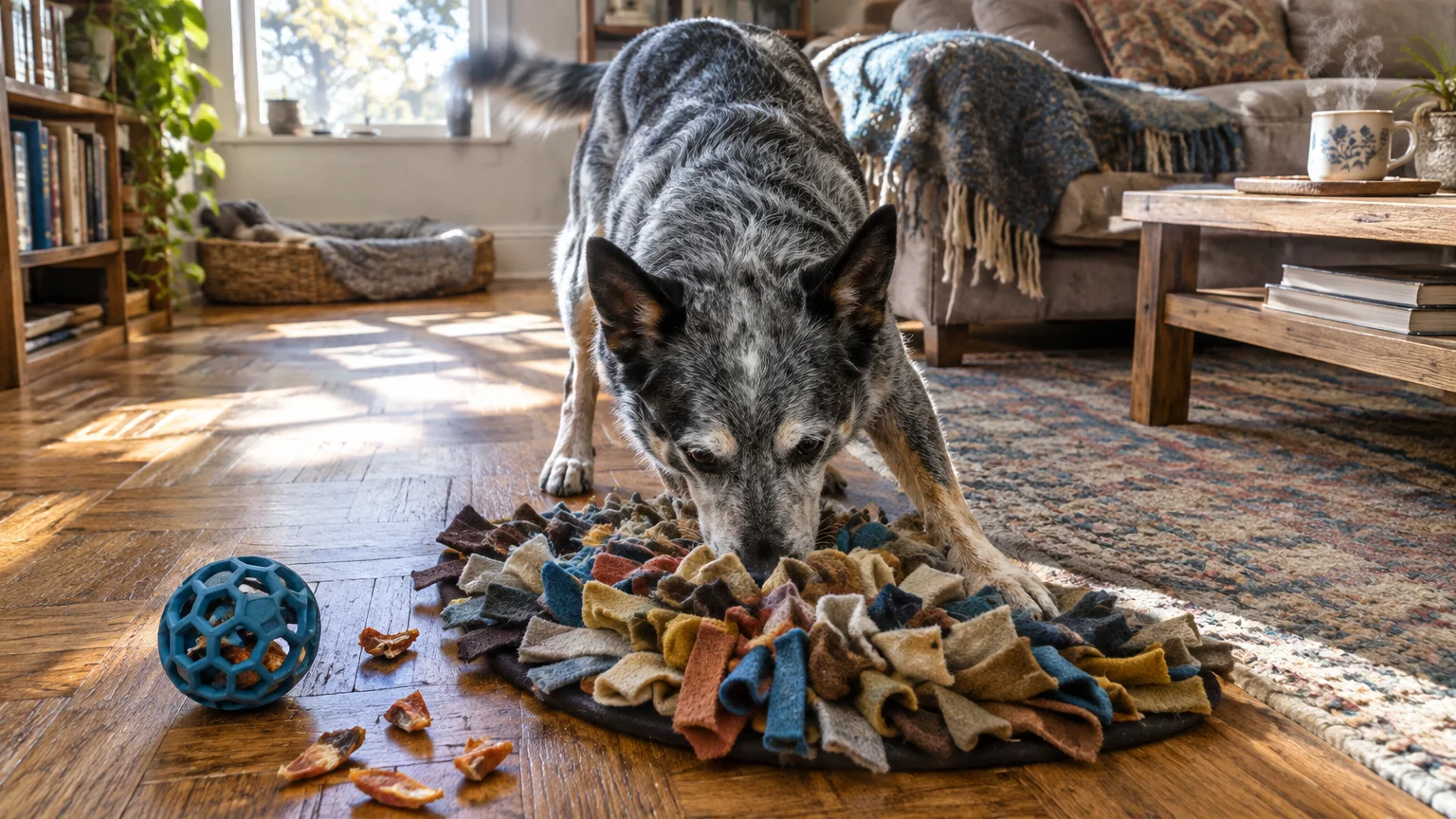
Give your aging terrier a designated sand digging box or snuffle mat to channel natural instincts safely. Watch stairs and couch jumps closely so small, speedy knees stay sound.
Your Daily Playbook for Playful Senior Dogs
Genetics spark youthful enthusiasm, yet your daily habits decide how comfortably your dog expresses it. Small adjustments to meals, movement, and mental games protect active seniors without draining your budget.
Nutrition and Weight Control for Aging Athletes
Healthy senior dogs typically require 1.2 to 1.4 times their resting energy requirement each day, according to the Merck Veterinary Manual. That translates to roughly 440 to 510 calories daily for a 20-pound dog and 875 to 1,020 calories for a 50-pound dog.
Keeping playful senior dogs lean protects both mobility and longevity. Yet the Association for Pet Obesity Prevention reported in its 2022 survey that veterinary professionals classify 59% of U.S. pet dogs as overweight or obese.
In that same survey, 32% of owners with overweight pets believed their dog’s weight looked normal, ideal, or thin. Run your fingertips gently along your dog’s ribcage weekly; you should feel individual ribs easily beneath a thin coat of fat.
Use a kitchen scale or leveled measuring scoop rather than eyeballing kibble portions. Count training treats toward daily calories, and swap high-calorie biscuits for crisp green beans, blueberries, or tiny single-ingredient freeze-dried meat pieces.
Fresh hydration keeps aging kidneys, joints, and digestive tracts running smoothly after play. Place wide, non-slip water bowls on every level of your home so stiff companions never skip a drink.
Joint-Friendly Exercise and Mobility Upgrades
High-drive dogs frequently mask soreness until stiffness limits daily routines. Veterinary prevalence data indicate osteoarthritis affects roughly 20% of dogs over age one and climbs to 80% of dogs over eight years old.
Do not stop exercising when arthritis or mild stiffness appears. Veterinary guidance recommends trading jarring, high-impact leaps for small, frequent, low-impact movement throughout the week.
Break one exhausting weekend hike into two or three brisk 15-minute strolls on forgiving dirt paths or grass. Swimming and structured physical rehabilitation—including hydrotherapy and targeted exercise therapy—build protective muscle around vulnerable joints.
The 2023 AAHA Senior Care Guidelines also advise practical home upgrades that prevent painful slips. Lay inexpensive yoga mats or rubber-backed runner rugs down slick hallways where excited seniors tend to scramble.
Install a folding ramp for vehicle loading, keep a fitted chest-and-belly support harness handy for stairs, and raise food bowls slightly if neck or front-limb discomfort shows up.
Mental Enrichment and Socialization on a Budget
Mental fatigue satisfies energetic dog breeds far more gently than high-speed sprints. Twenty minutes of focused sniffing engages brain circuits deeply while giving older hips a welcome break.
Turn afternoon outings into unhurried sniff walks where your dog chooses the direction and investigates safe neighborhood scent posts. Indoors, scatter kibble inside crumpled packing paper, rolled bath towels, or empty egg cartons for zero-cost foraging.
When shopping for enrichment tools, skip noisy electronic gadgets in favor of food-grade silicone lick mats, dishwasher-safe puzzle trays with smooth edges, and resilient natural rubber chews matched to your dog’s jaw strength. Freezing plain pumpkin or wet food onto a lick mat stretches calm focus across 20 quiet minutes.
Social time still nourishes playful senior dogs when tailored to calmer energy. Arrange gentle parallel leash walks with one familiar, polite canine buddy rather than risking rough collisions inside crowded dog parks.
Training and Communication for Older Dogs With Puppy Energy
Old dogs learn new routines eagerly when you adjust communication for changing senses. Clear visual cues and smart pacing keep training fun, safe, and frustration-free.
Step-by-Step Coaching for Smooth Transitions
Hearing often softens before enthusiasm fades in dog breeds for active owners. Pair every verbal command with a crisp, consistent hand gesture so your senior can read you effortlessly from across the yard.
Step one: Hold a soft, fragrant treat near your chest, flash an open-palm recall signal, and wait one beat before saying your recall word. Step two: Reward warmly the instant your dog reaches you, then gradually phase out visible food lures over several brief sessions.
If your exuberant senior still leaps at arriving guests, redirect that energy onto a padded mat near the entryway. Toss three tiny treats onto the mat each time the doorbell chimes so all four paws stay safely grounded.
Keep practice rounds under five minutes and train on carpeted floors or grass. Cushion underfoot prevents rear legs from slipping during sits, downs, and turns.
Reading Subtle Signals Before Play Turns Into Strain
Playful senior dogs will chase a rolling ball straight past mild discomfort unless you step in as their pace-setter. Watch closely for heavy open-mouth panting, glazed focus, lagging steps, or bunny-hopping hind legs mid-game.
Set a three-minute phone timer during lively tug or short-toss sessions. When it chimes, cheerfully cue an end to play and scatter a handful of kibble across the lawn to guide heart rates downward.
Notice quiet morning stiffness, hesitation before car rides, or sudden grumpiness when you touch hips or paws. Share those subtle clues with your veterinarian promptly rather than assuming your dog simply feels moody.
Veterinary Checklists, Community Networks, and Rescue Support
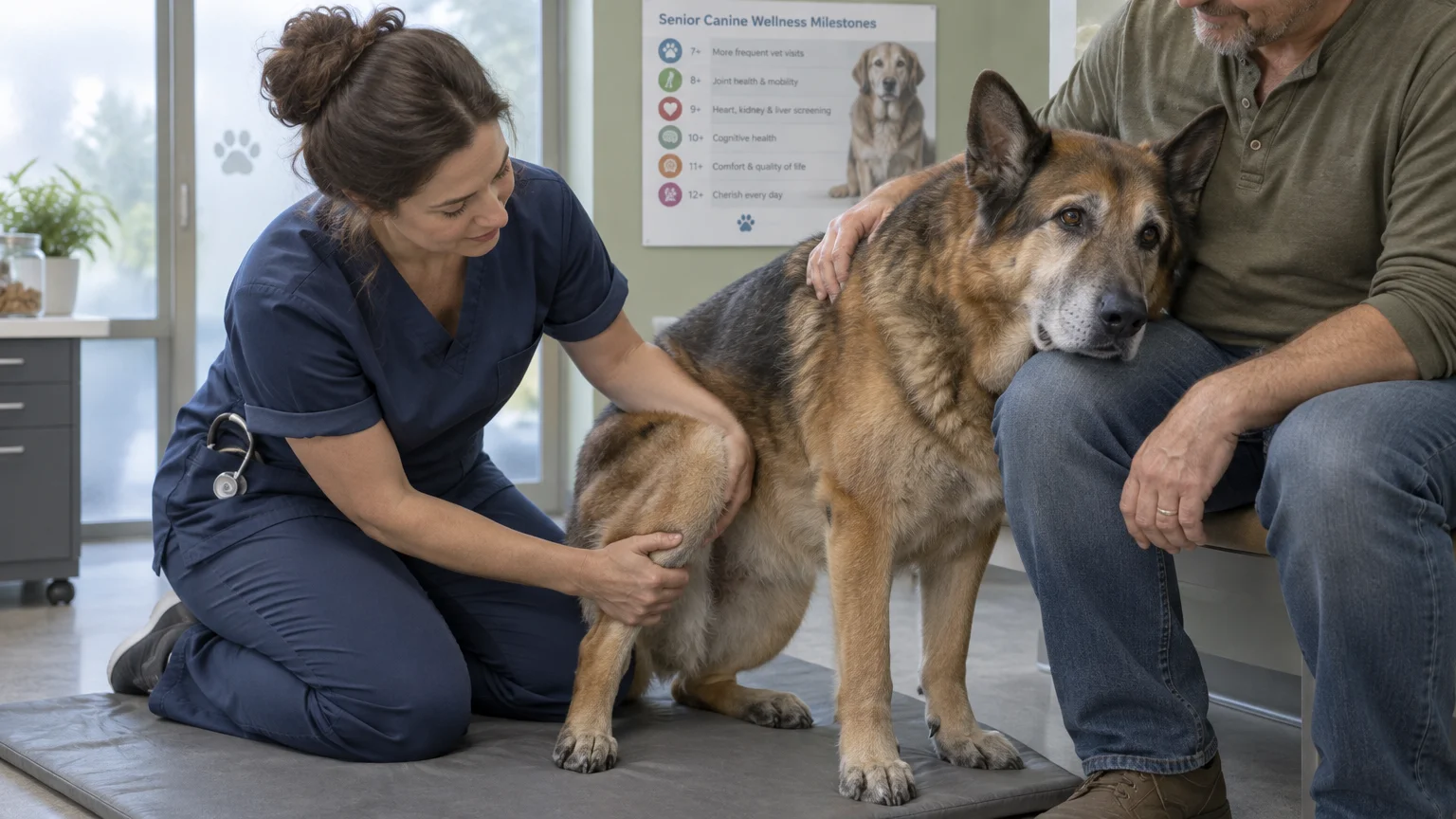
Proactive healthcare keeps active dog breeds moving comfortably long after gray hairs appear. Following the 2023 AAHA Senior Care Guidelines, book veterinary wellness exams every six to 12 months once your companion reaches senior status.
Request a complete blood count, chemistry panel, and urinalysis every six to 12 months, plus annual thyroid and blood pressure screenings. Early lab trends help your veterinarian fine-tune nutrition, pain relief, or thyroid support before vigor drops.
You can review senior screening checklists through the American Animal Hospital Association and explore aging care guidance from the American Veterinary Medical Association.
If you hope to welcome an older, spirited dog into your family, breed-specific rescue groups and local shelters regularly place house-trained seniors whose temperaments are already clear. Browse senior adoption resources at the ASPCA or compare breed exercise traits through the American Kennel Club.
When new behavioral shifts appear—such as dusk restlessness or mild leash frustration—seek credentialed, force-free coaching through the Association of Professional Dog Trainers. Many clinics also offer video telehealth follow-ups for routine mobility adjustments, sparing stiff dogs extra car rides.
Frequently Asked Questions About Active Senior Dogs
How Do You Travel Safely With an Energetic Senior Dog?
Restrain your dog in a crash-tested harness or padded travel crate, and use a sturdy non-slip ramp instead of letting your senior leap from tall tailgates. Plan stops every two hours for short sniff breaks, fresh water, and gentle stretching.
Can a Playful Senior Dog Live Happily in a Multi-Pet Household?
Yes, as long as you guard your older dog’s quiet recovery spaces using baby gates and separate meal stations. Supervise wrestling with energetic puppies closely so exuberant tumbles never strain aging backs or joints.
How Should You Budget for a Senior Dog’s Active Lifestyle?
Build a dedicated monthly pet-care fund for semiannual bloodwork, therapeutic diets, or physical rehabilitation sessions before urgent needs arise. Rely on DIY cardboard foraging puzzles for daily enrichment while directing dollars toward joint comfort and preventive diagnostics.
What Belongs in an Emergency Plan for an Aging Active Dog?
Pack a grab-and-go folder holding current medication doses, recent lab results, your nearest 24-hour emergency clinic address, and a fitted support sling for sudden mobility trouble. Practice walking up a portable ramp calmly today so stressful moments stay manageable.
Try a New Evening Ritual Tonight
Tonight, trade routine backyard fetch for a five-minute indoor treasure hunt. Tuck four pea-sized treats under towel folds or chair legs while your dog waits, then release them to sniff out every prize at their own joyful pace.
Watching a gray-muzzled friend triumph over a fresh puzzle captures everything magical about dogs that stay young at heart. One gentle, playful ritual tonight can spark a healthy habit that keeps you both smiling for seasons ahead.