

7 Definitive Behaviors That Reveal Your Cat Trusts You
1. The Deliberate Slow Blink
Direct eye contact between predatory animals usually signals an imminent challenge or physical threat. An unblinking stare causes a cat to assume an adversary is preparing to attack.
When your cat gazes at you and slowly closes their eyes, they deliberately surrender their visual vigilance. By closing their eyelids, your cat communicates that you represent zero threat to their immediate survival.
Behavioral biologists refer to this signature sequence as the feline equivalent of a genuine smile. According to published research in Scientific Reports, cats respond positively when humans initiate slow blinks back toward them.
You can easily practice this subtle language to reassure a hesitant or newly adopted cat. Simply narrow your eyes, close them gently for two seconds, and turn your gaze slightly away.
2. Exposing the Vulnerable Abdomen
A cat lying on their back with their belly fully exposed presents one of nature’s greatest vulnerability displays. The feline abdomen houses vital organs unprotected by dense bone or heavy muscle.
In a defensive conflict, a grounded cat may roll onto their back to fight with all four clawed paws. However, a relaxed posture accompanied by loose limbs reveals complete psychological comfort rather than combative readiness.
Many humans misinterpret this magnificent display as an open invitation for an immediate belly rub. Reaching down to stroke their stomach often triggers a defensive swat or an instinctive biting reflex.
You honor their confidence best by admiring the display without invading their personal space. Praise them softly or stroke their chin instead of disturbing their exposed underside.
3. Head-Bunting and Facial Allorubbing
When your cat pushes their forehead or cheeks against your hands, they engage in a behavior called bunting. This physical gesture represents an essential chemical dialogue rooted in feline scent communication.
Specialized sebaceous glands line your cat’s temples, cheeks, and the corners of their mouth. These scent glands deposit unique pheromones that establish familiarity, safety, and mutual acceptance.
In wild and feral colonies, related felines rub their heads together to construct a shared group scent. By scent-marking you, your cat formally integrates you into their familial social collective.
This tactile mingling replaces unfamiliar environmental odors with comforting, recognized pheromonal signatures. It demonstrates that your presence provides them with profound emotional stability.
4. Deep Sleep in Your Immediate Presence
Sleep represents the single most dangerous activity for an animal in the wild. While asleep, a feline cannot actively monitor predatory threats or detect sudden shifts in their physical environment.
Felines divide their resting time between shallow slow-wave sleep and profound, paralytic rapid-eye-movement sleep. During deep cycles, a cat requires several crucial seconds to regain motor control and wakefulness.
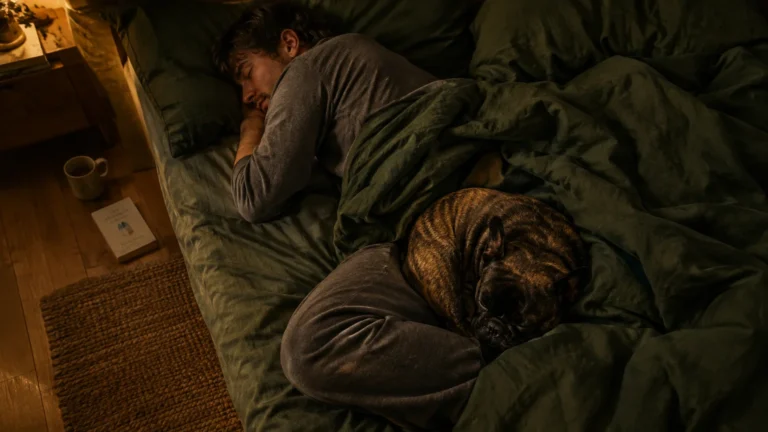
If your cat curls up on your lap or falls asleep beside your head, they designate you as their trusted protector. They rely entirely on your senses to alert them to external dangers while they recharge.
This habit signifies that your cat feels safe enough to completely disarm their internal early-warning systems. Such behavioral relaxation demonstrates that your presence creates an impenetrable safe haven.
5. The Upright Tail with an Inquisitive Hook
A cat’s tail acts as a precise emotional barometer reflecting changes in their autonomic nervous system. Tail movement reveals internal motivation long before facial expressions or vocalizations emerge.
When your cat approaches you with their tail held vertically like an antenna, they signal friendly intentions. The tip often forms an elegant, inquisitive hook resembling a gentle question mark.
Field researchers observe this vertical tail display when colony members greet one another after periods of separation. It exposes their scent glands and indicates an open, non-defensive psychological posture.
You can reinforce this welcoming gesture by offering an extended finger at their eye level. Allowing your cat to initiate contact confirms your respect for their personal autonomy.
6. Rhythmic Kneading and Resonant Purring
Rhythmic pawing, commonly called kneading or making biscuits, originates during the earliest hours of life. Nursing kittens rhythmically push against their mother’s mammary glands to stimulate steady milk flow.
When an adult cat kneads your leg or blanket, they experience a comforting neurochemical regression. They enter a calm state associated with maternal protection and profound nutritional security.
This rhythmic motion frequently pairs with low-frequency purring vibrating between twenty and one hundred forty hertz. These acoustic vibrations soothe the cat’s nervous system while promoting bone density and tissue repair.
When your cat directs this dual behavior toward you, they express complete emotional contentment. You have successfully created an environment that mirrors the absolute security of maternal care.
7. Reciprocal Allogrooming
Cats invest a significant portion of their waking hours meticulously cleaning their fur coats. When your companion begins licking your fingers, arms, or hair, they invite you into their grooming circle.
Biologists classify this interpersonal behavior as allogrooming, a key social mechanism observed across mammalian species. In feline colonies, allogrooming strengthens group bonds and reduces social tensions.
Your cat’s tongue features tiny, backward-facing spines made of keratin called filiform papillae. While these raspy papillae can feel coarse against human skin, their application represents profound social devotion.
By grooming you, your cat blends their distinct scent profile directly with your biological scent. This ritualistic exchange signifies that they view you as a treasured member of their family.


Whenever Charlie has to visit the Vet, he always senses that he is going. He cannot be found, he goes and hide , to the point, we can’t reach him and have to cancel his appointment. Then when the coast is clear, later on during the day, when I sit down, he comes and take his place either in my lap or on my right side. Charlie surprises us. !! We have to put a plan in action to get him in his crate, for his Vet appointment.