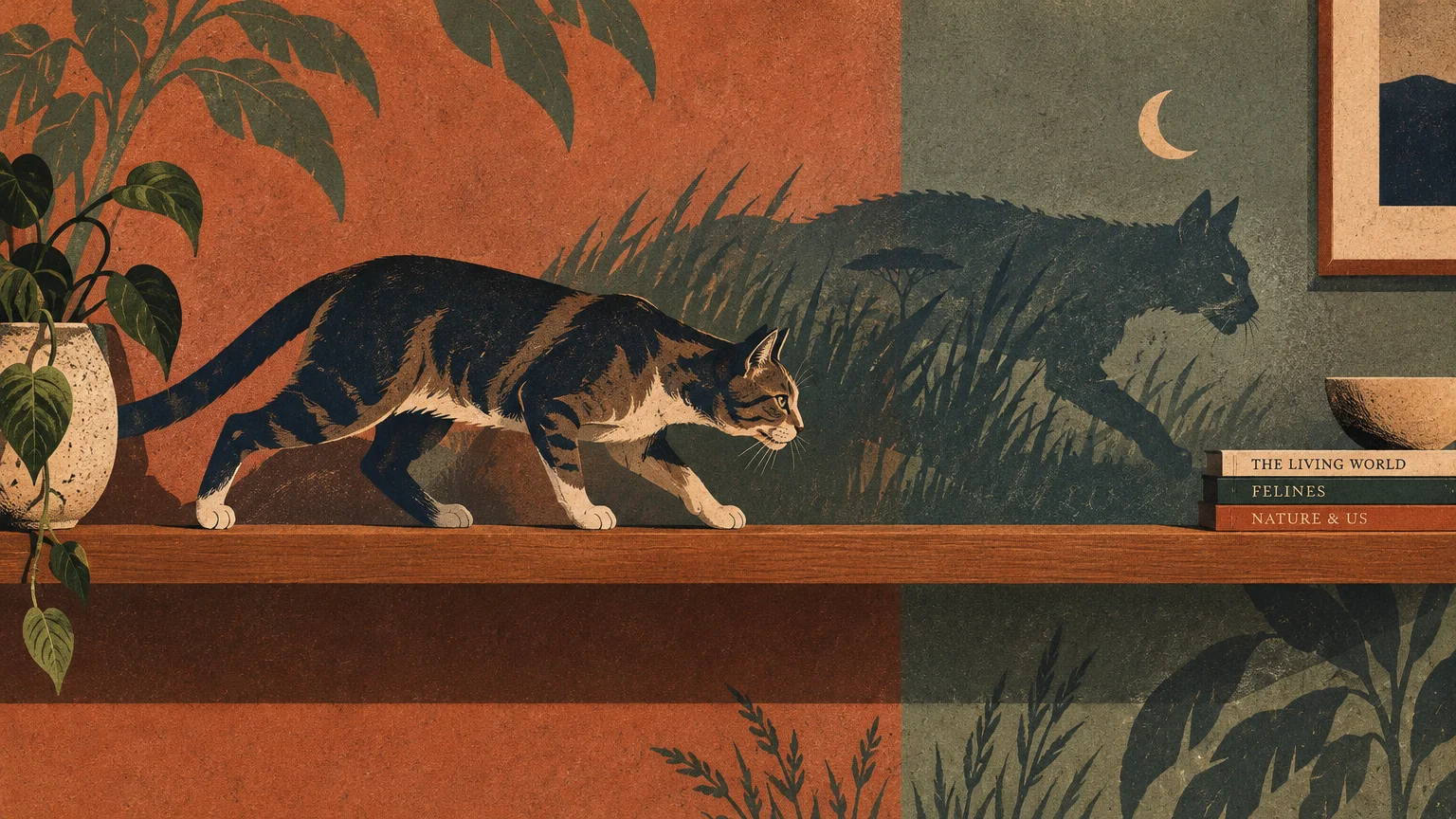
Unlocking feline behavior transforms ordinary companion care into a deeper partnership with your pet. Science reveals that domestic cats possess remarkable instincts that challenge traditional pet assumptions.
From ultrasonic hearing to intricate vocal tactics, your cat navigates the living room with sophisticated biological tools. Understanding these evolutionary traits lets you solve daily friction, optimize enrichment, and build lasting trust.
Whether your cat snoozes beside your keyboard or sprints at dawn, modern research clarifies their most puzzling habits. Explore ten surprising truths that will forever reshape how you nurture your feline companion.

1. Domestication Began 9,500 Years Ago in Cyprus
Popular culture often credits ancient Egypt with domesticating the first house cats around 4,000 years ago. Archaeological excavations prove that feline companionship began thousands of years earlier.
In 2004, archaeologists uncovered a Neolithic grave at Shillourokambos in Cyprus dating back 9,500 years, roughly between 7500 and 7000 BCE. The site contained an intentional burial of a cat resting beside a human.
Excavators discovered decorative artifacts, polished stones, and seashells resting alongside both skeletons. This deliberate burial demonstrates that early agricultural humans formed strong emotional bonds with feline companions.
Because cats are not native to Cyprus, early voyagers intentionally transported them across open sea routes. Settlers likely brought agile mousers aboard boats to protect grain stores from proliferating rodent populations.
This ancient heritage explains why your cat retains semi-wild behavioral drives inside your home. Recognizing their deep predatory ancestry helps you provide suitable outlets for stalking, climbing, and surveying their territory.
2. Most Fetching Cats Learn Without Human Training
Many pet guardians assume that fetching remains an exclusively canine game. Rigorous behavioral research confirms that domestic felines frequently initiate and govern this interactive retrieval pastime.
A landmark 2023 survey published in Scientific Reports by University of Sussex researchers examined 1,154 fetching felines. The data revealed that 94.4% of these cats developed fetching behavior instinctively without any human training.
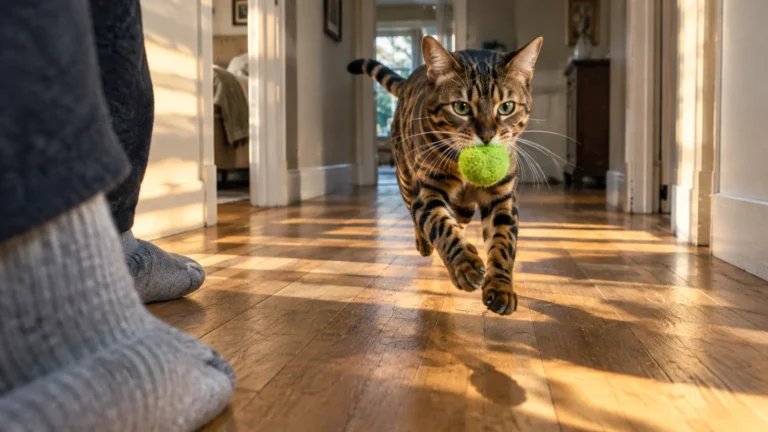
Most cats in the study initiated the game spontaneously during early kittenhood; they dictated when sessions started and finished. They preferred carrying small objects like hair ties, foam balls, or crumpled receipt paper.
To cultivate your cat’s natural retrieving drive, toss lightweight felt toys that fit comfortably inside their jaws. Avoid forcing the activity; allow your feline partner to bring the object back on their own terms.
Pair this play sequence with their natural predatory loop. When you combine chasing, catching, and retrieving with a protein snack, you fulfill their intrinsic hunting drive.
3. Meowing Is an Exclusive Language Invented for Humans
Feline vocal communication represents one of the most sophisticated cross-species adaptations in domestic animals. Adult cats rarely meow at other cats; they reserve vocal meowing almost entirely for human interaction.
Adult domestic cats utilize roughly 20 distinct vocalizations to express needs, warnings, and greetings. Feral cats communicate with other felines primarily through subtle posture, scent marking, and low acoustic signals.
Your companion cat developed custom vocal pitches that mimic human infant cries to trigger your nurturing instincts. You can learn your cat’s private vocabulary by monitoring pitch variations and companion body posture.
Beyond meows, feline purring carries remarkable physiological value. A cat purrs at an acoustic vibration between 25 and 150 Hz, a frequency range known to facilitate tissue regeneration.
Studies tracked by veterinary groups, including the Cornell Feline Health Center, demonstrate that low-frequency purrs stimulate cellular recovery. The vibration strengthens bone density, eases strained muscles, and soothes owner cardiovascular tension.
Pay close attention when your cat purrs during stressful vet visits or recovery periods. Purring serves not only as an expression of contentment, but also as a powerful self-soothing mechanism.
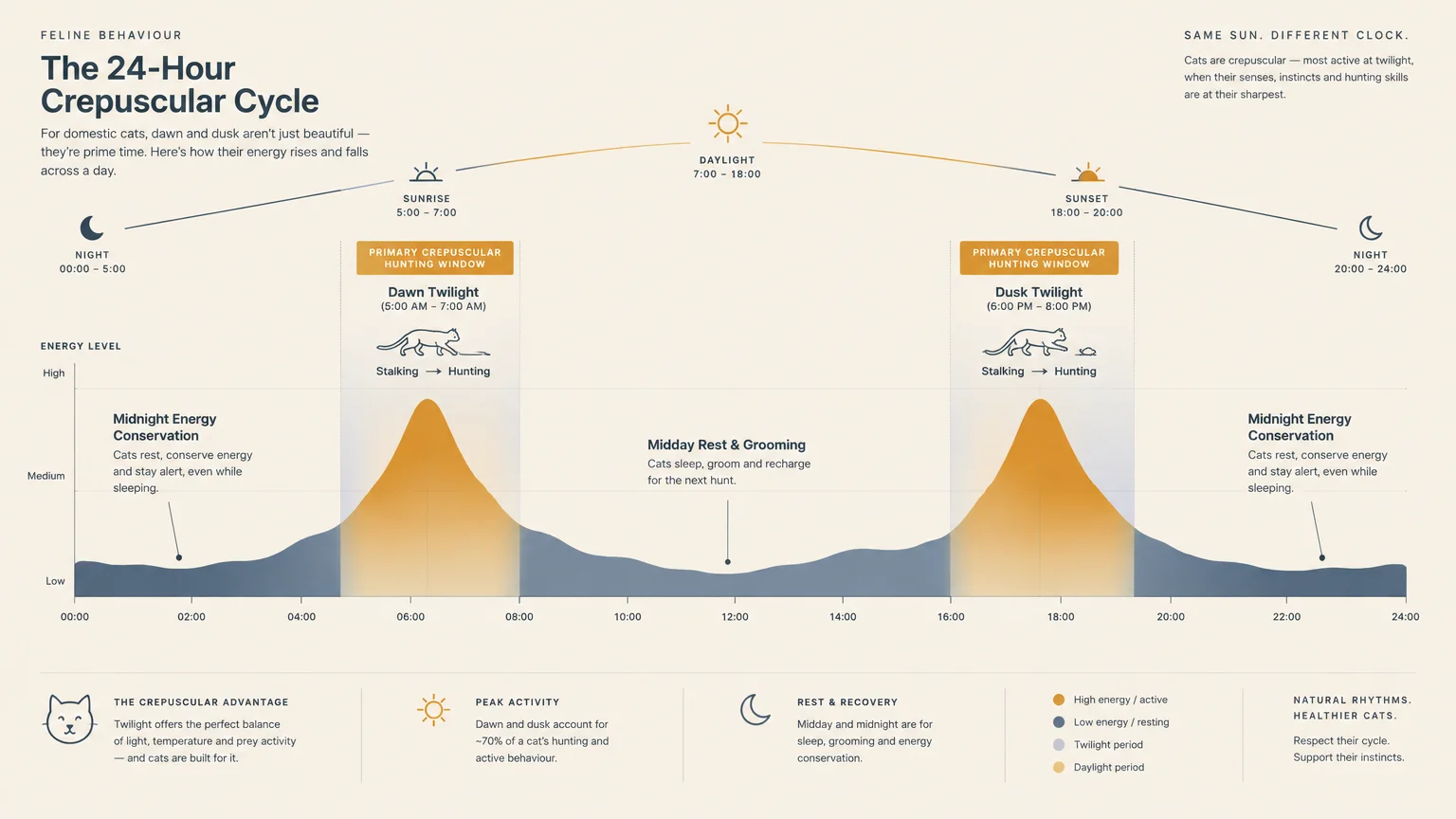
4. Cats Follow a Crepuscular Rhythm Rather Than a Nocturnal Clock
A common pet myth labels domestic cats as strictly nocturnal animals that roam through the night. Biologists classify domestic cats as crepuscular predators designed for peak activity during twilight.
Your cat’s internal clock primes their body for high metabolic energy during dawn and dusk. In nature, small prey species emerge during these transitional twilight hours, creating the ideal window for hunting.
Adult cats sleep between 12 and 16 hours daily, which occupies roughly 70% of their lifespan. Rapidly developing kittens often sleep up to 20 hours each day to support neurological growth.
Felines practice polyphasic sleep by resting in multiple cycles distributed across daytime and evening hours. Around 75% of this sleep involves light dozing, allowing them to awaken instantly to external sounds.
Only 25% of feline sleep consists of deep rapid eye movement sleep. During this deep stage, you may observe twitching whiskers and fluttering paws as their nervous system processes daily experiences.
To prevent unwanted 4 AM wake-up calls, align your daily routine with their crepuscular biology. Schedule vigorous interactive play at sunset, followed immediately by a protein-rich evening meal.
5. Feline Ears Operate as Ultrasonic Radar Dishes
Cats navigate their physical world using hearing equipment that far outperforms human and canine auditory limits. A cat hears ultrasonic frequencies up to 64,000 Hz with remarkable precision.
For comparison, average humans hear sounds up to 20,000 Hz, while dogs top out near 45,000 Hz. Felines developed this high-frequency range to pinpoint the ultrasonic vocalizations of rodents navigating dry foliage.
A cat’s outer ears feature 32 individual muscles per ear, granting extraordinary mechanical versatility. These muscular attachments permit each ear to rotate 180 degrees completely independently.
Your cat can pivot one ear toward a kitchen cabinet while directing the other toward the hallway. This independent directional scanning pinpoints the precise elevation and distance of moving targets.
High-frequency sensitivity also makes felines vulnerable to acoustic stress from modern household technology. Fluorescent bulbs, running dishwashers, and television consoles emit ultrasonic hums that humans cannot detect.
Designate acoustic sanctuaries in your home where your cat can retreat from electronic noise. Soft carpeting, heavy drapes, and insulated sleeping caves dampen jarring sound waves effectively.
6. Roughly 200 Million Scent Receptors Dictate Territory
While human perception relies heavily on sight, your cat interprets reality primarily through olfactory signals. Cats possess approximately 200 million scent receptors within their nasal passages.
Humans carry a modest 5 million odor receptors, making our sense of smell vastly inferior. Your cat detects subtle atmospheric chemistry, emotional hormones, and lingering visitors hours after contact occurs.
Felines maintain an intricate system of facial scent glands located along their cheeks, chin, and forehead. When your cat bunts their face against walls or ankles, they deposit comforting facial pheromones.
These pheromonal deposits establish safe territorial boundaries and reduce acute anxiety. Removing these marks with abrasive cleaning agents often disorients cats, triggering stress behaviors like urine marking.
Resources from The Humane Society of the United States emphasize that litter box conflicts frequently stem from olfactory overload. Avoid scented litters, which irritate delicate nasal membranes.
Offer unscented, clumping clay or soft natural substrates in open-top litter boxes. Scoop daily to honor their sophisticated olfactory system and maintain spotless bathroom hygiene.
7. Biology Erased Their Ability to Taste Sweet Flavors
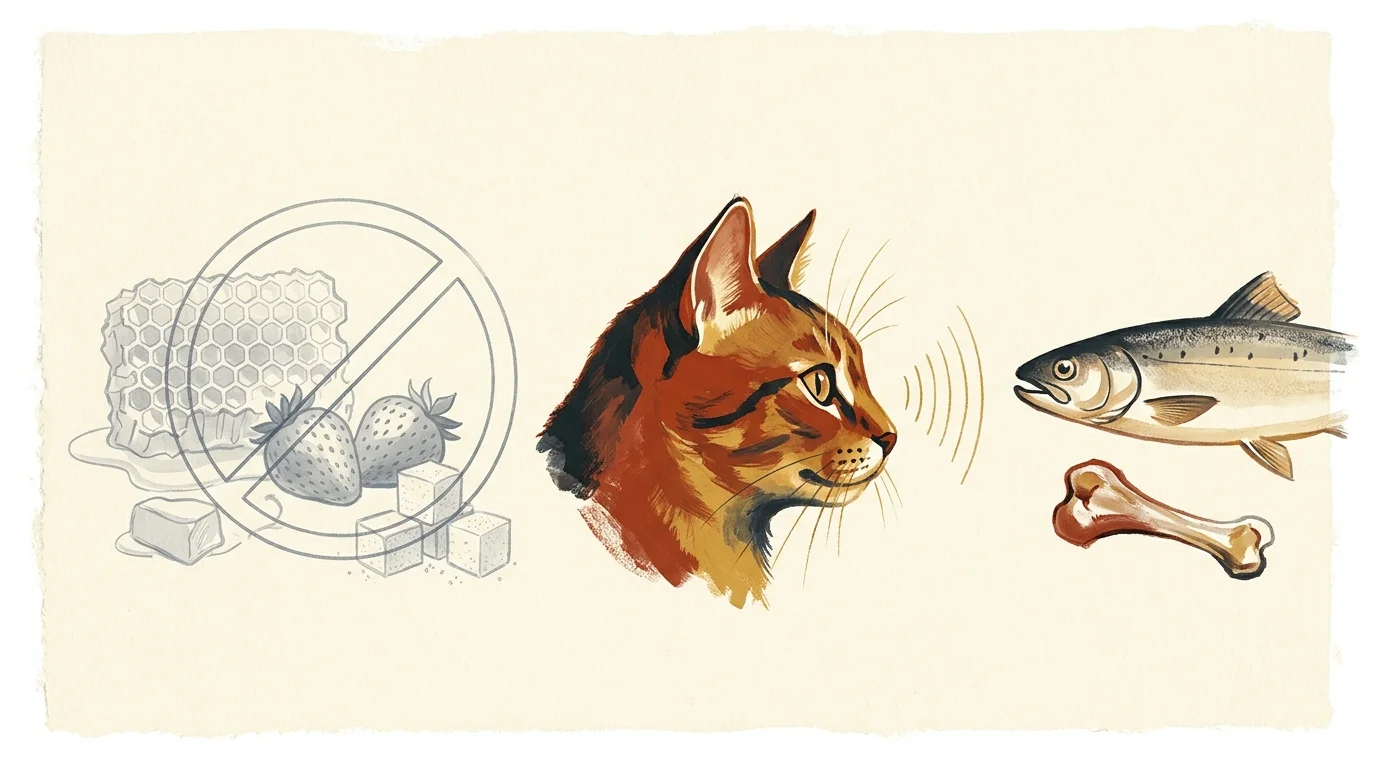
Have you ever wondered why your cat ignores birthday cake, sweet fruit, and sugary treats? Felines are the only mammals known to carry a permanent genetic inability to taste sweetness.
Cats are obligate carnivores whose bodies lack a functional Tas1r2 gene. Pseudogenization of this critical gene deleted the molecular protein necessary to build sweetness-detecting taste buds.
Because their evolutionary survival required hunting pure animal protein, cats never needed taste receptors for detecting sugar. Instead, their taste buds respond strongly to amino acids, animal fats, and savory peptides.
Feeding foods that contain processed sugars or excessive starches strains feline metabolism. Cats lack salivary amylase, an enzyme necessary to begin breaking down complex dietary carbohydrates.
Prioritize moisture-dense canned foods or complete commercial balanced raw diets high in bioavailable animal protein. Proper feline nutrition requires substantial taurine, an essential amino acid found exclusively in animal tissue.
Always inspect product packaging to ensure real poultry, fish, or meat occupies the first ingredient spot. Avoid fillers, synthetic sugars, and artificial flavorings that provide zero nutritional benefit to your companion.
8. A 230-Bone Skeleton Grants Unmatched Flexibility
The feline skeleton represents an engineering masterpiece designed for predatory agility, balance, and silent movement. A domestic cat’s body contains 230 bones, 24 more than the 206 found in adult humans.
A significant portion of these additional bones resides within their flexible spine and muscular tail. Feline vertebrae connect via spongy, elastic discs that allow the spine to twist and arch dramatically.
Unlike humans and canines, cats possess free-floating clavicles attached solely by pliable muscle tissue. Because their collarbones do not anchor into bone, their shoulders compress to match head width.
A cat can comfortably squeeze through any opening that accommodates their skull and whisker tips. Their whiskers act as sensory measuring tape, warning them before entering tight architectural spaces.
This skeletal structure makes vertical elevation vital for their mental health and daily comfort. Provide sturdy multi-tiered cat trees, wall ramps, and window perches to satisfy their urge to climb.
Budget-friendly vertical territory can include cleared bookshelf shelves secured safely to wall studs. Adding non-slip mats to high surfaces ensures your cat leaps and lands with secure traction.
9. House Cats Match Sprinting Champions in Short Bursts
Behind that sleeping couch companion rests an explosive sprinter capable of astonishing physical acceleration. Domestic house cats can reach top running speeds of 30 mph during brief predatory sprints.
At 30 mph, an ordinary house cat outpaces Olympic champion sprinters over short distances. Their flexible spine contracts and extends like a coiled spring, lengthening stride distance with every bound.
In addition to linear speed, felines demonstrate exceptional vertical and horizontal jumping capabilities. A healthy cat can leap up to six times their body length from a stationary position.
Powerful hindquarters packed with fast-twitch muscle fibers launch them upward without requiring any running start. This explosive spring lets them ambush birds or scale high fences effortlessly.
Indoor living can cause fast-twitch muscles to atrophy if cats lack regular sprint opportunities. Combat sedentary living by using extendable wand toys to inspire rapid daily sprint sessions.
Encourage your cat to chase feathered lures up carpeted stairs or across padded area rugs. Short five-minute bursts of vigorous pursuit burn calories, prevent obesity, and keep joints supple.

10. Felines Require Strategic Socialization and Space Management
The belief that all cats are antisocial loners ignores the complexity of modern feline psychology. While felines can hunt alone, their social networks in home environments prove remarkably rich.
Cat social hierarchies rely on shared space divided by distinct times of day. Two cats may share one prime sunlit chair peacefully by alternating occupancy between morning and afternoon.
Forcing direct, face-to-face introductions between unfamiliar cats almost always triggers intense territorial anxiety. Felines establish friendships through gradual scent exchange, auditory familiarity, and shared positive experiences.
Behaviorists and veterinary professionals at the American Veterinary Medical Association advise keeping essential resources distributed widely. Placing all food bowls and litter boxes in one room invites territorial blocking.
Follow the standard resource equation by providing one litter box per cat, plus one extra. Distribute these facilities across separate rooms on different floors so subordinate cats move freely without confrontation.
Respect each cat’s distinct social preferences and personal handling boundaries. Some felines thrive on physical contact, while others prefer sitting quietly nearby without direct touch.
Training and Problem Solving Through Positive Reinforcement
Cats learn cooperative behaviors quickly when you guide them using positive reinforcement techniques. Punitive measures like squirt bottles or shouting damage trust and increase underlying behavioral anxiety.
Clicker training offers an effective communication bridge between you and your companion feline. The sharp click sound marks the exact moment your cat performs a desirable physical action.
Begin by charging the clicker: click the tool and immediately deliver a pea-sized piece of freeze-dried meat. Repeat this sequence across several days until your cat looks eagerly for food upon hearing the click.
Next, use a target stick to guide your cat into pet carriers or onto weighing scales. Present the stick tip; when your cat sniffs it, click and reward instantly.
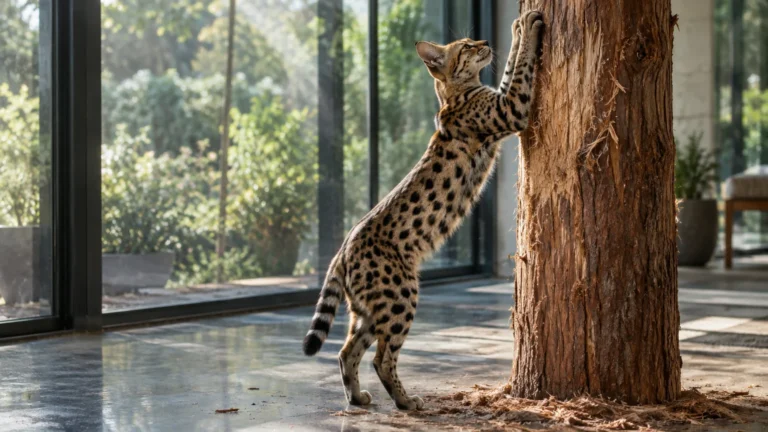
Address destructive clawing by redirecting the behavior rather than attempting to suppress natural scratching urges. Cats scratch to deposit paw scent, stretch their shoulders, and shed dead claw sheaths.
Place tall, sturdy sisal posts directly beside sofa corners and doorway frames where scratching occurs. Praise your cat and reward them whenever their paws touch the designated sisal surface.
Daily Enrichment and Welfare Playbook
Indoor cats require deliberate environmental enrichment to prevent chronic boredom and repetitive stress behaviors. Mental stimulation exhausts energetic cats far more effectively than aimless pacing.
Ditch traditional static food bowls in favor of interactive foraging puzzles and slow-feeding boards. Foraging stimulates your cat’s brain by turning mealtime into a problem-solving game.
Rotate toys every few days to keep novel stimuli fresh and exciting. A forgotten toy hidden in a closet for two weeks feels brand new when reintroduced to the living room floor.
Incorporate olfactory enrichment by introducing novel pet-safe herbs into their resting areas. Offer small samples of dried valerian root, silver vine powder, or fresh organic cat grass.
Provide secure visual enrichment by positioning perches near exterior bird feeders or garden flower beds. Watching wildlife from safe indoor perches keeps indoor minds engaged without exposing cats to outdoor hazards.
Always conclude high-energy laser play sessions by transferring their focus to a tangible toy. Letting your cat physically catch and bite a soft kicker toy prevents psychological frustration.
Community Support and Professional Care Networks
Navigating modern cat guardianship becomes much easier when you connect with knowledgeable pet welfare resources. You do not need to resolve complex health and behavioral hurdles in isolation.
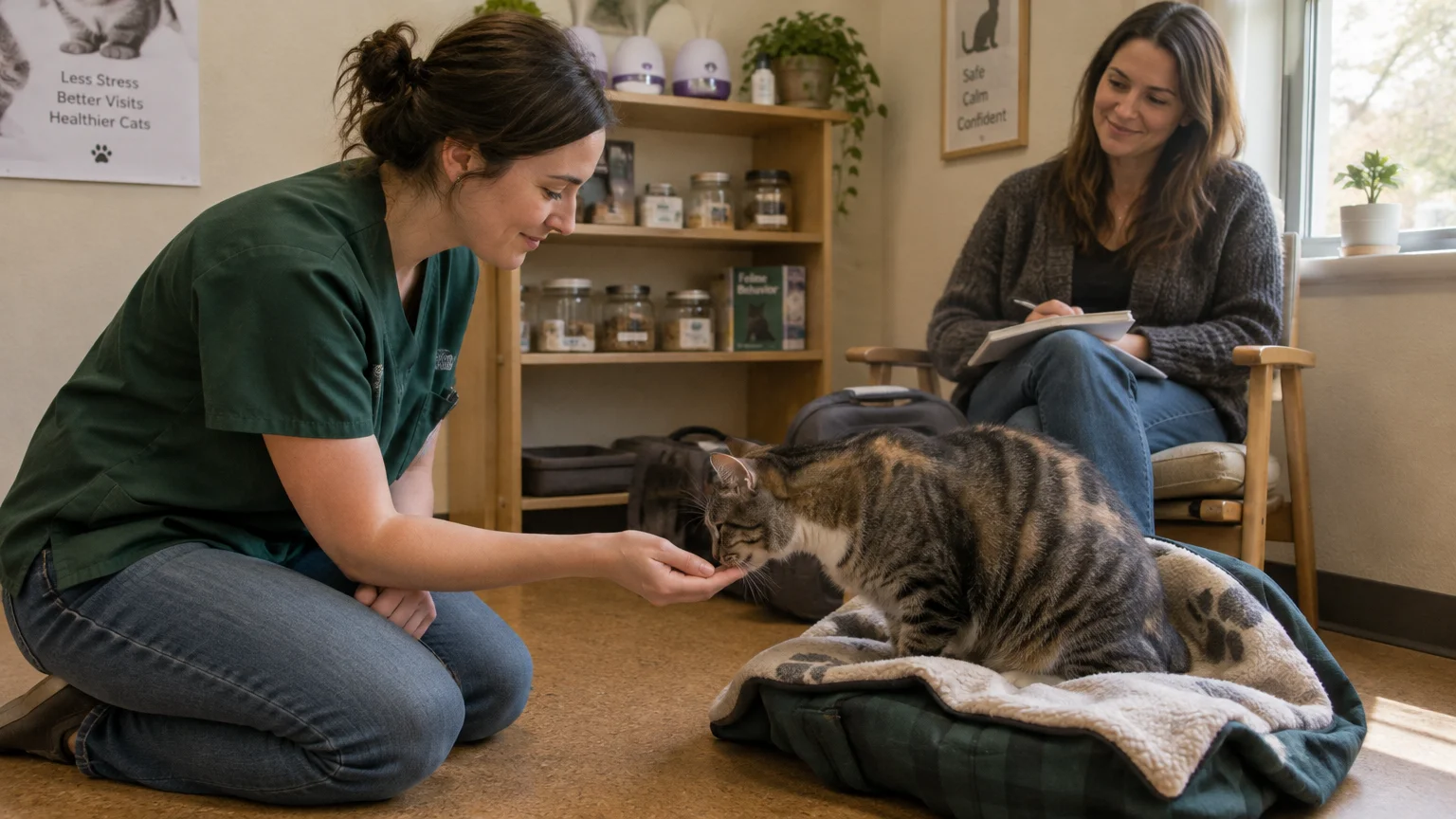
Partner with a veterinary clinic certified in fear-free handling practices to reduce clinic anxiety. Fear-free clinics utilize non-slip surfaces, gentle restraint techniques, and calming pheromones during routine physical examinations.
If severe behavioral challenges arise, consult a certified feline behavior consultant. These credentialed professionals design custom modification plans tailored to your home layout and family dynamic.
Local rescue organizations and shelters supported by groups like the ASPCA offer helpful community behavior resources. Many organizations host low-cost vaccination clinics, spay-and-neuter programs, and behavioral advice hotlines.
Consider pet telehealth platforms for non-emergency triage and general behavioral advice. Remote consultations let veterinary technicians assess environmental triggers inside your home without disturbing your cat.
Build a local network of trusted, cat-savvy neighbors or professional bonded pet sitters. Having experienced caregivers available reduces pet travel stress when business or family emergencies arise.
Frequently Asked Questions About Feline Lifestyle and Care
How can I minimize stress when traveling with my cat?
Transform the travel carrier into a permanent resting space inside your home weeks before departure. Place soft bedding and tasty treats inside the open carrier so your cat enters voluntarily.
Spray the carrier interior with synthetic feline facial pheromones 15 minutes before loading your pet. Cover the carrier with a light, breathable towel during transport to block terrifying visual movement.
What is the most reliable way to introduce a new cat to an established pet?
House the newcomer in a separate sanctuary room equipped with their own resources for several days. Feed both animals on opposite sides of the closed door to associate each other’s scent with meals.
Swap their bedding back and forth so they adjust to communal scents without direct physical confrontation. Transition gradually to visual contact through a baby gate before permitting supervised face-to-face interactions.
How can I provide enriching cat care on a modest budget?
Cardboard boxes, paper grocery bags without handles, and crumpled paper balls provide outstanding free physical enrichment. You can build elaborate puzzle feeders by cutting treat-sized holes into clean egg cartons.
Repurpose vertical closet space by clearing upper shelves rather than purchasing costly commercial cat trees. Simple daily attention, praise, and interactive play cost nothing while delivering immense behavioral benefits.
How should I prepare my feline for sudden emergencies or natural disasters?
Assemble a dedicated feline emergency kit containing a two-week supply of canned food, bottled water, and medications. Store medical records, vaccination certificates, and microchip registration numbers in a waterproof pouch.
Keep a sturdy, labeled travel carrier positioned near your home exit for rapid evacuation. Affix an emergency rescue decal near your front door alerting emergency responders to the cats inside.
Deepen Your Companion Bond Tonight
Every strange habit your cat displays—from sudden sprints to quiet purring—reflects thousands of years of evolution. Honoring these biological traits transforms your home into a thriving environment where your companion thrives.
Start small tonight by introducing one brand new enrichment routine into your companion’s schedule. Dedicate ten minutes at sunset to an interactive wand play session, letting your cat stalk, sprint, and pounce.
Follow their successful capture with a savory protein meal, and watch them settle into a deep, contented groom. When you meet your cat’s evolutionary needs, you forge an unbreakable bond built on mutual understanding.