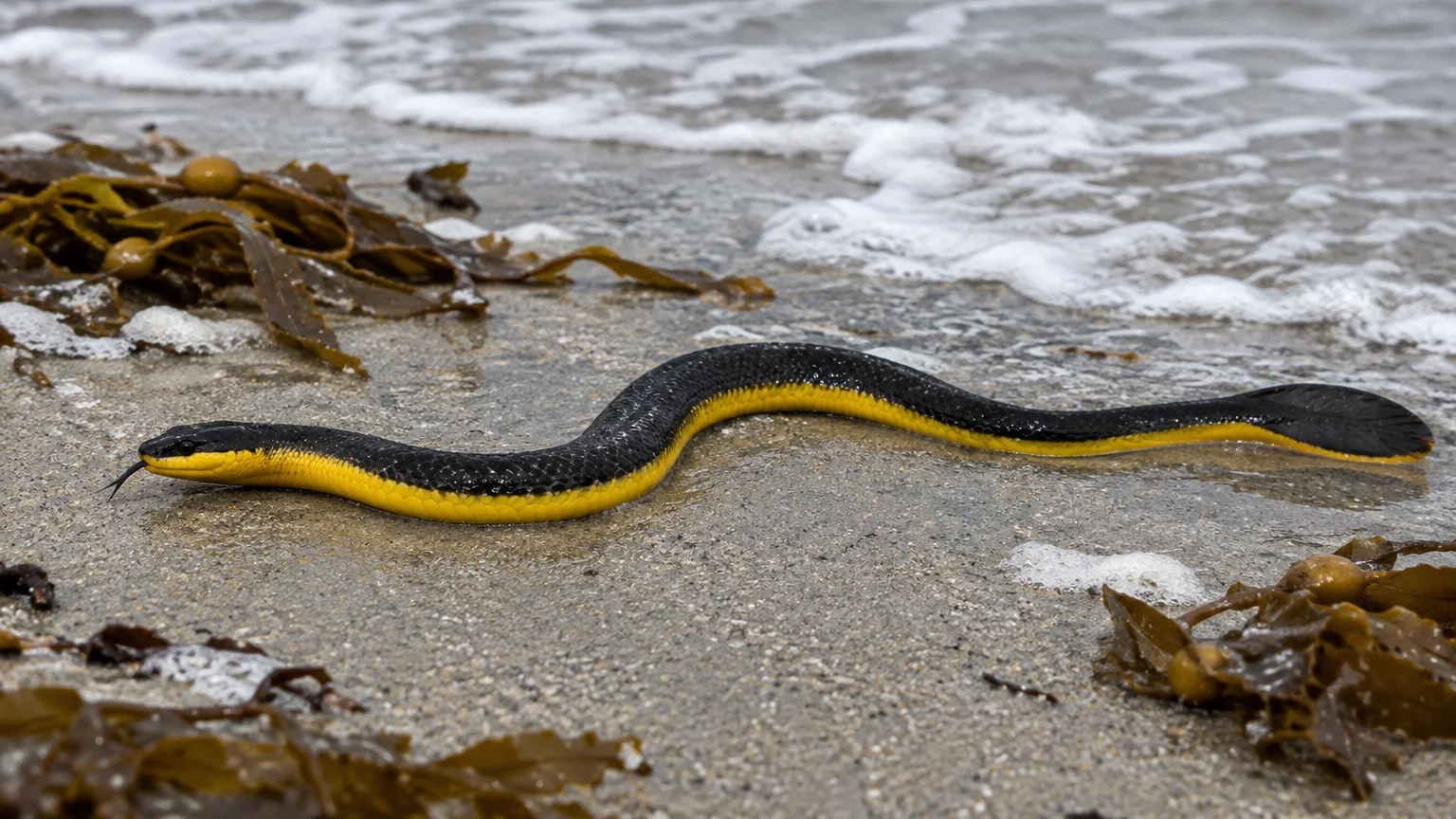
A rare, venomous yellow-bellied sea snake washed ashore at Bolsa Chica State Beach in Southern California. State biologists confirmed this creature is only the eighth documented sea snake in California history.
Finding one of these tropical ocean reptiles on a local beach is startling. Powerful ocean currents pushed this open-sea hunter far beyond its normal home.
You can help marine scientists track these rare ocean visitors during your next beach walk. Learning what to look for keeps both you and these wild animals safe.
A Rare Stranding at Bolsa Chica State Beach
California State Parks staff spotted the live yellow-bellied sea snake on November 22, 2026. The snake was lethargic and moved very slowly along the sand.
Experts from the Natural History Museum of Los Angeles County confirmed the find on November 25. Biologists noted that stranded sea snakes rarely survive more than 24 hours on land.
The San Diego Natural History Museum collected the snake for herpetology research. Scientists hope to learn more about why these pelagic reptiles drift north into colder coastal waters.
Why Only Eight Have Ever Appeared in California
Yellow-bellied sea snakes normally live thousands of miles away in tropical zones of the Pacific and Indian oceans. They rarely travel north of the warm waters near Baja California.
The first California record occurred on Thanksgiving morning in 1972 at San Clemente State Beach. Since that day, scientists have confirmed only seven other sightings across the entire state.
Seven of the eight California sightings happened during El Niño weather patterns. These regional climate shifts create warm water corridors that carry tropical wanderers into Southern California.
How El Niño Drives These Strandings
A strong El Niño event began warming Pacific waters in June 2026. The National Oceanic and Atmospheric Administration reported surface temperatures rising several degrees above average.
Forecasters expect these warm conditions to persist through March 2027. This shifting current brings unexpected marine visitors straight toward California beaches.
Yellow-bellied sea snakes need water warmer than 61 degrees Fahrenheit to survive. When local coastal waters cool to 55 degrees in late fall, these cold-blooded reptiles grow weak.
Chilled snakes cannot fight ocean surf and wash onto the beach between October and January. Biologists warn that beachgoers could spot more stranded snakes through February 2027.
The same warm currents brought four rare olive ridley sea turtle nests to California beaches in late 2026. Biologists rescued more than 200 eggs to protect them from high ocean tides.
The Biology of an Open-Ocean Hunter
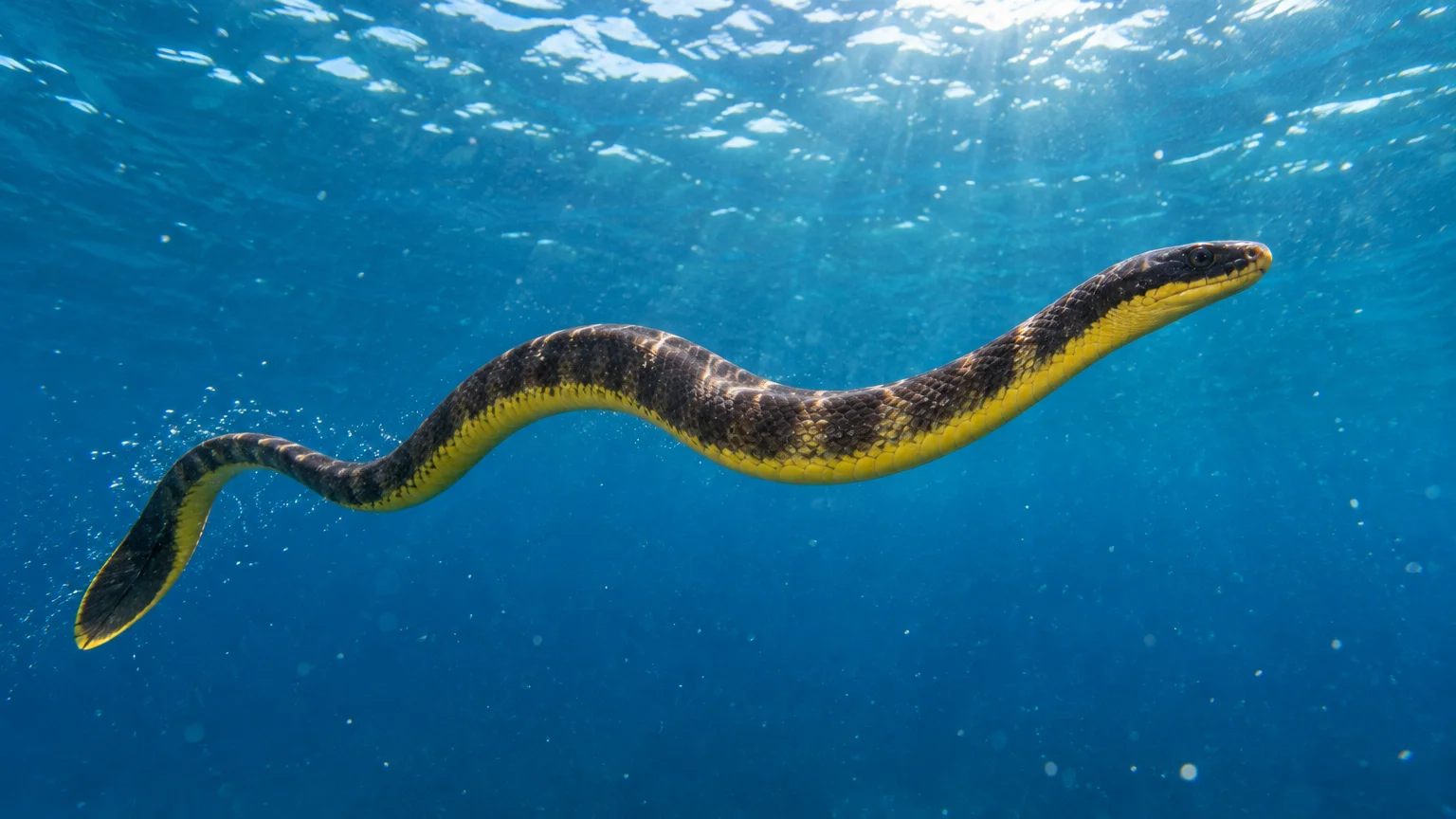
The yellow-bellied sea snake carries the scientific name Hydrophis platurus. It is the most widely distributed snake species in the world.
Unlike sea turtles, this reptile never crawls onto land to lay eggs. Females give birth in open water to between one and eight live young.
Most adults in the eastern Pacific measure between 18 and 25 inches long. Their flat, paddle-like tails help them swim in any direction with ease.
A dark brown back and bright yellow underside provide countershading camouflage in the open sea. Fish looking up see sunlit yellow, while predators looking down see dark water.
The IUCN Red List classifies this sea snake as a species of least concern. Their massive global range helps protect overall numbers from local habitat threats.
Venom Potency and Beach Safety
Yellow-bellied sea snakes belong to the elapid family alongside cobras and mambas. They hunt small fish by striking fast and injecting a powerful venom.
Their venom contains potent neurotoxins and myotoxins that break down muscle tissue and stop nerve signals. A bite can cause severe paralysis and respiratory distress in humans.
Despite their venom, these animals present little danger to swimmers in the surf. They have small mouths, short fixed fangs, and very calm temperaments.
These snakes do not hunt humans and bite only when stepped on or handled. Medical records show zero confirmed human deaths from their bites.
What to Do If You Find a Stranded Sea Snake
State law strictly protects wildlife on public shorelines. Under California Code of Regulations, Title 14, Section 5.60, taking any reptile from a state park is illegal.
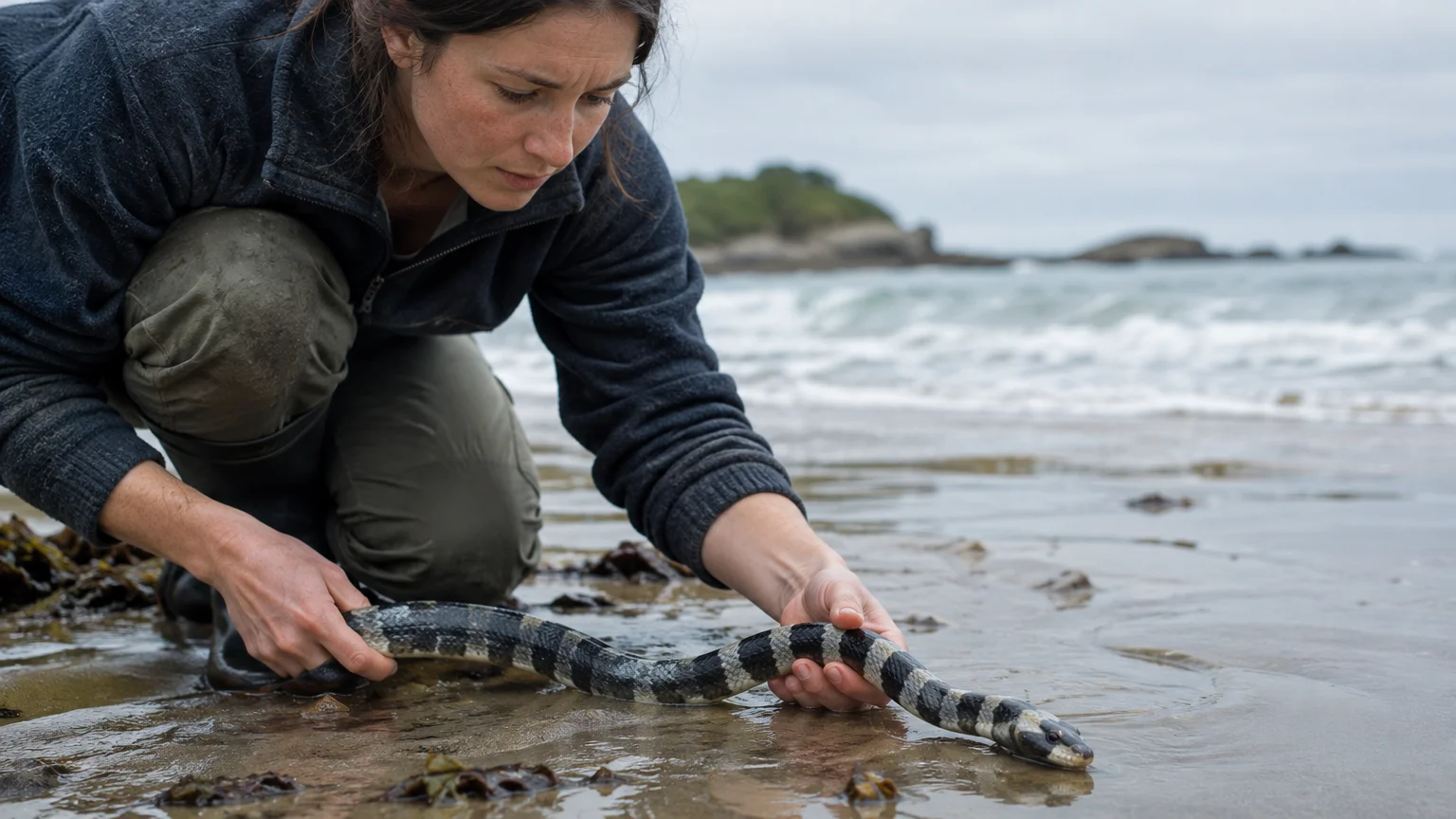
Never touch, pick up, or move a stranded sea snake, even if it looks dead. A cold-stunned snake can strike quickly if it feels threatened.
Do not throw the snake back into the ocean. Cold water shocks the animal and waves will push it right back onto the sand.
Keep dogs on leashes and guide children away from the stranded reptile. If someone suffers a bite, call 911 immediately for emergency medical care.
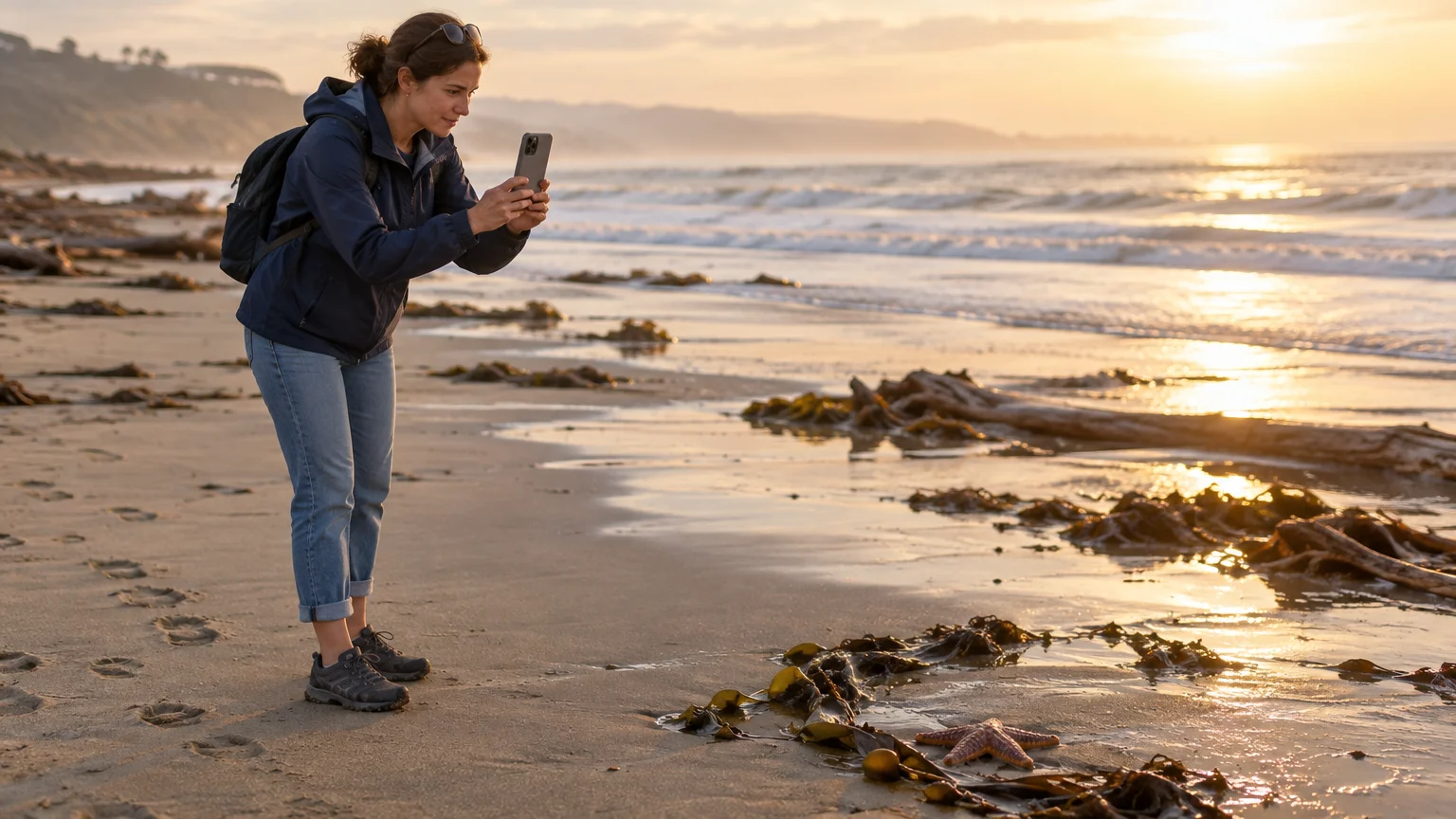
Take a clear photo from a safe distance and note the nearest lifeguard tower. Report the animal to California State Parks staff or email nature@nhm.org.
You can also log your sighting on the iNaturalist community science platform. If you find a sea turtle nest, call the NOAA stranding hotline at 562-506-4315.
Join the Coastal Community Science Search
The Natural History Museum of Los Angeles County launched a search project for coastal visitors. Their Fangsgiving and Hissmas project asks beachgoers to look for rare marine life.
Walk the high-tide line about 90 minutes after high tide for the best results. Peak windows include late November and late December when winter king tides wash debris ashore.
Your reports help biologists understand how warming waters change marine reptile ranges. Community data gives scientists a live map of shifts across our coast.
Frequently Asked Questions
Can a yellow-bellied sea snake survive on land?
No, these snakes cannot crawl or live on dry land. Their belly scales are too small to push against sand, leading to fatal dehydration within 24 hours.
Can you keep a yellow-bellied sea snake as a pet?
You cannot keep this species as a pet at home. They need specialized ocean enclosures with filtered seawater and live marine fish.
California law also prohibits keeping native or visiting wildlife without scientific permits. Housing venomous marine reptiles requires expert training and professional facility care.
How do sea snakes drink fresh water in the ocean?
Sea snakes cannot drink salty ocean water without becoming dehydrated. They drink fresh rainwater that collects in thin layers on the ocean surface after storms.
Why do these snakes have yellow bellies and black backs?
This color pattern provides countershading camouflage against predators and prey. A dark back blends with deep water from above, while a yellow belly blends with sunlight from below.
Appreciating Wild Ocean Life
Finding a tropical sea snake in California reminds us that ocean habitats have no borders. A rare visitor links your local coastline directly to the wider Pacific ecosystem.
When you walk the shore with care and curiosity, you help protect these remarkable animals. Watching wildlife with respect keeps our beaches safe and wild for everyone.