
Your dog nudges your elbow for an evening walk, or your cat settles onto your chest with a steady purr. Those quiet moments do far more than lift your mood—they actively support your cardiovascular system.
Research on pets heart health links companion animals to lower blood pressure, calmer stress responses, and more consistent daily movement. Even modest shifts in your shared habits create measurable cardiovascular benefits over time.
Here are five everyday ways your pet quietly supports your heart, plus practical daily routines, training steps, and budget-friendly care strategies you can start tonight.
How Daily Life With Pets Supports Your Cardiovascular Health
Across the country, companion animals hold a central place at home. According to the American Pet Products Association 2026 State of the Industry Report, 95 million U.S. households owned a pet in 2025, including 71 million dog households and 53 million cat households.
Separate 2026 data from the American Veterinary Medical Association estimate 88.9 million pet dogs and 77 million pet cats nationwide. Roughly 79.5% of dog owners and 70.4% of cat owners consider their animals true family members.
That deep bond often pays off physically, though medical boundaries matter. In a June 2013 Scientific Statement in Circulation, the American Heart Association concluded that pet ownership—especially dog ownership—is probably associated with decreased cardiovascular disease risk.
At the same time, the American Heart Association advises against adopting a pet primarily to prevent heart disease. Pets complement medical care, balanced nutrition, and regular checkups rather than replacing them.
1. More Daily Movement Without Gym Pressure
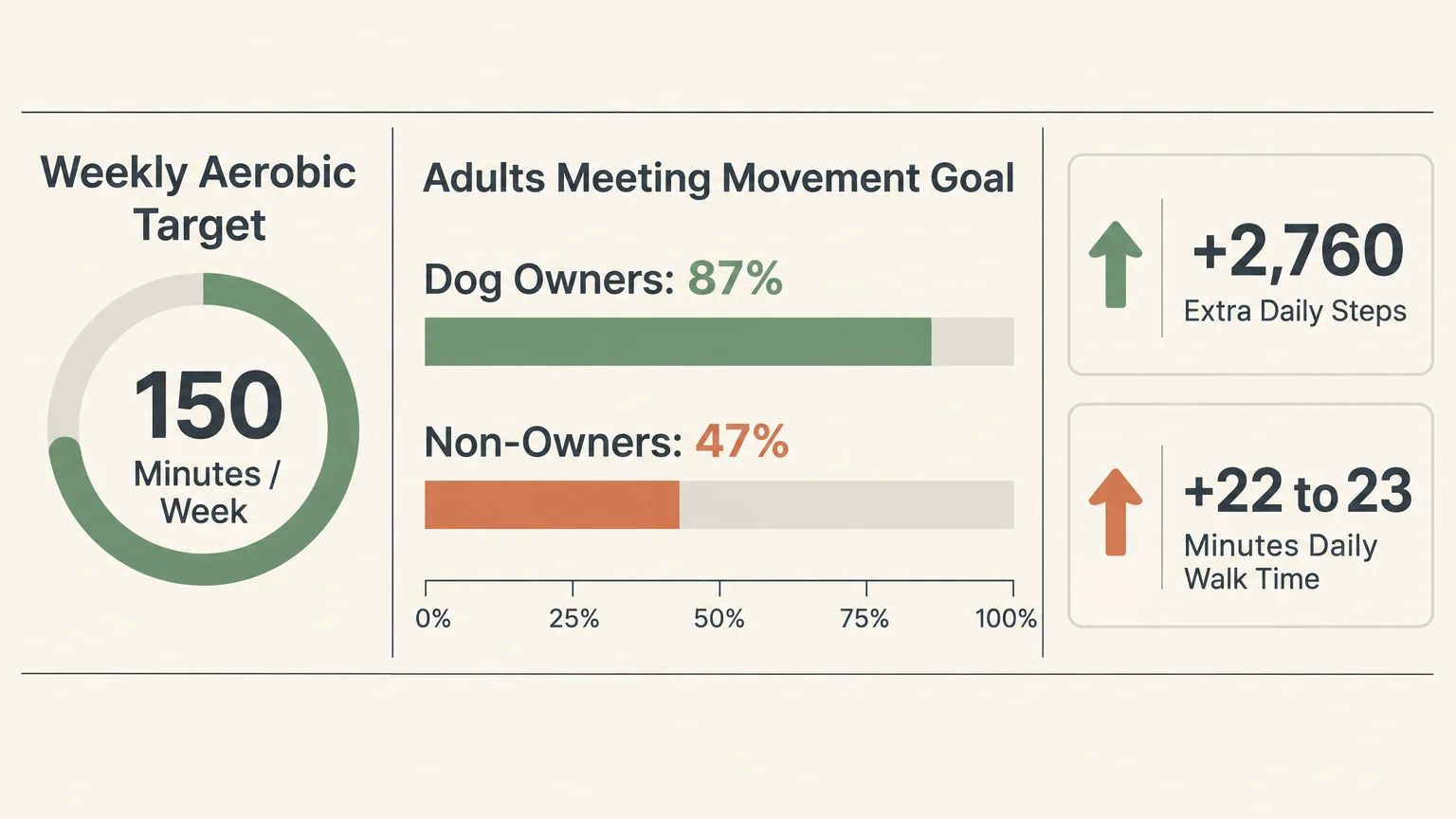
Connecting dogs and heart health often starts right at your front door with a leash in hand. Both the Centers for Disease Control and Prevention and the World Health Organization recommend at least 150 minutes of moderate-intensity aerobic activity each week.
That benchmark equals brisk walking at roughly 3 miles per hour or 100 steps per minute, yet only about 50% of U.S. adults meet it. Dog owners frequently clear that hurdle without ever stepping onto a treadmill.
Cross-sectional data covering over 5,000 adults in the American Heart Association Scientific Statement showed dog owners were 54% more likely to meet recommended activity levels than non-owners.
A June 2017 BMC Public Health study from the University of Lincoln and the Waltham Centre found even sharper gains among older adults.
Older dog owners wearing 24-hour trackers walked 22 to 23 more minutes daily—119 minutes versus 96 minutes—and logged 2,760 extra steps each day.
Most of that bonus movement happened at a moderate cadence, helping 87% of dog owners hit the 150-minute weekly mark versus 47% of non-owners.
Still, simply having a dog in your living room does not guarantee better fitness. Researchers from the University of Sydney and Michigan note that only about 60% of dog owners consistently walk their dogs, leaving non-walkers without those cardiovascular gains.
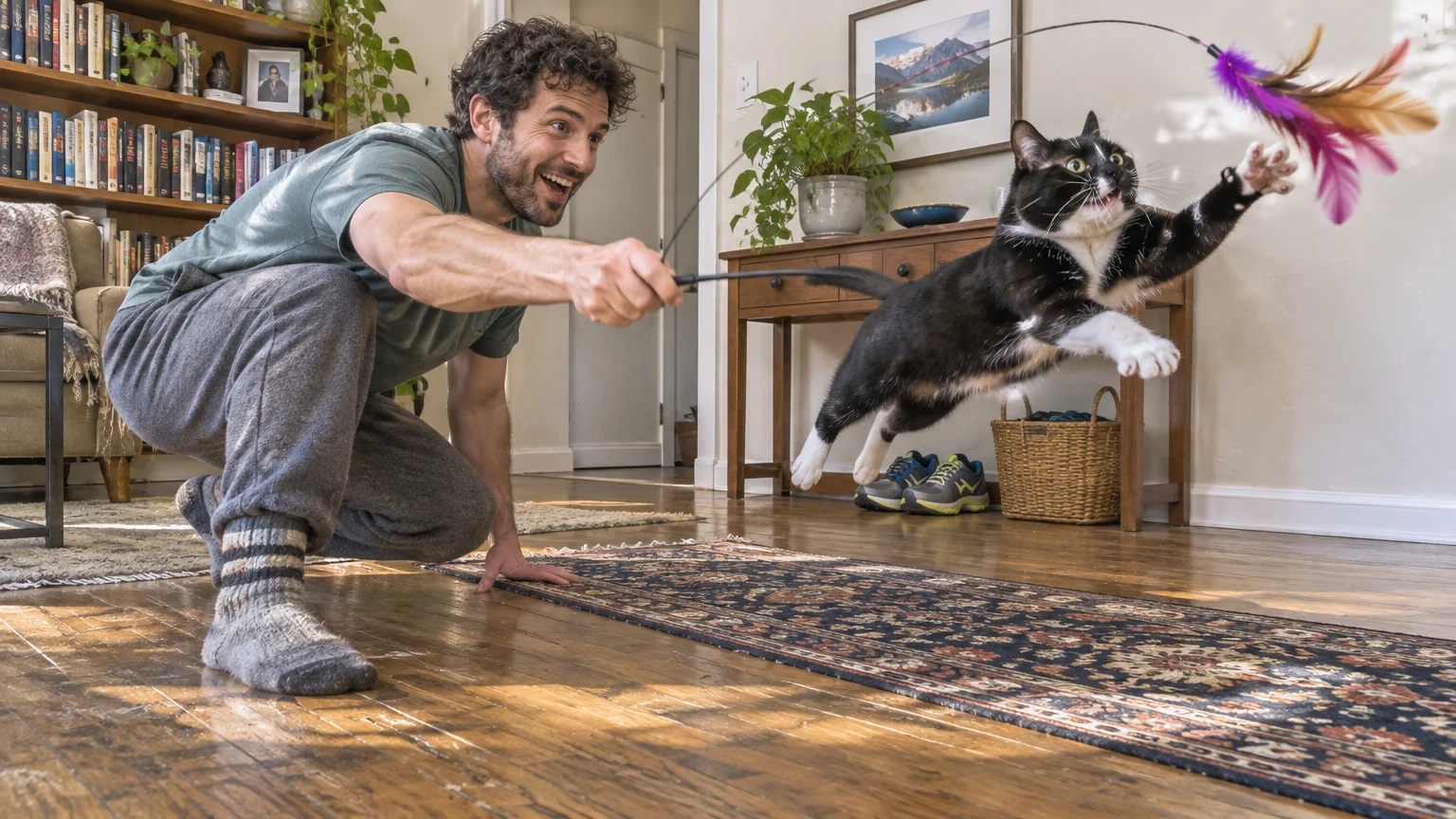
To capture the movement advantage, treat your morning loop as a brisk cardio window rather than a slow stroll around the mailbox. If you live with a cat, interactive feather-wand chases before meals get you off the couch and moving around the room.
2. Calmer Blood Pressure and Steadier Heart Rates
Many people notice their shoulders drop the moment their fingers sink into soft fur, and clinical readings back up that sensation. Research exploring how pets lower blood pressure reveals quieter sympathetic nervous system activity during direct animal contact.
An April 2022 meta-analysis of 11 studies in Current Hypertension Reports found pet owners averaged 1.7 mmHg lower systolic blood pressure than non-owners. Pet owners also showed a 2.3 beats per minute lower resting heart rate.
Broader population data point in the same direction for both cats and dogs. In an April 2020 American Journal of Cardiology analysis of 10,905 U.S. adults from CDC NHANES records, owning a cat or dog was linked to 33% lower odds of systemic hypertension.
Pet owners in that analysis also carried lower levels of LDL cholesterol after researchers adjusted for lifestyle and socioeconomic factors. Even people already managing diagnosed high blood pressure may benefit from animal companionship alongside standard prescriptions.
In a randomized trial of 48 hypertension patients cited in Current Hypertension Reports, participants taking 20 mg daily lisinopril who received a pet handled mental stress tasks with steadier blood pressure and lower heart rate spikes than patients taking medication alone.
You can use this physiology deliberately during hectic workdays. Step away from your screen between meetings, sit beside your pet, and match your breathing to their slow resting rhythm while offering calm strokes.
3. Built-In Stress Relief and Bonding Hormones
Chronic emotional strain drives inflammation, raises blood pressure, and disrupts sleep—making daily recovery essential for pet owners health. A June 2022 American Heart Association and Wakefield Research survey of 1,000 U.S. pet parents showed 95% rely on their pets for stress relief.
When given the choice to unwind, 70% preferred spending time with their pet compared with 30% who chose watching television. Survey respondents credited snuggling at 68%, laughter at 67%, and reduced loneliness at 61% as their top ways animals ease tension.
Biology helps explain why those simple interactions feel so restorative. An August 2022 systematic review of 129 studies by Teo and colleagues found strong consistency for oxytocin, the hormone tied to social bonding.
Five of six blood studies and two of two salivary studies recorded rising oxytocin levels during interactions with dogs. Findings for cortisol, a primary stress hormone, were more mixed across settings; six of seven blood studies showed drops, while 18 of 40 salivary studies saw reductions.
Roughly one-third of acute laboratory tests also captured immediate, short-term dips in blood pressure and heart rate while participants interacted with dogs. Quiet, affectionate contact typically lowers arousal better than rowdy tug games when your nervous system already feels overstimulated.
Try trading frantic evening phone scrolling for calm, screen-free floor time with your companion. Notice how quickly playful antics or a steady purr interrupt looping worries from your workday.
4. Stronger Social Ties and Less Loneliness
Isolation is far more than an emotional ache—it poses a direct threat to your heart. An August 2022 American Heart Association Scientific Statement reviewing four decades of data linked loneliness and social isolation to a 29% higher risk of heart attack or heart disease death.
The same statement connected social isolation to a 32% increased risk of stroke or stroke death. Adults reporting three or fewer social contacts per month faced a 40% higher risk of recurrent heart attack or stroke.
Companion animals directly cushion that isolation, particularly when you live by yourself. Both the Centers for Disease Control and Prevention and Harvard Health note that pets ease loneliness while acting as natural social catalysts on neighborhood sidewalks.
A 2024 BMC Psychology study confirmed that pet companionship buffers isolation and encourages casual community connection. Similarly, a 2023 American Psychiatric Association survey found 86% of pet owners felt their animals had a mostly positive effect on mental health.
You do not need an extroverted personality to turn pet care into healthy social connection. Walking the same route at a predictable hour or visiting a quiet neighborhood park invites easy greetings with fellow animal lovers.
5. Improved Long-Term Survival After Cardiac Events
The long-term benefits of owning a pet appear especially striking in large population studies tracking survival after serious medical scares. An October 2019 meta-analysis by Kramer and colleagues in Circulation: Cardiovascular Quality and Outcomes pooled 10 studies covering over 3.8 million people.
Dog ownership was associated with a 24% lower risk of death from any cause and a 31% lower risk of cardiovascular death. Among patients recovering after a prior heart attack, dog ownership corresponded to a 65% lower mortality risk.
A companion Swedish National Patient Register study published the same month tracked nearly 182,000 heart attack survivors and 155,000 stroke survivors. Dog owners living alone experienced a 33% lower risk of death after heart attack hospitalization versus 15% lower for owners living with family.
Alone-living dog owners also saw a 27% lower risk of death following stroke hospitalization compared with non-owners living alone. Earlier 2017 data in Scientific Reports covering over 3.4 million Swedish adults similarly reported 33% lower mortality among single-person dog-owning households.
Cat companions show encouraging links in long-term tracking as well. A 20-year University of Minnesota and NHANES follow-up of 4,435 adults led by Qureshi in 2009 linked past cat ownership to a 37% lower relative risk of fatal heart attack.
Keep in mind that observational studies prove statistical association rather than direct cause-and-effect, because healthier, more mobile people may adopt pets more often. Even so, daily movement, calmer stress responses, and loyal companionship work together powerfully over the decades.
Matching Heart-Healthy Routines to Your Pet Profile
Protecting your own cardiovascular health starts with respecting the animal sharing your home. Every species, breed mix, and age group brings distinct energy reserves, sensory needs, and medical priorities.
Dogs by Breed Size, Coat, and Life Stage
High-drive herding and sporting dogs thrive on brisk, structured cardio walks and scent games that push your own step count upward. Pushing a flat-faced brachycephalic breed like a pug or bulldog through hot midday pavement, however, creates dangerous heat stress for them.
Puppies need short, frequent movement bursts to protect growing joints rather than marathon jogging sessions. Senior dogs with stiff hips still gain joy and mild mobility from unhurried sniff walks on level grass.
If you are considering adoption, talk with shelter staff about an adult dog’s real daily pace rather than guessing from breed appearance alone. Matching your natural walking speed to your dog’s stamina keeps outings pleasurable for both of you.
Indoor Cats and Small Companions
Healthy indoor cats crave short, intense bursts of stalking and pouncing rather than prolonged endurance workouts. You can support both your agility and theirs by moving around the house with a wand toy, tossing lightweight felt mice, and rotating vertical perches.
Older cats with quiet arthritis prefer low-entry litter boxes, warm padded ramps onto favorite couches, and gentle grooming sessions. Small caged companions like rabbits or guinea pigs offer soothing visual calm and soft handling, though they require quiet rooms free of sudden noise.
Hygiene and Household Safety Priorities
According to the Centers for Disease Control and Prevention, regular walking and play lower blood pressure, cholesterol, and triglycerides while easing anxiety and PTSD symptoms. Safe routines keep those benefits sustainable for everyone at home.
Wash your hands after handling pet waste, raw treats, or bowls, and keep litter boxes away from kitchen prep areas. Households with young children, older adults, or immunocompromised family members should coordinate parasite prevention closely with a veterinarian and avoid touching wild animals.
Before welcoming any new animal, research expected lifespan, exercise demands, and annual veterinary expenses carefully. A calm match prevents caregiver burnout that can quietly raise your own stress.
Your Daily Playbook for Heart-Healthy Care and Enrichment
Consistent daily rhythms keep your pet calm while reducing decision fatigue for you. Remember that 69% of pet parents in the 2022 American Heart Association survey admitted taking better care of their pets than themselves—use your pet routine as an anchor for your own self-care.
Balanced Nutrition and Hydration
Feed measured portions at predictable times rather than free-pouring kibble into an oversized bowl. Maintaining a lean body condition prevents painful joint strain in your pet and avoids costly diabetes or heart bills down the road.
Look for commercial diets carrying complete-and-balanced nutritional adequacy statements for your pet’s specific life stage rather than chasing flashy marketing bags. Keep fresh water bowls in quiet corners away from loud appliances, and rinse them daily to encourage steady hydration.
Smart Exercise and Shared Cardio
Pair your dog’s morning and evening outings with your own posture check and brisk walking intervals. Start with relaxed sniffing so your dog reads neighborhood scents, shift into a brisk heart-pumping stride along clear sidewalks, and finish with a cool-down sniff.
For cats, schedule active play right before breakfast and dinner to mirror natural hunt-eat-groom-sleep cycles. Consistent evening play cuts down on midnight hallway sprints that disrupt your sleep and elevate next-day blood pressure.
Mental Enrichment on Any Budget
Mental work tires pets out gracefully without requiring miles of pounding pavement. Scatter half of your pet’s dry kibble across a clean bath towel, roll it loosely, and let them nose through the folds for dinner.
Empty cardboard egg cartons and paper grocery bags make free, recyclable foraging puzzles for curious cats and gentle dogs. When buying enrichment gear, choose food-grade silicone lick mats, heavy-duty stitched plush free of small plastic eyes, and chews that yield slightly under your thumbnail.
Skip ultra-hard antlers or rigid bones that risk painful tooth fractures and emergency dental bills. Rotating a few simple toys each week keeps novelty high without cluttering your living room or draining your budget.
Safe Socialization and Routine Checkups
Confidence around neighbors, delivery drivers, and other animals keeps walks peaceful rather than spike-inducing. Reward calm observation from a comfortable distance whenever your dog notices cyclists or unfamiliar dogs across the street.
Schedule annual wellness exams—or twice-yearly visits for senior pets—so your veterinarian catches subtle dental or cardiac changes early. Reviewing ASPCA pet care guides can also help you seasonal-proof your yard and home against toxic plants or summer heat.
Training and Communication That Calm Both Ends of the Leash
Nothing spikes your blood pressure faster on a walk than lunging, frantic pulling, or nonstop barking. Clear, reward-based communication replaces daily friction with smooth teamwork.
Step-by-Step Loose-Leash Walking
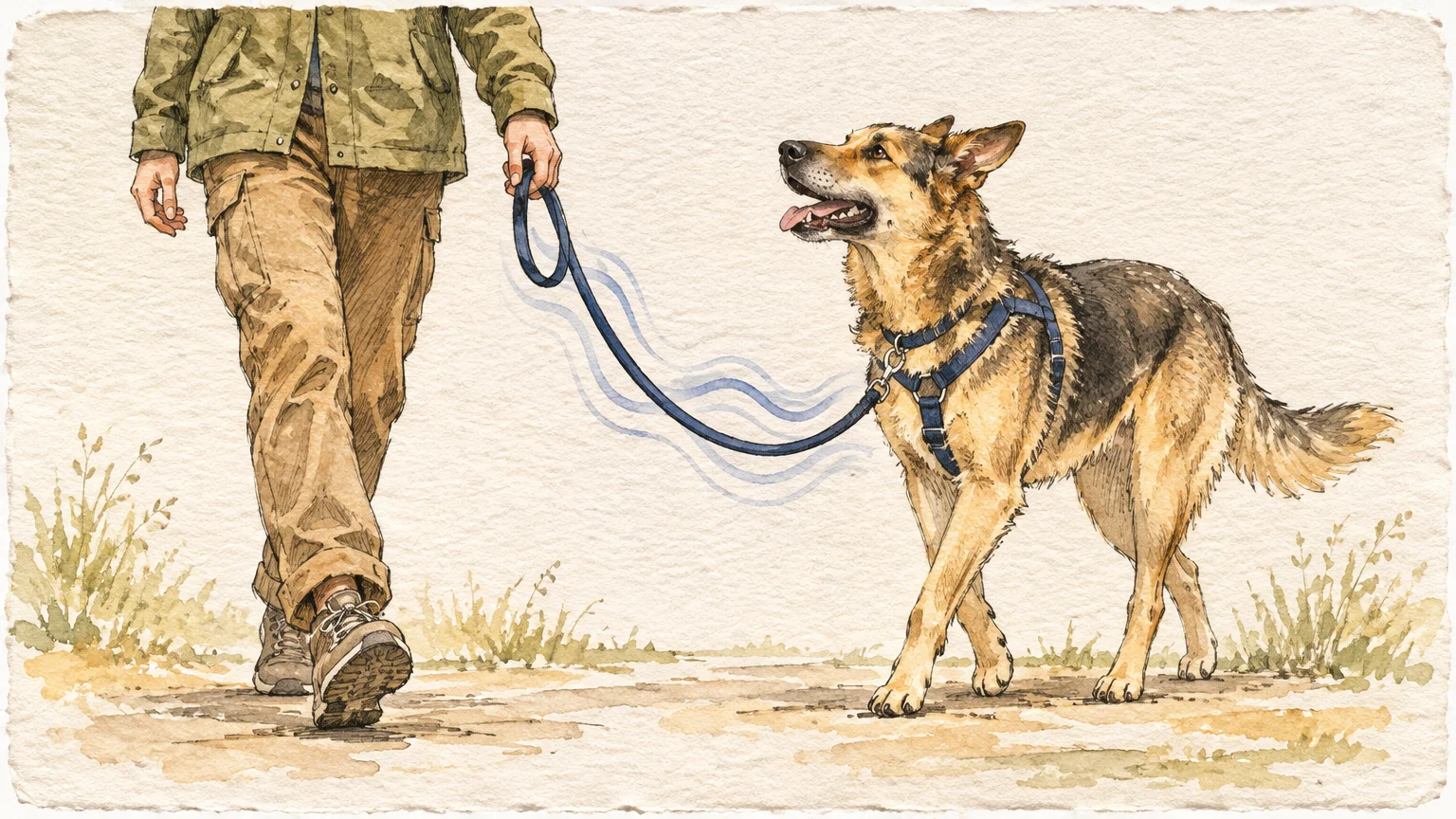
Load a waist pouch with soft, pea-sized treats before clipping on a flat collar or well-fitted front-clip harness. Start practicing in your quiet hallway or driveway before testing busy neighborhood sidewalks.
Step one: walk forward with your dog beside your leg and drop a treat right at your pant seam every few calm steps. Step two: the instant the leash pulls tight, stop moving like a grounded tree without jerking the line.
Step three: wait quietly until your dog glances back or steps toward you to create slack, then mark with an upbeat yes and resume walking. Step four: release your dog with a cheerful cue like go sniff at safe grass patches so loose walking earns real-world rewards.
Step-by-Step Mat Training for Instant Calm
Teaching a reliable settle cue creates an instant reset button whenever doorbells ring or work stress climbs. Place a washable mat or folded blanket near your desk or favorite armchair.
Step one: toss a small treat onto the mat and praise softly as every paw touches the fabric. Step two: wait a brief beat before placing another treat right between your pet’s front paws to reward staying put.
Step three: add a quiet cue like settle once your pet eagerly walks onto the mat, gradually lengthening pauses between treats. Cats take wonderfully to mat target training too—use tiny flakes of freeze-dried meat and keep sessions brief while curiosity stays high.
Solving Common Everyday Friction
If your dog barks furiously at passing walkers through front windows, frost the lower glass with inexpensive peel-and-stick film and redirect them onto their mat for a stuffed food toy. Removing visual triggers lowers rehearsal of high-stress arousal instantly.
If your cat wakes you at dawn, avoid getting up to fill the bowl immediately, which teaches them that meowing opens the pantry. Use an automatic timed feeder for early breakfast and reserve interactive play for evenings before bed.
Always choose humane, reward-focused methods over shock, choke, or prong tools that heighten fear and defensive aggression. Reviewing evidence-based humane training guidelines helps you evaluate local classes and keep learning gentle.

Community, Telehealth, and Budget-Smart Support Networks
Pet care works best when you build a reliable safety net around yourself and your companion. Knowing who to call before a minor worry turns into a midnight crisis protects both your wallet and your peace of mind.
National pet spending reached $158 billion in 2025 and is projected to climb to $165 billion in 2026, according to the American Pet Products Association. You do not need luxury subscriptions or designer gear to deliver excellent care.
If you are not ready for full-time pet expenses or physical commitments, consider volunteering as a shelter dog walker or cat socializer. Local humane societies welcome dependable helpers, letting you enjoy brisk movement and warm companionship without long-term veterinary bills.
For current pet parents, look into veterinary telehealth options offered through your primary clinic or pet insurance plan for after-hours triage questions. Quick video guidance helps you distinguish a watch-and-wait upset stomach from a true emergency.
Build a neighborhood swap with trusted pet parents so you can trade midday potty breaks or vacation feeding instead of paying premium boarding rates every trip. Keep contact information for a credentialed, force-free trainer handy whenever new behavioral hiccups pop up.
Many community shelters also maintain low-cost vaccine clinics, pet food pantries, and behavioral helplines to keep families together during tight financial seasons. Reaching out early protects your companion’s stability and shields your own heart from preventable worry.
Frequently Asked Questions
How can I protect my heart routine when traveling with or without my pet?
When bringing your pet along, pack familiar bedding, portable water bowls, and a small extra supply of daily food to prevent stomach upset on the road. Build short stretch-and-sniff stops into driving days so both you and your dog keep blood flowing.
If your pet stays home with a trusted sitter, schedule brief daily video or photo updates rather than worrying through your trip. Keep up your own brisk morning walks even while away so you return energized rather than sluggish.
Do multi-pet households double the stress or double the heart benefits?
Multiple companions can enrich your home wonderfully when everyone enjoys enough personal space and predictable routines. Tension climbs only when animals compete over food bowls, narrow doorways, or resting spots.
Feed pets in separate rooms, provide plenty of scattered litter boxes for cats, and carve out brief individual play sessions daily. Harmonious multi-pet dynamics give you lively humor without chaotic household noise.
How do I budget for pet care without causing financial stress that hurts my health?
Unexpected veterinary bills can trigger real anxiety, so automate a modest monthly savings transfer into a dedicated pet emergency fund. Even small, steady contributions build a comforting cushion over time.
Ask your clinic about preventive wellness bundles, prioritize core vaccines and parasite prevention, and skip non-essential grooming add-ons by learning nail trims and brushing at home. Compare pet insurance policies while your pet is young and healthy if catastrophic bills worry you.
What emergency plan protects both my pet and my own cardiac health?
Post a clear care card inside your wallet and on your refrigerator listing your veterinarian’s number, medications, feeding instructions, and trusted local friends authorized to step in. Place a simple window decal near your front door noting how many animals live inside.
If you ever face sudden hospitalization or cardiac recovery, knowing your companion has an immediate backup caregiver removes agonizing stress. Ask your cardiologist when safe leash walking can resume during recovery, and lean on neighbors for heavy lifting or energetic walks meanwhile.

A Calm Bonding Ritual to Try Tonight
Before tonight wraps up, pick one small, screen-free ritual that lets both you and your pet exhale together. Leave your phone charging in another room so notifications cannot steal your focus.
Sit on the rug beside your dog with slow, rhythmic chest strokes, or guide your cat through a gentle feather chase followed by a small dinner puzzle. Pay attention to your jaw unclenching, your breathing deepening, and your shoulders dropping away from your ears.
Those quiet, ordinary minutes are where the magic lives—nurturing a happier pet and a steadier, healthier heart every single day.