Dogs and cats track household social dynamics with surprising precision, often selecting one human partner above all others. This domestic hierarchy dictates who receives prime lap access, enthusiastic greetings, and nighttime cuddles.
Identifying your pet’s chosen person requires looking past generic affection to spot nuanced biological markers. Neurochemical responses and evolutionary survival strategies shape these distinct daily preferences.
Recognizing these quiet signals transforms how you interpret your pet’s emotional world. It also reveals whether you or your partner holds that coveted top spot.

The Science of Animal Attachment and Favoritism
Mammalian brains are wired for selective social bonding, a trait that helped ancestors survive in complex group environments. When an animal shares a home with multiple humans, their brain continuously evaluates safety, resource predictability, and emotional resonance.
In peer-reviewed research published in Frontiers in Psychology, scientists demonstrated that dogs show significant individual attachment preferences within multi-person households. These secure attachments stem from consistent social interactions rather than mere feeding schedules.
Domestic felines also form intricate social structures and display measurable preferential bonding toward particular individuals. This biological favoritism does not indicate hostility toward others, but rather reflects an established baseline of profound trust with one standout human.

Sign 1: Sustained, Relaxed Eye Contact
Direct eye contact in the animal kingdom often signals aggression or territorial challenge. However, when your pet offers soft, prolonged eye contact without tension, they are exhibiting an exceptional level of trust.
Research highlighted by Smithsonian Magazine demonstrates that mutual gazing between dogs and their favorite humans triggers an immediate surge of oxytocin. This biological feedback loop mirrors the hormonal bonding between human parents and their infants.
Cats communicate this profound comfort through slow blinking, often called the feline kiss. If your pet reserves this quiet, unguarded gaze primarily for you, you have likely secured their highest emotional rating.

Sign 2: The Proximity Magnet and Persistent Following
Ethologists refer to proximity seeking as one of the clearest indicators of social bonding in mammals. If an animal consistently chooses to inhabit your personal space, they view your presence as inherently reinforcing.
Your dog may trail you from room to room, curling up against your feet while you work. Cats display this by navigating between your ankles or perching on desk surfaces right beside your keyboard.
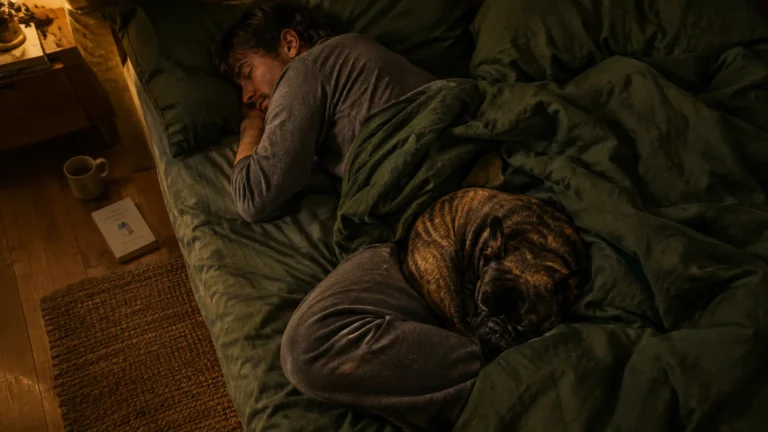
This shadow behavior differs from anxious clinginess because the animal remains calm and relaxed while near you. Consistently resting their body against you during quiet evenings reveals their intuitive hierarchy of security.

Sign 3: Scent Seeking and Garment Nesting
Scent serves as the primary language through which domestic carnivores decipher and navigate reality. Dogs possess up to 300 million olfactory receptors, while cats utilize around 200 million highly sensitive scent detectors.
According to clinical studies in Applied Animal Behaviour Science, familiar human odors activate the caudate nucleus in the canine brain. This neural region governs positive expectations, emotional reward, and neurological pleasure.
A pet with a clear favorite will deliberately burrow into that specific person’s unwashed laundry or sleep on their pillow. If your cat reliably naps directly on your discarded sweater, your scent provides superior solace.

Sign 4: The Elevated Greeting Ritual
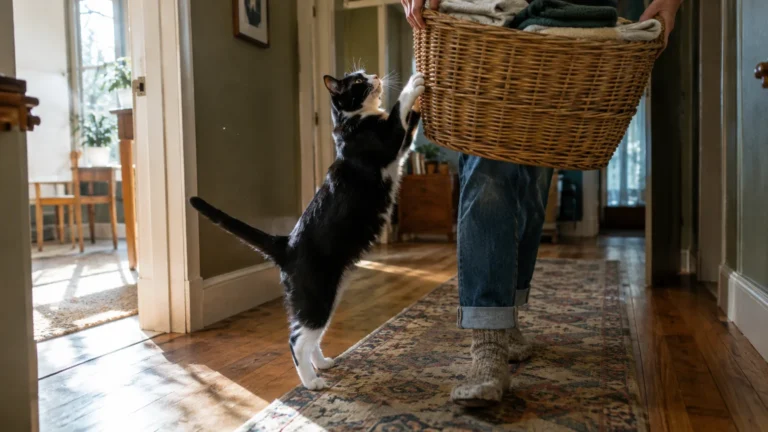
Every pet offers some form of acknowledgment when family members return home after an absence. Yet the intensity, vocal profile, and body language of that greeting often vary dramatically depending on who walks through the door.
A dog greeting their favorite human displays loose, rhythmic body wags, curved spine postures, and joyful tail motion directed toward their right side. Neuroscientists link right-sided tail wagging to left-hemisphere brain activation, which processes positive social emotions.
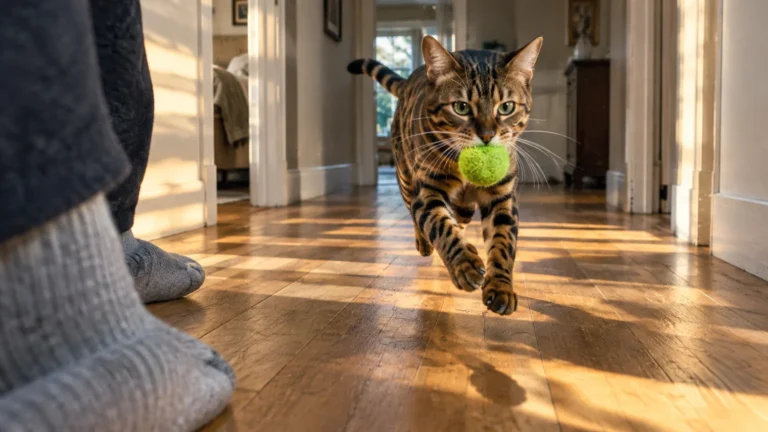
Cats reserve specific acoustic signatures, such as high-pitched chirps and upright tail tremors, for their most cherished companions. If your pet routinely abandons their toys to welcome you at the doorway, you hold primary status.

Sign 5: Radical Relaxation and Physical Vulnerability
In the natural world, resting posture directly correlates with perceived environmental risk. Exposing delicate anatomical zones like the throat and abdomen requires an animal to surrender defensive readiness completely.
When your dog flops onto their back and offers an exposed belly for quiet strokes, they are demonstrating absolute psychological safety. Cats display their bellies to express deep comfort and social acceptance rather than an invitation for rough handling.
If your pet regularly enters limp, heavy-limbed slumber on your lap while remaining vigilant around others, you provide an unmatched calming presence. Your presence acts as a biological tranquilizer that quiets their nervous system.

Sign 6: Returning to You as a Safe Haven
Developmental psychologists define a secure base as a primary caregiver who provides safety during moments of perceived danger. Companion animals consistently utilize their favorite human in this exact clinical capacity.
The American Veterinary Medical Association notes that animals instinctively retreat toward the person whose body language and vocal tones reliably regulate their stress. This behavioral refuge demonstrates functional reliance rather than simple play preference.
If your trembling dog buries their muzzle into your knees during thunder, they have nominated you as their emotional shock absorber. That instinctive choice reveals the ultimate depth of their attachment.

Sign 7: Targeted Allogrooming and Scent Deposition
Social grooming, known scientifically as allogrooming, serves as a primary tool for establishing communal bonds among social animals. When your pet licks your hands or grooms your hair, they are reinforcing social cohesion.
Cats take this chemical bonding further through allorubbing, pressing their temporal and perioral scent glands directly against your skin. By depositing facial pheromones, your cat actively blends their personal scent profile with yours to create a shared colony odor.
If one specific person in your home consistently receives the lion’s share of grooming and scent-marking gestures, that individual has been officially claimed. It represents mutual belonging translated into biochemical and physical behavior.

The Biology Behind the Choice: Why Pets Pick One Human
Understanding why pets select a favorite person requires analyzing evolutionary drivers, early development, and daily domestic interactions. Pets do not select their human partners at random or based on superficial affection.
Early Socialization and Imprinting Windows
The developmental clock plays an immense role in shaping lifelong social attachments. Puppies experience a critical socialization window between three and fourteen weeks of age, while kittens undergo this formative phase between two and nine weeks.
Positive experiences during these narrow developmental milestones forge enduring neural pathways in young animals. Even in adopted adult animals, early foundational experiences dictate which human communication styles feel familiar, safe, and inherently rewarding.
Energy Alignment and Behavioral Predictability
Animals excel at reading subtle human micro-expressions, respiratory rates, and movement tempos. A quiet, contemplative cat frequently gravitates toward a family member who moves deliberately and speaks with a gentle cadence.
Predictability also provides emotional safety. Pets strongly favor humans whose physical boundaries, tone of voice, and household routines remain completely stable and trustworthy day after day.
The Power of Positive Reinforcement and Shared Value
Operant conditioning continually shapes animal preferences through associative learning. The person who delivers the highest-value experiences often captures the animal’s primary focus.
When an animal consistently pairs your presence with intellectual stimulation, engaging play, and genuine dopamine release, strong neural bonds form. You become the living catalyst for their greatest daily pleasures.

How to Deepen Your Bond if You Are Not the Favorite
Discovering that you are your pet’s second choice can feel slightly disappointing. Fortunately, neuroplasticity allows companion animals to build rich, secondary attachment bonds at any stage of life.
Take Over High-Value Daily Routines
Shift primary responsibilities so that you deliver the pet’s favorite daily activities for several consecutive weeks. Take over the morning wilderness walk, prepare the evening fresh-food meals, or manage interactive puzzle games.
Pair these daily responsibilities with ultra-high-value treats, such as freeze-dried liver or squeeze-tube purees, reserved exclusively for your interactions. Your pet will quickly link your presence to extraordinary sensory rewards.
Respect Sensory Boundaries and Animal Agency
Desperate attempts to force physical affection usually backfire, especially with perceptive felines and sensitive canines. Allow your pet full agency by letting them initiate all physical contact on their terms.
Practice the three-second consent test by gently petting your animal for three seconds, pausing, and pulling your hands away completely. If the pet nudges you or steps closer, you have explicit permission to continue.
Introduce Novel Cognitive Enrichment
Shared problem-solving builds exceptional interspecies rapport. Teach your pet novel scent-work games, cooperative care behaviors, or engaging clicker-training cues that challenge their cognitive faculties.
Working through challenges together stimulates dopamine and serotonin pathways, cementing a genuine partnership. This shared mental effort transforms you from a casual bystander into an indispensable team partner.
Frequently Asked Questions
Can a pet change who their favorite person is over time?
Yes, pets regularly update their social hierarchies when household circumstances, family routines, or human emotional states change. A change in work schedules, health conditions, or training commitments often prompts a natural shift in attachment.
Consistent, positive engagement from a different family member can gradually shift the animal’s primary allegiance over several months. Animal preferences remain adaptable rather than permanently locked in place.
Does being the sole food provider guarantee favorite status?
No, delivering daily meals does not automatically ensure you will secure the number-one spot in your pet’s heart. While food satisfies a baseline biological drive, true emotional bonding relies heavily on interactive engagement, communication, and mutual play.
A family member who never touches the food bowl can easily become the favorite through stimulating agility training or comforting cuddles. Emotional depth consistently outranks transactional sustenance.
Do cats express favoritism differently than dogs?
Cats express their preferences through subtle micro-behaviors rather than the boisterous physical displays typical of dogs. Preferred humans receive flank rubbing, upright tail shivering, gentle head-butts, and synchronized resting schedules.
Dogs tend toward more overt physical proximity, vigorous tail movements, and immediate compliance with training requests. Both species feel deep attachment, but their biological expressions reflect their distinct evolutionary heritage.
Is intense pet favoritism a sign of separation anxiety?
Healthy favoritism involves a secure emotional attachment where the animal remains relaxed and functional when their preferred person departs. In contrast, separation anxiety triggers acute physiological distress, destructive behaviors, continuous vocalization, and house soiling.
If your pet panics, stops eating, or paces incessantly when you step outside, seek guidance from a certified veterinary behaviorist. True devotion brings peace and stability, whereas clinical anxiety demands proactive professional intervention.
Nurturing the Interspecies Bond
Recognizing who your pet prefers provides fascinating insight into the intricate cognitive and emotional lives of domestic animals. These silent votes of confidence highlight how deeply pets perceive our personalities, routines, and emotional frequencies.
Whether you hold the coveted top spot or share secondary status, every respectful interaction enriches your pet’s daily life. Cherish these individual communication pathways, honor their boundaries, and enjoy the remarkable journey of cross-species companionship.